by kelsey | Jun 26, 2013 | Food

The recent storm really took a hit on our area and many didn’t have power for hours. I posted this a few months ago, but I thought I would re-post it as I think this content is very important to review during times like these. Without power to your freezer or fridge, the safety of your food is at risk…especially when it’s 80 degrees out. If you don’t have one already, be sure to get a thermometer for your fridge and freezer so you are able to monitor and track temperatures appropriately…and be sure to follow these recommendations below.
Keeping cold foods cool and hot foods hot may be a challenge without power so follow these recommendations to keep your food safe in an emergency.
- Keep the refrigerator and freezer doors closed as much as possible to maintain the cold temperature. Watch the temp on both using a thermometer. You want your fridge to stay under 40 degrees and your freezer under zero degrees F.
- The refrigerator will keep food safely cold for about 4 hours if it is unopened.
- A full freezer will hold the temperature for approximately 48 hours (24 hours if it is half full) if the door remains closed.
- If are you able to, get dry or block ice to keep your refrigerator as cold as possible if the power is going to be out for a prolonged period of time. Fifty pounds of dry ice should hold an 18-cubic foot full freezer for 2 days.
- If you are wondering if your food is safe to consume, you need to evaluate each item separately using a thermometer as you cannot rely on the appearance or odor! If the food still contains ice crystals or is 40 °F or below, it is safe to refreeze. Refrigerated food should be safe as long as power is out no more than 4 hours. Keep the door closed as much as possible. Discard any perishable food (such as meat, poultry, fish, eggs, and leftovers) that have been above 40 °F for 2 hours. Remember…it’s better to discard and buy new than risk it and get sick!
For more tips and detailed recommendations please visit the USDA’s website: http://www.fsis.usda.gov/Fact_Sheets/keeping_food_Safe_during_an_emergency/index.asp .
-Kelsey
by kelsey | Jun 18, 2013 | Diet, Family, Food, Holidays, Weight Management, Wellness/Health
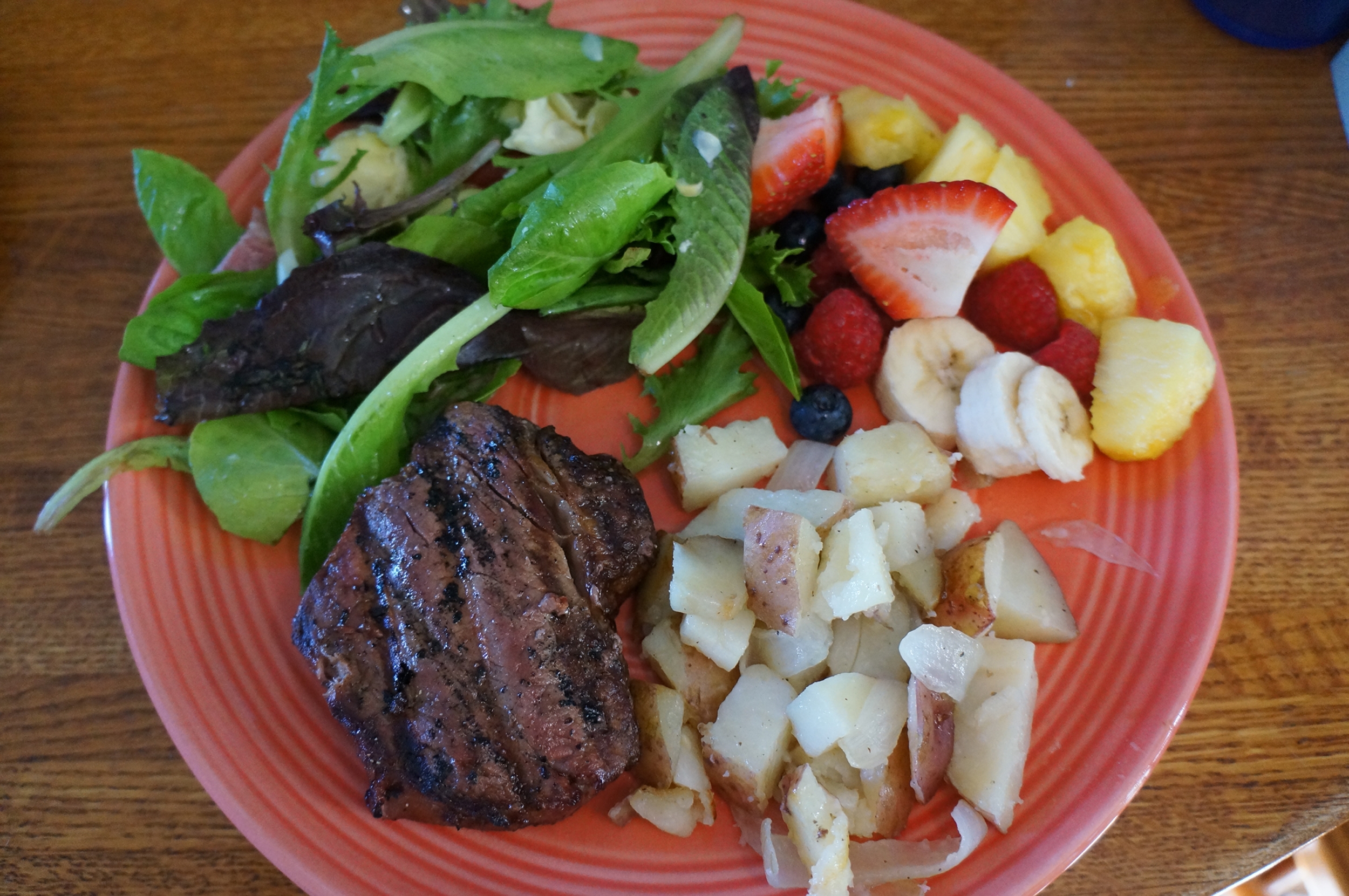
This last weekend, my family had a great Father’s Day celebration all weekend complete with boating, fishing, good food, campfires, and fellowship. My brother Lincoln and his family came from Wisconsin and it’s always a treat to get to be with their two little girls. We had an awesome supper Saturday night to celebrate the great dads and I have to say I was quite proud of our family! We grilled our own Raml Cattle lean steaks, had potatoes on the grills, and a bunch of really great fruits and veggies. As I dished up my plate, I noticed it mirrored the USDA’s MyPlate’s icon and I couldn’t resist taking a picture of it! I think it’s very important to practice what you preach and if I am giving you recommendations on healthy eating, I feel it’s essential for me to practice those recommendations as well! This meal was fairly simple to prepare and was thoroughly enjoyed without the feeling of being too full. Things to have on hand to make a healthy plate include: lean proteins (in this case we used sirloin), plenty of fruits and veggies to complete half of your plate, and a quarter starch or grains (we grilled red potatoes with a little olive oil). When you eat a balanced, portion controlled plate like this, you will feel content and the need to snack and over-eat is greatly decreased. I hope all of you Fathers out there enjoyed your day and got extra special treatment! I know I sure enjoyed the weekend with my family as we celebrated!

My Dad helping me grill.

“BEEF, it’s what’s for dinner.” Our delicious Raml Cattle steaks were perfect for our Father’s Day celebration!
-Kelsey
by kelsey | Jun 11, 2013 | Diet, Food, Wellness/Health
GMOs or Genetically Modified Organisms have been in the news frequently and the discussion continues to increase as states consider labeling laws. As a Registered Dietitian and supporter of agriculture, I feel it’s important for you, as consumers, to understand the facts. Understanding the facts and looking at evidence based studies and research is essential with this topic as you will find all kinds of crazy claims and stories by doing a quick Google search of which many of them are not credible and biased.
First off, it’s important for you to understand what a GMO is. Genetic engineering is used to describe methods used by scientists to introduce new traits or characteristics to an organism. For example, a food crop may be genetically engineered to enhance group or nutritional value of the food. People have been modifying plants for thousands of years through breeding and selection, however the term genetically engineered has been used to distinguish those plants that have been modified using modern biotechnology from those those modified through traditional breeding. GMOs have been around for over 20 years and are regulated by several government agencies. The FDA regulates food from GE (genetically engineered) crops along with the USDA (US Department of Agriculture) and the EPA (Environmental Protection Agency). Due to the multi-agency regulation and examination, there has been thorough review on these products and practices to ensure their safety. In the history of using and consuming GE foods, there have been no harmful reactions or effects in humans.
Putting it simple: GMOs are effectively used as a way to improve the control of pests, weeds, plant diseases and increase their tolerance to drought and flood. This helps decrease the use of herbicides, reduce tillage & soil erosion, decreases insect infestations and increases yield. By the year 2050, the world’s population is expected to reach 9 billion. Currently, 3.5 million children under the age of 5 die every year as a result of undernutrition. GM foods have been developed to decrease world hunger and malnutrition. For example, scientists have developed rice with increased levels of beta-carotene. This rice is used to feed regions of the world which are deficient in vitamin A. GMOs are also being used to increase the amount of ethanol which can be produced from corn, therefore, reducing our dependence on foreign oil. Using GMOs in farming is the only way for farmers to feed the hungry world.
There some states considering a labeling law for these products. I do believe consumers have the right to know what’s in our food, however I want you to know and understand that GMOs are proven safe and that there truly is a purpose for them in our food system, so this shouldn’t straw you away from eating them or raise concerns. If you are concerned about GMOs you may consider eating organic. Personally, I feel eating organic is a personal preference and that there are just as much concerns about food safety with organic foods since they do not use pesticides, etc to kill the natural bacteria and many foodborne outbreaks are the result of organic farming practices.
So all in all, I feel it’s important for you to understand the use and science behind the use of GMOs and to use credible sources such as the FDA, USDA, EPA and unbiased university studies for education and knowledge. It’s essential to look at the evidence based facts before you form an opinion. We are all entitled to our own opinions, however I do hope this will help you understand the benefits of GMOs, despite whatever your opinion is.
From a personal insight, all the crops we (my husband and family) plant are GMOs as is the only way we can help feed the hungry world. Our beef is not organic, but our cows are well cared for and taken care of, thus providing us and you as consumers, a quality and safe product to consume. I do not eat organic, but I do practice proper food safety and strive for a balanced intake. You have heard me say it before, but moderation and balance are essential to healthy eating!
-Kelsey
Reference: http://www.fda.gov/ForConsumers/ConsumerUpdates/ucm352067.htm
by kelsey | Jun 6, 2013 | Diet, Food, Weight Management, Wellness/Health
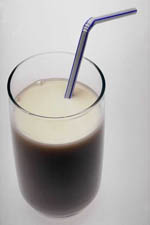
June is National Dairy Month so I decided today would be a good day to discuss the benefits of dairy…and let me tell you, there are many!! Cow’s milk is the richest source of well-absorbed calcium and is actually absorbed better (about 25%) than the calcium in soy milk. There is about 300 mg of calcium in an 8 oz serving of milk and we recommend getting at least 3 servings of dairy a day. A serving is equal to an 8oz (1 cup) serving of milk, 6 oz tub of yogurt, 1 oz cheese, 1/2 c cottage cheese. In addition to calcium, cow’s milk is an excellent source of phosphorus, vitamin B12, potassium, riboflavin, vitamin A, vitamin D, protein, and niacin…totalling 9 nutrients compared to only 4-5 nutrients found in soy and almond milk.
There are many other types of “milks” out there such as almond, rice, coconut, and soy, however these drinks are not the same as cow’s milk in regards to the nutritional qualities. Many of these milks use fortification (adding nutrients), whereas the nutrients are found naturally in cow’s milk. Below is a list from the Midwest Dairy Association about these beverage’s nutrient sources and nutrition quality (http://www.midwestdairy.com/0p335/dairy-imitators/)
- “Soy beverages are made from soybeans and are a good source of protein. However, according to the Protein Digestibility Corrected Amino Acid Score (PDCAAS), soy protein is a lower quality protein than the whey protein found in dairy products.
- Rice-based beverages are generally processed from brown rice and are fortified with nutrients such as calcium and vitamin D. Rice beverages typically contain only one gram of protein compared to eight grams in cow’s milk.
- Nut-based beverages can be ground from any nut and the most popular is almond. Almond beverages only supply one gram of protein per serving and lack many of the natural benefits found in almonds.
- Seed-based beverages, such as hemp, are newer to the marketplace. Their nutritional benefit is touted to be their omega fatty acid content. Similar to the other beverages, they also fall short on protein.”
Often times, these other “milks” contain higher sugar content, less calcium, less protein, and are absorbed less than those benefits in cow’s milk. Now if you have a lactose intolerance or milk allergy, these are certainly options for you, however if you do not have an allergy or intolerance, I highly encourage you to work towards getting your 3 a day servings of dairy and preferably low fat dairy. It will not only provide you with excellent vitamins and minerals to keep your bones and muscles healthy and strong, it will also provide you with an excellent source of protein.
For more information on the benefits of dairy, you can visit www.midwestdairy.com or contact my good friend and fellow Registered Dietitian Whitney Jerman at wjerman@midwestdairy.com.
I know I will enjoy a nice glass of cold milk tonight with supper, I hope you do too!
-Kelsey
by kelsey | Jun 4, 2013 | Cooking Tips, Diet, Food
Everyone loves smoothies but few make their own. Often times, the smoothies you get when eating out are filled with sugar and excess calories. This recipe is a great way to make a healthy smoothie and limit calorie intake and only takes about five minutes to prepare.
Spinach is a very nutrient dense food that provides a good source of iron, vitamin, C, K, folate, dietary fiber and calcium. Spinach is also packed with antioxidants that potentially may protect against some cancers. Spinach is good for cardiovascular health and helps prevent heart attack and stroke.
Ingredients
1 sliced banana
1 ½ cups of chopped spinach
1 cup milk (Prefer fat free or soy milk)
5-10 almonds
1 cup of sliced strawberries, pears, berries, peaches or mangos
Add crushed ice or water as needed
ALSO COULD ADD
2-4 baby carrots
Protein powder
Directions
Blend together the sliced bananas, spinach and about 1/2 cup of milk to make it a smooth puree. There should not be any lumps. Now add the remaining milk and almonds then blend it once again. You can adjust the quantity of milk and ice to get the desired consistency. Serve it immediately.
The smoothies mask the spinach’s boring, bitter taste with the fruit flavors making consumption of spinach an easy task!
-Submitted by SDSU Senior Dietetic Student Brett Delaney
by kelsey | May 30, 2013 | Diabetes, Diet, Food, Weight Management
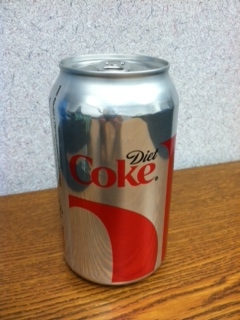
One of the most frequent questions I get from patients is what the real truth is about artificial sugars. You hear all kinds of good and bad things about them, so how do you know what to believe?! Well….here’s the facts:
Artificial sweeteners or sugar substitutes refer to substances that have little to no calories or other nutrients and are added to foods and beverages to provide a taste that is similar to table sugar (sucrose). Because artificial sweeteners are many times sweeter than table sugar, smaller amounts are needed to create the same level of sweetness.
There are five artificial sweeteners that have been tested and approved by the U.S. Food and Drug Administration (FDA):
Acesulfame-K is 200 times sweeter than sugar and it is heat stable, making it great for cooking or baking. The FDA approved acesulfame-K in 1998. Brand names include Sunett and Sweet One.
Aspartame is 200 times sweeter than table sugar and is one of the most commonly used sweeteners today. Aspartame was approved by the FDA in 1981 and is used in a variety of foods. Brand names include NutraSweet and Equal.
Saccharin is about 300 times sweeter than sugar and is used as tabletop sweetener, in baked goods, jams, chewing gum, canned fruit, candy, dessert toppings and salad dressings. The FDA approved saccharin in 1981, along with a warning label stating it was ‘reasonably anticipated to be a human carcinogen’. This warning label was lifted in 2000, after numerous studies cited there is no evidence that saccharin is associated with an incidence of cancer. Brand names include Sweet ‘N Low, Sweet Twin and Sugar Twin.
Sucralose is about 600 times sweeter than table sugar and approved by the FDA in 1999. Sucralose is not absorbed by the body and is eliminated through the urine and feces resulting in zero calories. Sucralose is also heat stable so it can be used for cooking or baking. The brand name for sucralose is Splenda.
Neotame is 7,000-13,000 times sweeter than sugar. Neotame is approved for use in beverages, dairy products, frozen desserts, baked goods and gums. Neotame is not available for consumer purchase at this time.
Stevia has become a popular sweetener in recent years and is extracted from the leaves of the Stevia Rebaudiana Bertoni bush. Two forms can be extracted: Reb A and stevioside. Both are 200-300 times sweeter than table sugar and are calorie free. In 2008, Reb A was generally recognized as safe by the FDA for use as a tabletop sweetener and in prepared foods. Brand names include A Sweet Leaf, Sun Crystals, Stevia, Truvia, and PureVia.
There is a lot of confusion about artificial sugars due to the mixed messages consumers hear about their risks, but when you really look at the studies and evidence, there are are in fact little concerns. According the the FDA, National Cancer Institute, and several other health agencies, there is no sound evidence that these artificial sugars approved cause cancer or serious health problems. Acceptable Daily Intake levels have been set by the FDA to help you determine how much you can consume and still be safe. The ADIs are set at 100x less than the smallest amount that may be harmful. So in order to actually come close to being at risk for side effects it would mean the average person would have to consume around 20 cans of diet pop/day to experience adverse effects. Please see the charts below:
Acceptable Daily Intake for Various Levels: Note the ADI is based on kg of body weight. Take your weight in pounds divided by 2.2 to get your weight in kg.
|
ADI (mg/kg body weight)
|
Average (mg) amount in 12oz can soda
|
Amount (mg) in a packet of sweetener
|
| Acesulfame-K |
15
|
40**
|
50
|
| Aspartame |
50
|
200
|
35
|
| Saccharin |
5
|
140
|
40
|
| Sucralose |
5
|
70
|
5
|
| Sweetener |
Number of 12oz cans diet soda to reach the ADI |
Number of artificial sweetener packets to reach the ADI |
| Acesulfame-K |
25.6
|
20.4
|
| Aspartame |
17
|
97.4
|
| Saccharin |
2.4
|
8.6
|
| Sucralose |
4.8
|
68.2
|
| Stevia/Reb A |
Product info not available. Sodas containing stevia are not widely available |
30
|
There are also newer studies suggesting that the use of artificial sweeteners tricks our body as it’s not real sugar and in turn we eat more. These studies are inconclusive and not reliable.
The Bottom Line:
Adults may be able to better manage weight when sugary foods and beverages are replaced with artificial sweeteners as these artificial sweeteners are sugar free, calorie free. Studies have also shown that artificial sweeteners do not increase appetite or food intake in adults, adolescents or children. The American Academy of Nutrition & Dietetics states that, “based on studies reviewed, artificial sweeteners are safe for use in the general population.” Special populations, such as pregnant women, should limit the use of sugar substitutes and avoid saccharin, since the fetus may not be able to clear the substance quickly enough. Individuals with PKU should avoid aspartame since phenylalanine is found in aspartame. However, individuals with this genetic predisposition can use neotame. So all in all, I recommend them for those wanting to manage their weight and control their blood sugars, however moderation and portion control are key!!
Source:ADA Evidence Analysis Library (2011).The Truth about Artificial Sweeteners or Sugar Substitutes: How Much Is Too Much?.Retrieved May 1, 2012 from the American Dietetic Association. Website: http://www.adaevidencelibrary.com/files/Docs/NNSResourceDraft3.pdf
-Kelsey
