by kelsey | Jul 19, 2012 | Cooking Tips, Food, Weight Management, Wellness/Health

As I mentioned in my post yesterday, I am proud to be a part of South Dakota Team BEEF which is sponsored by the SD Beef Council. Team BEEF is a group of runners and health advocates who recognize the benefits nutritionally of lean beef and the important role this top notch protein can play in training. As members of Team BEEF, you get a running jersey to promote Team BEEF and reimbursement for several sponsored races. I first learned of Team BEEF from a good friend and fellow dietitian who helped start Wisconsin’s Team BEEF when she was in school there. As I learned more, I knew I had to get involved as I am truly passionate about health and wellness and am an advocate for lean beef protein. Yes, I may be little biased because I am the wife of a cattle rancher and that’s our way of living, however if you truly examine the research and evidence regarding beef protein, there truly is a place for it in our diets…as long as you are selecting the lean cuts the majority of time.
Did you know that beef is 20% leaner than it was about 15 years ago? There are at least 29 cuts of lean beef which means they meet the government guidelines for lean, meaning each cut has less than 10g of total fat, less than 4.5 g of saturated fat, and less than 95mg of cholesterol (in a 3 oz serving). Here are some tips for you to make beef a part of your heart healthy meals:
- Look for key words such as “round” or “loin” …these are typically leaner cuts
- Choose 90% or greater lean beef. This means in a 3oz serving there is less than 5g of fat in it.
- Use healthy cooking methods such as grilling, broiling, baking, roasting, or braising. The less tender cuts can be marinated in a tenderizing marinade such as salsa or light Italian dressing.
- Trim the fat! Trimming the fat before cooking will help eliminate some of the fat from the cut.
- Cook with fresh ingredients such as lemon juice, peppers, onions, garlic, and herbs instead of adding extra fat to the cut.
- Practice portion control. Select the 3-5 oz serving over the 10oz.
Balance is key to a healthy diet, so be sure to include your fruits and veggies and whole grains along with your lean meat to create a healthy plate. As of a just a few months ago, all meat is required to have the nutrition content (label) posted by it in the grocery store. Be sure to use this when you’re selecting your cuts of meat and pay special attention to the total fat and saturated fat content. If you want to learn more about the benefits of beef and explore healthy recipes check out these websites: www.beefnutrition.org and www.beefitswhatsfordinner.com.
Below is a picture of some of the SD Team BEEF members after the Beef & Eggs 5k.
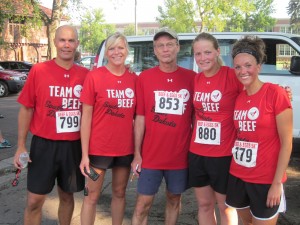
-Kelsey
by kelsey | Jul 18, 2012 | Goals, Wellness/Health
Many of our regular readers and my friends and family know about my heart issue that resulted in me having to readjust my fitness goals and aspiration. For those new readers of our STRIVE 2 Survive blog, you will have to refer back to a previous post (https://s2sbrownclinic.com/2012/05/the-reality-of-goal-setting/) to get more details. In short, my hopes and dreams of running a half marathon were diminshed when I learned my heart couldn’t take that amount of vigorous activity due to a congenital valve issue. This was a major let down for me, but I am a realist and I knew I had to move on as it wasn’t worth dwelling over and it definetely wasn’t worth dying over!
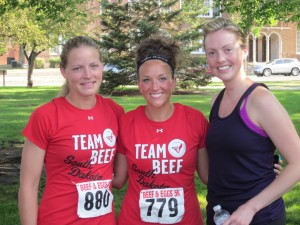
After a lot of self reflecting, I decided I needed a different goal that was better for my heart and for my spirit. Thus, I decided to sign up for the Beef & Eggs 5k race in Brookings. I also became a part of South Dakota Team BEEF thus promoting two passions of mine: running or activity in general and promoting the benefit of lean protein found in 29 cuts of lean beef. This last weekend, I fulfilled this goal and ran the 5k without any chest pain or shortness of breath. I ran with two of my best friends from college who were on the SDSU Equestrian Team with me and I couldn’t have asked for better support. My friend Anna, who is on the left of me in the picture, also a member of SD Team BEEF and my friend Katie, on the right, were a great support system for me. We weren’t too focused on time, but rather enjoyed each other’s company while doing something we all love.
Setting new goals isn’t always an easy task, especially when you didn’t meet the previous goal, however staying positive about your aspirations and being real about what you are capable of doing will help you. Setting goals pushes you to achieve more in life. In addition, it’s important to reward yourself when meeting the goals. My reward for fulfilling my new goal was a day spent with my friends after the race and it was totally worth it! I am thankful for having a great support system to help me get through the tough times and celebrate the good times.
Tomorrow I will discuss SD Team Beef, so stay tuned!
-Kelsey
by Dan | Jul 12, 2012 | Exercise, Heart Health, Wellness/Health

Time to get back to previous discussion about heart disease, or coronary heart disease. We will discuss over a 3 part series, the first being about what is coronary heart disease, and what are the symptoms.
In short, coronary heart disease refers to the process where the arteries that supply blood to the heart “get clogged” with fatty deposits. Overall, this puts you at risk for having a heart attack. I had previously discussed some of the statistics related to the prevalence of heart disease in general, now to discuss the symptoms associated with this.
The symptoms of a heart attack can include: Pain, pressure, or discomfort in the center of your chest; Pain, tingling, or discomfort in other parts of the upper body, including the arms, back, neck, jaw, or stomach; Shortness of breath; Nausea, vomiting, burping, or heartburn; Sweating, or having cold, clammy skin; A racing or uneven heartbeat; Feeling dizzy, or lightheaded.
One very important thing to keep in mind is that people with coronary heart disease may have no symptoms, and in fact, the first symptom may be a heart attack. In the next 2 series, I will talk about tests that can be done to help with testing for coronary heart disease, and then how do you treat it, as well as how do you prevent it. The prevention is what we have talked about since we started this blog, continuing to exercise, and watching our diet.
Keep moving everybody.
Dr. Dan
Consecutive Exercise Day #: 1750
by kelsey | Jul 12, 2012 | Diet, Weight Management
In today’s society we are often consumed by the next best diet. There are many kinds of shakes, supplements, the next best diet gimmick to help you lose that 20lbs in 2 weeks. The predicted weight loss is usually what intrigues us to learn more and want to try it…especially when it says “no exercise recommended.” Like I stated in a previous post, not all of these representatives promoting the products and plans have credible and substantial education in health and nutrition. In addition, the supplement and diet industry is huge and everyone in it is trying to make the big bucks, thus they are going to tell you exactly what you want to hear! These plans are very tempting to try, but it’s very important to be aware of the consequences some of these diet plans and supplements can have on our bodies and take the proper precautions.
There was a recent article published in the British Journal of Medicine that showed a high protein, low carbohydrate diet (typical of diets like the Atkins Diet, True Weigh/Ideal Protein Diet, and the Paleo Diet) increased risk for heart disease in women. In addition, this high protein, low carb diet can result in damage to our liver and kidneys. In regards to the supplements, it’s important to be mindful of the ingredients and the nutrient content as many contain ingredients that can act as stimulants and cause elevated blood pressure, heart palpitations, and overall stress to the heart. Most of these fad diets will result in weight loss as you are often cutting your calories very low and as a result you lose that superficial weight also known as water weight. The odds of you keeping this weight off are slim, which is why we come back to the good old fashioned diet and exercise as our best plan for weight loss and weight management.
Sometimes we need that reassurance that dieting the old fashioned way is best because there are so many other temptations out there…but what you need to know is YES, this is best for you and your body! Following a lower calorie, balanced diet plan that includes lean proteins, low fat dairy, whole grains, and plenty of fruits and vegetables will not only help you lose weight and keep it off in the long run, but it will also keep your body healthy inside and out. A healthy and balanced diet paired up with an activity routine is your ticket to success and has been heavily researched to prove this. Sometimes this process takes longer than we’d like, but be patient!! We really like to see a slower, steadier weight loss than a quick one so stay strong and true and eventually you will reach your goal! If you need help with this or have questions don’t hesitate to contact us! We’re excited to start our fall session of STRIVE 2 Survive September 4th!
-Kelsey
by kelsey | Jul 11, 2012 | Diet, Food

Hello again! I apologize for the lack of posts this last week! I took a little vacation with the 4th of July holiday last week. I hope everyone had a wonderful holiday and holiday week! Despite the warm temps, I hope you were able to get out and enjoy it. Before we know it we’ll be complaining about snow, wind, and ice, so take advantage of these sunny, warm days!
I spent last weekend at the lake fishing and boating. It was fun to spend time with family while enjoying the outdoors. We had a fun time fishing and eating our fresh catch. Many times during my visits with patients who are working to improve their cholesterol levels, we discuss types of fats and the benefits of the good fats such as omega-3 fatty acids. The fresh fish found in our local lakes are a great source of lean proteins, however they do not have much omega-3 fatty acids. The fish that have omega-3’s are fatty fish such as salmon, herring, tuna, trout, seabass, and mackerel. These are harder to get since these fish aren’t as readily available as our walleye, perch, and northern are. This is why many take a fish oil supplement as they aren’t able to get adequate amounts through their diets to provide the benefits needed to improve lipid levels.
Fish oil or omega-3 fatty acids can reduce your total cholesterol and triglycerides. They can also increase your HDL in small amounts, but they can also increase your LDL as well. If you have high LDL cholesterol taking a fish oil supplement may not be the best for you, so you should always discuss it first with your doctor. The recommended dosage varies from 1-4g/day and you want to have at least 1g of DHA and EPA combination.
Now it’s still good to get out and enjoy our local lakes and rivers and your fresh catch, but keep in mind these local fish do not have much omega-3’s, so if you’re looking for that benefit then you’ll want to incorporate more fatty fish into your diet or consider a supplement. In addition, you will also want to consider a healthy cooking method for your fish, such as grilling, broiling, or baking rather than frying. If you do decide to fry, be sure to use a healthy oil such as olive or canola oil.
-Kelsey
