by kelsey | Jul 26, 2012 | Etc.
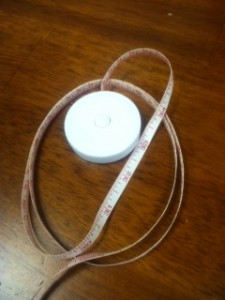
Body Mass Index or BMI is a part of our regular assessments when you come in to see me, the doctor, or participate in STRIVE 2 Survive. It’s part of our assessments as it’s a fairly reliable indicator for fatness in most adults and it tells us where you’re at on the spectrum in regards to your height to weight ratio. BMI is calculated from your height and weight and is an inexpensive measurement tool compared to other measurements for body fat such as underwater weighing or the bod pod. BMI does not not take muscle mass or bone structure into consideration thus it’s not always the best measurement for everyone. It is not as beneficial with athletes and the elderly.
There are several categories which help us determine where you are at at the spectrum of underweight to obese. The categories include:
- Underweight: BMI below 18.5
- Normal weight: 18.5 to 24.9
- Overweight: 25.0 to 29.9
- Obese: 30.0 and above.
Those people with very low or very high BMI’s are at highest risk. Even though BMI is used as an assessment tool, it’s just one factor that contributes to the big picture of your overall health and wellbeing. As I said earlier, we use BMI in STRIVE 2 Survive, but we also get body fat percentage, fat mass, and muscle mass by using our body composition analyzer scale. Other measurements we find valuable are blood pressure, waist circumference, and lab work such as the lipid panel and glucose. A higher waist circumference can be an indicator of heart disease as those who carry their weight in their mid section (apple shape) are at higher risk for heart disease compared to those who carry their weight in their buttocks and thighs (pear shape).
If you would like to calculate your BMI and learn more about this measurement, check out this website for more information: http://www.nhlbisupport.com/bmi/.
If your BMI is not desirable and you’d like to work on improving this, eating healthy, practicing portion control, and engaging in daily activity are tools for success. With STRIVE 2 Survive we like to look at the big picture of wellness which is why we get the variety of measurements pre-program and post-program. Sometimes we get frustrated with the scale as the number doesn’t always want to move like we want it to, but we have to remember that our positive lifestyle changes can be improving things inside too!
-Kelsey
by kelsey | Jul 25, 2012 | Etc.
Lately, I have had several people tell me that they enjoy reading our blog or that they found a specific post really intriguing or valuable to them. Dr. Dan and I really enjoy spreading the word about health, wellness, nutrition, and activity and we enjoy the feedback from you! Many of you get our posts directly into your email, some learn more through our Facebook page, and many just browse our site on a regular basis. No matter how you decide to connect with us, please know we appreciate you! You are the reason we are so passionate about our work with STRIVE 2 Survive and promoting healthy lifestyles! We typically write about relevant topics related to our lives, the news, etc, however we certainly can write about anything you desire to learn more about! If you have questions related to wellness, health, nutrition, or activity please share them with us and we’ll be sure to get them answered through our blog! You can contact us by commenting on the posts, emailing us, calling us, or writing us on Facebook.
Our program continues to evolve and improve as time goes on and we base alot of our improvements on our participant’s feedback and requests. We are so excited to be starting our fall program September 4th and are eager to work with another great group! We already have a list of participants excited to start, so if you are interested in learning more and getting enrolled, be sure to contact us!
Thanks for giving us purpose to continue sharing our passion about wellness with you!
-Kelsey
by kelsey | Jul 24, 2012 | Food, Heart Health, Wellness/Health

Lately, the farmers have been busy harvesting their grain crops such as oats and wheat. I always marvel at this process as what they’re doing is directly contributing to our food sources and availability. Without their hard work, our food chain would be greatly affected. Grains are an excellent source of energy for our brain and central nervous system. The whole grains are especially beneficial for promoting heart health due the fiber content. The average American only eats about 1 serving of whole grains a day and a serving is equivalent to a slice of bread, a cup of cereal, or a 1/2 cup of rice…which means that’s not much! We recommend at least half or your grain intake to be whole grains which should be at least 3 servings.
Whole grains are unrefined meaning they have all three parts still intact. Refined grains go through a process where the bran and germ are removed, thus extending shelf life and giving them a finer taste. Since the whole grains do not go through any processing and their germ (inner layer) and bran (outer layer) are still intact, they are a better source of fiber and other essential vitamins and minerals, especially selenium, potassium, and magnesium. When selecting a whole grain product, it’s important to look at the ingredient list and select a product that’s first ingredient is “whole” such as “whole grain,” “whole wheat,” etc. If the first ingredient says refined or enriched, that means that product is truly not whole grain.
Whole grains are found in brown and wild rice, whole wheat flour, oats, popcorn, rye, and whole wheat pasta. Like I’ve mentioned before, balance is truly key to a healthy diet, so achieving a balance of whole grains, lean proteins, fruits and vegetables will not only fuel your body but will aid in disease prevention. The fiber found in whole grains is not only beneficial for heart health, but also aids in stability for blood sugars, digestive health, and satiety. Next time you go to the store, make sure you take the extra few seconds to double check your label to ensure you’re getting a whole grain product…and be sure to thank our farmers for helping harvest our food supply!
-Kelsey
by Dan | Jul 23, 2012 | Exercise, Family, Motivation, Wellness/Health

It was a busy weekend for many parents. It was the state softball tournament held in SF. Boy, was it hot; around 100 degrees both days. Between me running back and forth between my daughter Molly’s game, and my son’s games, I had just as much of a workout as they did. Here Nick is with his Brown Clinic/Glacial Lakes Property Management teammates as they placed 2nd in the U14 division. They played very well, and gave it all they had.

Here Molly is racing around 3rd base on her way to home to score. Both kids had a lot of fun, and for me, as Dad, I can say it was a lot of fun watching them, but I was exhausted afterwards. Keeping up with the 2 of them, while Sarah is back home on call, was quite the workout. I did lots of walking in between games as well, and did not have to worry about trying to do any other exercise for the day. All of this was enough.
For all of you parents out there, you know what you all do for your kids. We make a lot of sacrifices as well trying to keep the kids involved in activities, and trying to be there to cheer them on as well. We have to remember to take care of ourselves as well, and remember to stay active for us as well. If we don’t, we are going to have a hard time keeping up with them. We also run the risk of not being around for them later when they need us. Hopefully, they appreciate all of this as well. For many of these things, it may not be appreciated at the time, but as they look back, they will remember we were there for them, and then it will matter. So remember, take care of ourselves, stay healthy, and keep moving everybody.
Dr. Dan
Consecutive Exercise Day #: 1761
by Dan | Jul 22, 2012 | Exercise, Heart Health, Wellness/Health

There are several tests that can be done in the evaluation of Coronary Heart Disease. These include:
1.) EKG–This is an electrical tracing of your heart, and can help detect any changes in blood flow to the heart, and help determine if someone is having a heart attack, or if they have had one in the past. It only takes a few minutes, and is painless.
2.) A Stress Test–You are monitored continuously with an EKG tracing, and then start walking on a treadmill, such as the one pictured. Every 3 minutes, the speed and the incline of the treadmill increase. We are trying to evaluate not only your exercise capacity/limit, but also help determine if your heart is getting enough blood with activity. We are “stressing” your heart.
3.) An Echocardiogram–it is basically an ultrasound of your heart, giving us information about your heart valves, and how well your heart contracts when it is beating.
4.) A cardiac catheterization, or angiogram–the large vessels in the groin of your leg have a catheter placed and dye is injected to evaluate the coronary vessels of the heart. This is where we can see exactly where blockages exist, and then can place a stent where necessary if blockage is present.
5.) A cardiac score/calcium score–This is a CT scan of the coronary vessels of your heart, and if the amount of calcium present in the coronary vessels are increased, this is also a risk factor with blockage of the vessel going forward. It to is painless, and takes only a few minutes.
Overall, what everyone needs to keep in mind is that if they are experiencing increasing shortness of breath with activity, or chest pain, then you need to see your doctor to decide on which tests above need to be performed in order to help evaluate you.
The final upcoming segment on coronary heart disease will be dealing with how to treat it. Keep moving everybody!
Dr. Dan
Consecutive Exercise Day #: 1760
