by kelsey | Aug 15, 2012 | Cooking Tips, Diet, Food, Weight Management
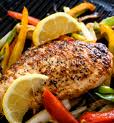
A popular topic of discussion with my patients is fat content and ways to reduce fat in our diets. You have read about lean beef options in previous posts, but it’s also important to discuss white meat poultry compared to dark meat. Many prefer the chicken thigh over the breast due to the flavor and taste. The dark meat certainly may have more flavor, but it also has more calories, fat, and saturated fat all contributing to the flavor. A 3 oz portion of a chicken breast without the skin contains about 3 g of fat, <1g sat fat and about 140 calories. A similar serving of dark meat has about 170 calories, 9 g of fat and 3 g of saturated fat. The nutritional composition of dark meat is very similar to that of a T-bone steak. Thus, the white meat has less calories and significantly less fat.
Choosing lean meats is going to help reduce your risk for heart disease, but it’s also important to be mindful of your portion sizes to help keep your calories balanced. Keeping your protein to a quarter of your plate or about 3-4 oz will provide your body with the right amount of nutrients, while not breaking the calorie bank. In addition, be sure always include a balance at your meals with a quarter of your plate whole grains and half your plate fruits and veggies.
-Kelsey
by kelsey | Aug 14, 2012 | Diet, Weight Management
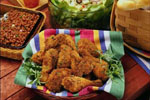
Eating out can be a challenge as you aren’t sure how the foods are prepared, what types of foods are used, and what the food prep consists of. You may question, are the healthier looking choices sometimes worse for you? A salad over a hamburger should always be healthier, right? We find that in some scenarios this is not the case at all. Because of added seasoning, dressing, and breading the choices that appear to be healthier can have more calories. A way to avoid some of these unnecessary calories is to ask for the dressing on the side, or ask for your meats grilled instead of fried. If you eat at a restaurant regularly it’s not a bad idea to look at their menu online for their nutritional values. This could help you make a healthier decision when going out to eat. In addition, you may also consider using a pocket guide book such as Calorie King’s book (www.calorieking.com) or using an app on your smart phone. Besides making a good choices, portion control is essential! Take half of your meal home or share with a friend or family member. That alone will cut down on calories, fat, and sodium.
Here is a fun quiz to help you compare some foods and see which have more calories. The results may surprise you.
1) Applebee’s Oriental Chicken Salad (with dressing) Vs. Applebee’s Bacon Cheeseburger
2) McDonalds the Big Breakfast with Hotcakes Vs. McDonalds Angus Delight
3) McDonalds Cheeseburger Vs. McDonalds Chocolate Shake
4) Culvers Fresh Fried Chicken Dinner Vs. Culvers Chicken Sandwich Value Basket
5) Arby’s Medium Curly Fries Vs. Arby’s Pecan Chicken Salad Sandwich
********************************************************************
Answer #1 The Bacon Cheeseburger has fewer calories at 970 calories compared to the Oriental Chicken Salad that has 1390 calories.
Answer #2 The Angus Delight has fewer calories at 750 compared to the Big Breakfast with Hotcakes that has 1090 calories.
Answer #3 The Cheeseburger has 300 calories compared to a Chocolate Shake that has 570 calories.
Answer #4 The Chicken Sandwich Value Basket is 422 calories compared to the Fresh Fried Chicken Dinner that has 2220 calories.
Answer #5 The Curly Fries are 540 calories compared to the Pecan Chicken Salad Sandwich that has 840 calories
*This blog post was prepared by SDSU Dietetic Student Megan Bren.
-Kelsey
by kelsey | Aug 9, 2012 | Diet, Weight Management, Wellness/Health

Have you been cheering Team USA on in the Olympic games? The Olympics are one of my favorite times as I really enjoy watching our top notch athletes perform, I enjoy watching the variety of sports, and it’s also fun to cheer them on and support the USA! Nutrition plays a key role in helping the athletes perform at their highest abilities. Many are genetically pre-disposed for their sports but they also have to put a lot of time and energy into training of which nutrition become very important. Most athletes work with a sports dietitian to help them figure out the best eating plan to help them perform. Nutrition needs vary depending on the activity, however they all have one main focus which is achieving and maintaining a lean body mass to give them the appropriate endurance, agility, energy, and skills they need.
You may have heard that the greatest Olympian of all time, Michael Phelps, eats around 8,000-10,000 calories a day. Swimming takes a lot of energy and in order for him to perform well, he must fuel his body with appropriate calories and nutrients. Carbohydrates are very important for energy as they are needed to maximize glycogen (storage form of glucose) stores before training and competition, and replenish the stores after exercise. In addition, protein intake is very important to help replenish muscle cells and help provide strength to the athlete. Since each sport and each athlete are different, a dietitian can help individualize their diet plans. Proper nutrition can turn a mediocre athlete into a great one, thus it’s really important for the athlete to have this a part of their training regime.
Even though we may not be Olympic athletes, this concept applies to us as well. If we provide ourselves with the appropriate energy needs and balance of nutrients, we will perform at our highest abilities and our body will be well fueled to prevent disease, aid in longevity, and allow us to enjoy a long and healthy life! Remember, food is fuel!
-Kelsey
by kelsey | Aug 8, 2012 | Diet, Food, Weight Management

I’m sure everyone has experienced a time when you get a craving for a specific food and it’s very hard to give into it. Whether it may be pizza, chips, icecream, or chocolate, many times our cravings are so intense, it’s hard not to give in! Research is still inconclusive about whether cravings are physiological or pyschological and both factors may be causes. Sometimes our cravings can be so intense and overwhelming which results in overindulgence which then results in guilt. Those that follow very restrictive diets that cut out specific food groups can get trapped into a vicious cycle of indulging, overeating, and then feeling very guilty and bad about those actions. A balanced, portion controlled diet that has small amounts of foods but sometimes includes those high fat, high sugar, high calories foods (in moderation) can be easier to maintain as there is not elimination in this diet. Moderation and portion control are truly essential to a healthy diet and can help you stay in control of those behaviors and desires and that viscious cycle of cravings, over-indulging, and guilt.
Here are some tips to help you manage your food cravings:
- Ignore the craving: if you feel a craving coming on, wait for 20 minutes and then decide if you should give in. Usually cravings are short-lived so if you can distract yourself for a little while, the feeling may go away.
- Find a healthier option: Feeling like potato chips? Find a kind that is lower in fat such as the baked chips. Feeling like pizza? Make a mini pizza with thin crust and add some great veggies and lean meats. Feel like something crunchy? Try carrots and light dip or a crisp apple.
- Choose single servings: Buy just one cookie rather than the whole box. 100 calorie packs are a nice way to practice portion control, however the key is only having one pack, not 10. In addition sometimes these foods are not the healthiest, so you will want to choose wisely and carefully.
- Practice a consistent intake: Planning your meals and snacks throughout the day and eating every couple of hours can decrease the desire to over-eat and indulge. You may have to plan ahead and have snacks or foods readily available if you’re on the run alot.
- Distract yourself: take a walk, call a friend, or work on a hobby. Sometimes redirecting your thoughts and behaviors will help you get through the craving without giving in.
- Keep a food journal: Journaling your intake not only helps with choices and portion control, but it can also help you recognize your feelings and desires about foods. Record your emotions, how long the craving lasted, what food you craved, and how you handled the situation. You may also want to pay attention to the time of the day the cravings occur. By journaling, you’ll be able to recognize patterns and be better prepared to handle these situations in the future. Keeping a food journal is a very valuable tool and something we provide at our first meeting with STRIVE 2 Survive!
-Kelsey
by kelsey | Jul 12, 2012 | Diet, Weight Management
In today’s society we are often consumed by the next best diet. There are many kinds of shakes, supplements, the next best diet gimmick to help you lose that 20lbs in 2 weeks. The predicted weight loss is usually what intrigues us to learn more and want to try it…especially when it says “no exercise recommended.” Like I stated in a previous post, not all of these representatives promoting the products and plans have credible and substantial education in health and nutrition. In addition, the supplement and diet industry is huge and everyone in it is trying to make the big bucks, thus they are going to tell you exactly what you want to hear! These plans are very tempting to try, but it’s very important to be aware of the consequences some of these diet plans and supplements can have on our bodies and take the proper precautions.
There was a recent article published in the British Journal of Medicine that showed a high protein, low carbohydrate diet (typical of diets like the Atkins Diet, True Weigh/Ideal Protein Diet, and the Paleo Diet) increased risk for heart disease in women. In addition, this high protein, low carb diet can result in damage to our liver and kidneys. In regards to the supplements, it’s important to be mindful of the ingredients and the nutrient content as many contain ingredients that can act as stimulants and cause elevated blood pressure, heart palpitations, and overall stress to the heart. Most of these fad diets will result in weight loss as you are often cutting your calories very low and as a result you lose that superficial weight also known as water weight. The odds of you keeping this weight off are slim, which is why we come back to the good old fashioned diet and exercise as our best plan for weight loss and weight management.
Sometimes we need that reassurance that dieting the old fashioned way is best because there are so many other temptations out there…but what you need to know is YES, this is best for you and your body! Following a lower calorie, balanced diet plan that includes lean proteins, low fat dairy, whole grains, and plenty of fruits and vegetables will not only help you lose weight and keep it off in the long run, but it will also keep your body healthy inside and out. A healthy and balanced diet paired up with an activity routine is your ticket to success and has been heavily researched to prove this. Sometimes this process takes longer than we’d like, but be patient!! We really like to see a slower, steadier weight loss than a quick one so stay strong and true and eventually you will reach your goal! If you need help with this or have questions don’t hesitate to contact us! We’re excited to start our fall session of STRIVE 2 Survive September 4th!
-Kelsey
by kelsey | Jul 11, 2012 | Diet, Food

Hello again! I apologize for the lack of posts this last week! I took a little vacation with the 4th of July holiday last week. I hope everyone had a wonderful holiday and holiday week! Despite the warm temps, I hope you were able to get out and enjoy it. Before we know it we’ll be complaining about snow, wind, and ice, so take advantage of these sunny, warm days!
I spent last weekend at the lake fishing and boating. It was fun to spend time with family while enjoying the outdoors. We had a fun time fishing and eating our fresh catch. Many times during my visits with patients who are working to improve their cholesterol levels, we discuss types of fats and the benefits of the good fats such as omega-3 fatty acids. The fresh fish found in our local lakes are a great source of lean proteins, however they do not have much omega-3 fatty acids. The fish that have omega-3’s are fatty fish such as salmon, herring, tuna, trout, seabass, and mackerel. These are harder to get since these fish aren’t as readily available as our walleye, perch, and northern are. This is why many take a fish oil supplement as they aren’t able to get adequate amounts through their diets to provide the benefits needed to improve lipid levels.
Fish oil or omega-3 fatty acids can reduce your total cholesterol and triglycerides. They can also increase your HDL in small amounts, but they can also increase your LDL as well. If you have high LDL cholesterol taking a fish oil supplement may not be the best for you, so you should always discuss it first with your doctor. The recommended dosage varies from 1-4g/day and you want to have at least 1g of DHA and EPA combination.
Now it’s still good to get out and enjoy our local lakes and rivers and your fresh catch, but keep in mind these local fish do not have much omega-3’s, so if you’re looking for that benefit then you’ll want to incorporate more fatty fish into your diet or consider a supplement. In addition, you will also want to consider a healthy cooking method for your fish, such as grilling, broiling, or baking rather than frying. If you do decide to fry, be sure to use a healthy oil such as olive or canola oil.
-Kelsey
