by kelsey | May 1, 2013 | Wellness/Health

I have received some excellent blog requests so far–thank you to all who have emailed or contacted me! The invite is always there so if there is something you want me to discuss or cover, please let me know!
Today’s topic is nutrition for vision. That saying, “you are what you eat” really does apply to all aspects of keeping your body healthy and it certainly does with keeping your eyes healthy and strong. There is strong evidence that antioxidants such as zinc, vitamin C, vitamin E, and beta-carotene can reduce risk for developing advanced age related macular degeneration. The carotenoids lutein and zeanthin (also antioxidants) may also protect against macular degeneration and cataracts. Foods rich in antioxidants are the colorful fruits and vegetables, especially those red, yellow, and green fruits and veggies. Omega 3 fatty acids, predominantly found in fatty fish and fish oil can also provide some benefit to our eyes in preventing age related vision issues like cataracts and macular degeneration. We recommend eating at least 2 servings (3 oz) of fatty fish (salmon, herring, trout, tuna, seabass, and mackerel) a week to get adequate amounts of these essential fatty acids.
Many of these can be found in supplement form and there are multivitamin supplements just for eyes, but please keep in mind that the natural source is always best and there is limited data indicating the supplements are just as beneficial as the real food. Soo….this is just another reason to eat your 5 a day fruits and veggies and eat a colorful diet. You will not only aid in a healthy waistline, but you will keep your eyes healthy and strong. 🙂
-Kelsey
by kelsey | Apr 30, 2013 | Etc.

I have a request for our readers…I am in need of blog topics! If there’s anything you have been wondering about, want to learn more about, or want me to discuss, please let me know! You can submit your request by commenting on this post, emailing strive2survive@brownclinic.org, or writing us on Facebook. It can be anything related to food, nutrition, health, or wellness. If you have an activity question I will forward that on to Dr. Dan to discuss. This is a free way to get your questions answered by experts in the field, so please take advantage of it! I look forward to hearing from you!
-Kelsey
by kelsey | Apr 25, 2013 | Weight Management, Wellness/Health
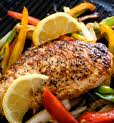
Eating healthy can be challenging. Some struggle with selecting the right choices, some struggle with the cost of fresh produce, others struggle figuring out how to plan and make a meal…especially when you’re in a hurry when you get home from work, others struggle eating healthy for 1-2, etc, etc, etc…there are all kinds of struggles and challenges to eating healthy but in reality they are just EXCUSES! You have a choice, you can let these challenges get in the way of you achieving a healthy lifestyle and in turn struggle with your weight and have increased risk for disease or you can face these challenges head on and work towards overcoming them. Even though I am a dietitian and this is my chosen profession, I sometimes struggle with this, just like you do…however I constantly work towards overcoming these barriers to make healthy eating a lifestyle. I am a firm believer in the concept “practice what you preach”…if I wasn’t trying to eat healthy, then why would anyone want to listen to what I have to say! I also believe that finding the balance in your life to eat healthy and make it work for your lifestyle is truly key to success.
Planning and time management are the best ways to overcome these challenges. Every Sunday I take a look at my freezer and my fridge and decide what meals I’m going to make for the week. I take the meat out of the freezer and make sure I have the appropriate ingredients for each dish. I will often times use the same meat in a few different meals to make things go smoothly…and example of this is I will take out a 2lb package of lean hamburger and brown half of it. I will use it in tacos, bbqs, pizza, spaghetti, etc. I can use the other half or meatloaf or meatballs, etc. Another easy way to prep your food is to put several skinless, boneless, chicken breasts in the crockpot on low and cook for a few hours…you can then use them in a variety of other dishes. The next step is to think like MyPlate and get the rest of the food groups included in your meal. You will need a veggie, fruit, and whole grain. Keep these items on hand and re-stock weekly. If you don’t have them, you won’t eat them! It’s also important to think about timing. We recommend a consistent intake of several small meals and snacks a day, which helps keep your blood sugars stable and aid in weight management. Eating late is common in my household due to the demands of ranching and farming. I recommend having a snack/light meal around 4-5 to tide you over until supper time. It may feel like you are eating more, but in reality, you will eat less when that supper time comes around at9pm because you won’t be as hungry! Eating a big meal late at night and then going to bed is not helpful…spread it throughout your day, but planning is the only way to make this happen!
When you don’t have a plan, it’s easy to resort to packaged, boxed foods that are high in sodium, fat, and calories and/or eat out. Since it’s just my husband and I, I will often cut my recipes in half so that we don’t have excess leftovers and we only eat what’s there which helps us use proper portion control.
Eating healthy does NOT have to be challenging. Change your way of thinking and attitude about it and then put it into action. You truly can be successful!
-Kelsey
by kelsey | Apr 24, 2013 | Diet, Motivation, Weight Management, Wellness/Health

Coming up with a relevant and useful topic to our blog posts is sometimes a challenge as we want our information to be useful and we try to not repeat ourselves too much! As I contemplated what to write about today I thought about what I have been working on with my patients recently and it seems the majority are all in the same boat….this long, undesirable winter has caused the motivation to eat healthy and exercise to fly out the window. It’s hard to be motivated when every other day we’re getting a blizzard, the sun hasn’t shined for days, and we have to worry about driving in these poor conditions. Emotional eating becomes more prominent and the motivation to exercise is no longer there. I noticed my mood and attitude was much better yesterday as I woke up to the bright sun shining compared to the wintery weather I woke up to on Monday. If you have succumbed to this trap, it’s important to tell you that it’s never too late to get back on the band wagon! Below are a few tips to get you started:
- Why are you eating? The first step is to recognize why you are eating emotionally. Keeping a journal and reflecting on this question is helpful.
- What is missing? Are you neglecting a part of your life such as your spirituality, family, friends/social life?
- What areas need more focus? Food and eating is often used to fill an empty hole or void in your life. Figuring out what area needs focus will allow you to find effective ways to gain more balance in your life.
- Are you planning activities that do not involve food?
Food is always present at gatherings, activities, etc. Work on planning activities that do not revolve around food to help you learn how to enjoy life without focusing on food.
- Are you prepared? Meal planning and prep is really key to success. Take some time on the weekend to plan your week’s menu, take meat out of the freezer, pre-prep some of your items and keep healthy food choices in your purse, desk, etc….this will help prevent you from convenience eating and making poor choices.
- Focus, Determination, Motivate! Think of eating healthy and exercise like you do your job. No one wants to perform mediocre at their job, so why are you performing mediocre with your life choices. You only get one body and it will perform like you treat it…if you eat crappy, put on weight, don’t exercise, you will be sluggish, lethargic, and not able to enjoy the things you want to do. Instead, gradually work into a regular exercise routine and replace the junk foods with healthy ones and you’ll notice you have more energy, your sleep will improve, and you’ll be able to focus better. “You are what you eat” really does mean something!
We never expect these changes to happen overnight so focus on a few things at a time as you gradually work back into a healthy way of life. It can start slow with a 10 minute walk a day, adding a piece of fruit to your daily intake, keeping a food log, etc….it’s never to late to get back on track!
-Kelsey
by kelsey | Apr 10, 2013 | Food, Weather

Well for once Watertown has dodged the bullet with this winter storm. It sounds like there is more coming, but we have avoided the terrible ice that the Sioux Falls and southeastern SD region has gotten. There are many without power and it sounds like it may be days-week before they get power back on. These poor conditions are not ideal but, like I said yesterday, we can’t change the weather so we must do what we can to keep safe. Without power to the fridge and freezer, many may be wondering how to keep their food safe. Even though we aren’t dealing with these issues here in the Watertown area, you may have friends or family dealing with them so be sure to share these recommendations with them! Keeping cold foods cool and hot foods hot may be a challenge without power so follow these recommendations to keep your food safe in an emergency.
- Keep the refrigerator and freezer doors closed as much as possible to maintain the cold temperature. Watch the temp on both using a thermometer. You want your fridge to stay under 40 degrees and your freezer under zero degrees F.
- The refrigerator will keep food safely cold for about 4 hours if it is unopened.
- A full freezer will hold the temperature for approximately 48 hours (24 hours if it is half full) if the door remains closed.
- If are you able to, get dry or block ice to keep your refrigerator as cold as possible if the power is going to be out for a prolonged period of time. Fifty pounds of dry ice should hold an 18-cubic foot full freezer for 2 days.
- If you are wondering if your food is safe to consume, you need to evaluate each item separately using a thermometer as you cannot rely on the appearance or oder! If the food still contains ice crystals or is 40 °F or below, it is safe to refreeze. Refrigerated food should be safe as long as power is out no more than 4 hours. Keep the door closed as much as possible. Discard any perishable food (such as meat, poultry, fish, eggs, and leftovers) that have been above 40 °F for 2 hours. The way it sounds, this will be case for many in the Sioux Falls area. Remember…it’s better to discard and buy new than risk it and get sick!
For more tips and detailed recommendations please visit the USDA’s website: http://www.fsis.usda.gov/Fact_Sheets/keeping_food_Safe_during_an_emergency/index.asp .
Stay safe and warm everyone!
-Kelsey
