by kelsey | May 14, 2013 | Food

Before I started dating (and then married) a farmer/rancher, I didn’t put too much thought into where my food came from. I went to the store, selected what I wanted, and ate it…that was it. My dad’s parents did some farming and I have friends who were farmers but I never really knew how much went into putting that food on my table until about 5 years ago.
It seems like my household has been running at 100mph for the last few months and when I think about why, it’s all for YOU! Our ranchers work very hard to ensure their calving process goes well and with those spring storms we had, it sure made for a tough calving season. Calving typically involves checking on the cows every few hours to ensure things are going well. If they aren’t, then they have to take proper action that the calf and cow are safe and thriving. And since the snow just melted 2 weeks, ago, the farmers have finally been able to get into the fields to plant the crops. The calving produces cows that the consumers purchase as selections of beef, an excellent source of protein…and the farming produces crops such as wheat, soybeans, and corn of which are all used in a variety of food products and essential to our nutrition and health.
The picture above is from my view riding with Adam in the tractor while he was planting corn….if I want to see him right now, this is about the only way as he and all of the other farmers are working day and night to get the crop in…in efforts to put food on your table. So next time you go to the grocery store or you see a tractor in the field, think about this process: the seed is purchased by the farmer, planted by the farmer, we pray for good weather to help it grow, the farmer harvests the crop, sells the crop to the elevator, which then is sold and transported to food producing companies, products are created, you purchase the product at your store, you eat it. All of that effort starts with your farmer….pretty amazing huh! As I said earlier, I have learned more about farming and ranching than I never imagined, but I wouldn’t change it for the world. Since I have a nutrition/food science knowledge, learning more about the agricultural part of food production has been fascinating and it makes me appreciate the food I eat a lot more when I think about where it came from and how much effort and time was put into the production of it….I hope you do too!
-Kelsey
by kelsey | May 9, 2013 | Weight Management, Wellness/Health
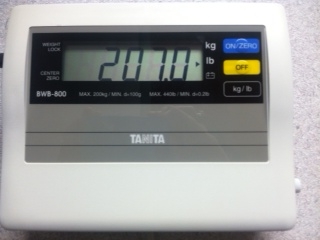
The past several months, you’ve been working hard to lose weight and live a healthier life. To your delight, the number on the scale has dropped after making these lifestyle modifications. However, soon you find that your weight loss is at a standstill. You can’t think of anything you’ve been doing differently since losing weight. Your exercise and food intake seems to be the same as during the weeks you were losing weight. Are you starting to feel as if you want to throw in the towel and give up on all of your goals?
You are not alone. Weight-loss plateaus are very common as you begin dropping weight. Your body tends to reach a point where it becomes content with remaining at the same level. However, there is certainly hope in overcoming these plateaus.
One of the first things you can do to get moving on your weight loss journey is to reevaluate your calorie intake. Now that you have lost weight, your body doesn’t need as much energy as it did at your prior weight.
So how can you determine how much your body needs?
A helpful tool you can use is the USDA’s SuperTracker. Visit the website www.supertracker.usda.gov. You will need to create a profile where you will enter the information below.

Your height, weight, and activity level will help determine the amount of calories you need on a daily basis. Remember that calories in=calories out! In other words, in order to lose weight, you need to burn more calories than you are consuming. Therefore, you need to either increase your activity or decrease the calories you eat. Another good tracker is www.myfitnesspal.com.
Another suggestion is to change up your exercise. Do you normally walk 3 miles four days each week? Try bumping the miles up to 3 ½ miles and exercising 5 days each week. Continue to work your way up. After a certain period of time, your body starts to adapt to the amount and kind of exercise you are engaging in. Just like your diet, perhaps it is time to reexamine your exercise routine as well. Never get bored with your routine! There are plenty of ways to change your exercise routine and keep things interesting. Focus on staying active throughout your days as well. If you tend to exercise and then are idle the rest of the day, consider becoming more active in other ways. If you are watching your favorite television show, get up and do something during the commercial breaks. Little modifications like this may help impact your weight loss. If you always do cardio, you may also consider adding some weight resistance to your workouts by using a balance ball, resistance bands, or light weights…you may also consider trying pilates or yoga as strengthening exercises. The resistance training will help build more lean muscle mass which will help increase your metabolism and aid in weight loss.
Finally, be patient with your body. More than likely, your body gained weight slowly over time. Likewise, it is going to take time to lose weight as well. Overall, you will be more successful with keeping your weight off if you lose it gradually over time. If you are experiencing a weight-loss plateau, do not be discouraged. Keep a positive attitude and remember that you were able to lose weight before and by making some modifications again, you can continue moving towards your goals.
-Amanda Lambrechts, SDSU Senior Dietetic Student
by kelsey | May 8, 2013 | Weight Management, Wellness/Health

Have you ever heard the phrase, “If you keep on doing what you’ve always done, then you’ll keep on getting what you’ve always got.”? While the saying holds true in most all aspects of our lives, it certainly is applicable in regards to our health and wellness.
Consider this: For the past several months, you have been working in a full-time position. Throughout the day, you have little time to run home for lunch. Instead, you head over to the convenient drive-thru at your favorite fast-food restaurant. In the afternoons, you find yourself so tied up in work that you are unable to eat or drink anything until supper, later that evening. Once you are home, you are so exhausted from your day that you resort to ordering a pizza for the family and lounge on the sofa in front of the television for the rest of the evening. Before you realize it, your jeans are tighter than usual and the pounds are creeping up on you.
Sound a little too familiar?
Perhaps this was the case for you over the course of this past winter. The South Dakota winter was in full-force and the last thing you wanted to do after a long day was prepare a healthy meal and venture off to the gym. Now that the sun has decided to make an appearance and the snow has melted away, why not change up your routine?
The changing of the seasons offers the perfect opportunity to reevaluate your daily routine and make some appropriate modifications. If you don’t have time to make it home on your lunch break, make a point of planning ahead. Pack a healthy lunch the night before and keep it in a lunch bag the next day. While your afternoons may be busy, waiting from lunch until supper to eat is an awfully long time to go without food. In your lunch bag, pack snacks, such as yogurt and apples, to keep you energized until the next meal. Don’t forget to stay hydrated! Keep a water bottle with you that you can refill throughout the day. In addition to packing lunches ahead, plan your menu for the week on Sundays or your day off. You are more likely to stick to eating well-rounded meals if you have a plan. Now that the weather is finally warming up, take a walk or a jog after supper to unwind for the evening. You will be amazed at how these simple lifestyle changes not only help with your waistline, but also help boost your energy and mood as well.
-Amanda Lambrechts, SDSU Senior Dietetic Student
by kelsey | May 7, 2013 | Cooking Tips, Food, Weight Management, Wellness/Health

This week I have a dietetic student from South Dakota State University with me doing part of her practicum experience. Amanda Lambrechts is a senior dietetic student and originally from Milbank. She has her own personal blog so when I asked her if she wanted to contribute this week’s posts she was happy to do so, as she’s a natural at it! -Kelsey
Amanda’s Sweet Potato Fries
I tried sweet potato fries for the first time my sophomore year of college at a place on campus at SDSU. I liked them, but they didn’t seem much healthier than any other fries. They were still covered with salt and grease. I hadn’t thought much about them again, until earlier this Spring. A dietetics friend of mine was telling me that sweet potatoes are a staple food of hers. Feeling in a food rut after a long semester, I decided to dig my way out by trying some different recipes. I must say, after you make these homemade sweet potato fries, you will never go back to greasy fast food fries again.
1.) You will need: Extra Virgin Olive Oil, Mrs. Dash, Garlic Salt, Sweet Potatoes, a baking sheet, aluminum foil, a sharp knife, and a cutting board.
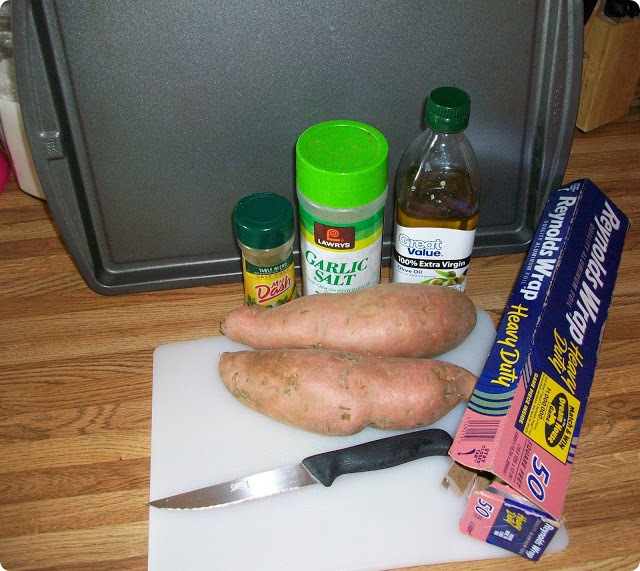
2.) Before preparing the fries, preheat the oven to 400 degrees F and line the
baking sheet with foil.
3.) After washing and scrubbing the sweet potatoes thoroughly, cut them into wedges.
4.) Sparingly, drizzle olive oil and sprinkle some Mrs. Dash and Garlic Salt over the wedges. Toss the wedges a few times so the seasoning and oil is distributed.
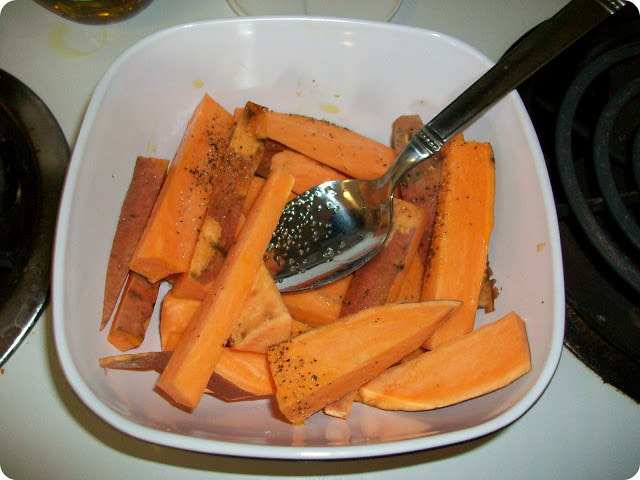
5.) Line the baking sheet with the wedges and place them in the heated oven.
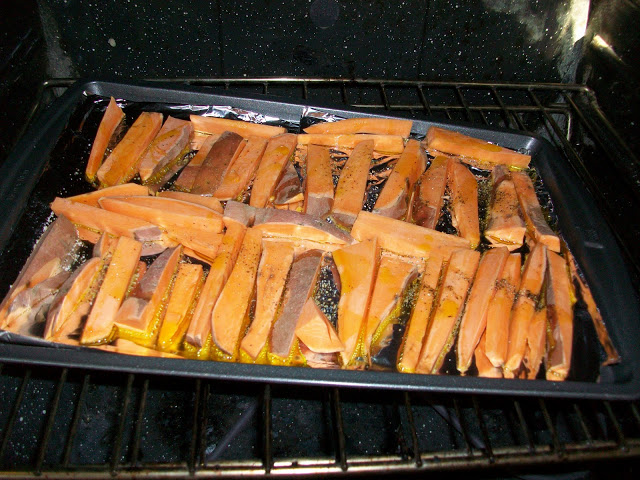
6.) Allow the wedges to bake for 10-15 minutes. Take the pan out of the oven and flip each of the wedges to their opposite side. Bake for 10-15 additional minutes.
7.) Allow the fries to cool a few minutes before serving.

8.) Finally, enjoy! I dipped mine in Kraft 3-Cheese Ranch Lite Dressing.
Not only are these fries delicious, but they are also a great source of Beta Carotene. I can see myself making these again in the future.
Get it?
Beta Carotene…See….
Okay, you don’t have to laugh at that joke, but I would recommend you trying this recipe.
-Amanda
by kelsey | May 2, 2013 | Diet, Weight Management, Wellness/Health

You have heard me say it many times, but once again, a diet rich in a variety of colorful fruits and vegetables does aid in good health and this specifically applies to our digestive health as well! The digestive tract is a very important part of our body and as many of you know, when somethings a bit off with it, you suffer! Eating healthy is truly going to make a positive impact on your digestive health and below are a few tips to focus on.
- Get Active! Activity speeds up the digestion process and can stimulate muscles within the GI tract helping your organs work more efficiently and effectively. Engaging in at least 30 minutes of activity most days of the week is helpful to your heart, weight, muscles, and your digestive tract. Yes, this is just another reason why we recommend daily activity so get up and get moving!
- Increase your fiber intake: Adequate fiber intake (25-35g/day) keeps everything moving smoothly. It slows down digestion and absorption and aids in better blood sugar control. Fiber keeps the intestinal walls healthy and functioning appropriately and it also acts as a scavenger and breaks up the bad cholesterol in our vessels, thus having a reduction on our risk for heart disease. Fiber is found in fruits and vegetables (the outer layers so be sure to eat the skins!), whole grains, beans, and lentils. If you aren’t getting much through your diet, you could try a fiber supplement such as Benefiber, Metamucil, or even flaxseed.
- Get plenty of water: When you increase your fiber intake, you need to make sure you are getting adequate water intake. Not drinking enough water can slow down your digestive tract and contribute to constipation. Getting at least 8 glasses of water a day is very helpful!
- Limit fats: Fats are harder to break down and digest and can slow down your digestive system. Limiting saturated and trans fats…and your total amount of fat will help improve your digestive tract, keep things moving appropriately, and aid in a healthy heart and waist line. Choose low fat or fat free dairy products, lean meats, and healthy oils such as canola oil or olive oil.
- Practice Mindful Eating: take your time when you’re eating and really focus on your fullness factors. It takes 20 minutes for our stomach to tell our brain we’re full and most of us are done eating by then and are stuffed. Slow the process down and savor each bite. You will be more apt to recognize your fullness and hunger factors while allowing your body to fully breakdown and absorb the nutrients. Mindful eating also promotes a healthy weight which is very important as well!
- Probiotics: probiotics are the good bacteria typically found in yogurt and are used to prevent and improve a variety of conditions that affect the GI tract. Activia yogurt as a greater amount of probiotics than the regular yogurt so you may try having 1-2 tubs/day depending on your condition. You can also find probiotics in the supplement form.
- Limit sodium: limiting sodium will help reduce bloating and swelling. It will also help improve your heart health. Aim for keeping your sodium intake to less than 2400mg/day.
Many of these tips you have heard me discuss before in relationship to other diseases, weight management, or overall health. Healthy eating truly affects all parts of the body, thus it’s very important to limit the junk foods and stick to a well balanced, healthy diet to keep your body and in particular your digestive tract healthy!
-Kelsey
