by Dan | Jul 30, 2012 | Exercise, Goals, Motivation, Wellness/Health

Year round, there are fun runs, walks, triathlons, bike rides, that it is easy to find some ways to keep busy, and stay fit. Here this last saturday was the annual Kampeska run, 1/2 marathon, 10K, and 5K. It was great weather, perfect day for getting out for a run. Here I am after I won the 10K for my age group. Whether you win or lose, it does not matter. Get out, and try. I am surprised, and of course, when I saw Rhonda Arbogast taking pictures, I had to ham it up a little more. It is all about having fun, right?

Of course, not to even be outdone by myself, here I am holding my winning door prize for the race–a hooded sweatshirt. So everybody, get out, and go have some fun. Whether you are walking, running, biking, it does not matter. Just get out and move. Where have I heard that before? Oh, yeah–me! Keep moving everybody!
Dr. Dan
Consecutive Exercise Day #: 1768
by Dan | Jul 29, 2012 | Exercise, Family, Goals, Heart Health, Motivation, Wellness/Health

This is the final segment of the heart disease series. Everybody knows somebody, or they themselves personally, have heart disease. No one is immune. Sometimes reminding yourself of the reasons why you should do something about it is as close as your own home. Family should rank as the primary goal. I touch on this more is a minute.
Treatment options include: 1. Medications: These medicines can be used to help lower your blood pressure, lower your cholesterol, improve your blood sugars, but in all, they can help lower your risk of a heart attack. Which medication is right for you depends on your own health issues, and discussion with your doctor.
2. Angioplasty/stent: If you already have heart disease, or had a heart attack, these may be one of the treatments that are used. Angioplasty involves using a balloon to open up the coronary artery, and then placing a stent helps keep it open. If things are too involved for this, then the next step may be…
3. Coronary bypass surgery: Here another blood vessel from your body, very commonly from your leg, is used to “bypass” the areas of blockage. It is reattached above the area of the blockage, to an area below it, so it effectively bypasses the blood flow around the areas of blockage. These 2 options definitely are more advanced ways of treating heart disease, but one of the most effective yet is preventing it from ever getting this severe. This brings up to the last treatment option.
4. Lifestyle changes: This is basically what are entire blog, and Strive 2 Survive program is all about. The more you can do about watching your diet, and increasing your exercise, the better. This can definitely help prevent heart disease from coming on, but are also extremely effective in helping to manage heart disease if any of the other options above come into play also.
Afterall, is life not about having fun!

Wrap your arms around the things in life that are most important to you. We all have to remember we are not going to have them forever. Appreciate them while we can. Family is the center of all of this for me, and why I try to stay healthy. I want to be here and enjoy them a long time. A special thanks to photographer, and friend, Cory Ann Ellis, for once again creating some great family pictures to enjoy forever. Thanks!
Keep moving everybody!
Dr. Dan
Consecutive Exercise Day #: 1767
by kelsey | Jul 24, 2012 | Food, Heart Health, Wellness/Health
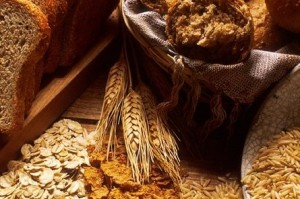
Lately, the farmers have been busy harvesting their grain crops such as oats and wheat. I always marvel at this process as what they’re doing is directly contributing to our food sources and availability. Without their hard work, our food chain would be greatly affected. Grains are an excellent source of energy for our brain and central nervous system. The whole grains are especially beneficial for promoting heart health due the fiber content. The average American only eats about 1 serving of whole grains a day and a serving is equivalent to a slice of bread, a cup of cereal, or a 1/2 cup of rice…which means that’s not much! We recommend at least half or your grain intake to be whole grains which should be at least 3 servings.
Whole grains are unrefined meaning they have all three parts still intact. Refined grains go through a process where the bran and germ are removed, thus extending shelf life and giving them a finer taste. Since the whole grains do not go through any processing and their germ (inner layer) and bran (outer layer) are still intact, they are a better source of fiber and other essential vitamins and minerals, especially selenium, potassium, and magnesium. When selecting a whole grain product, it’s important to look at the ingredient list and select a product that’s first ingredient is “whole” such as “whole grain,” “whole wheat,” etc. If the first ingredient says refined or enriched, that means that product is truly not whole grain.
Whole grains are found in brown and wild rice, whole wheat flour, oats, popcorn, rye, and whole wheat pasta. Like I’ve mentioned before, balance is truly key to a healthy diet, so achieving a balance of whole grains, lean proteins, fruits and vegetables will not only fuel your body but will aid in disease prevention. The fiber found in whole grains is not only beneficial for heart health, but also aids in stability for blood sugars, digestive health, and satiety. Next time you go to the store, make sure you take the extra few seconds to double check your label to ensure you’re getting a whole grain product…and be sure to thank our farmers for helping harvest our food supply!
-Kelsey
by Dan | Jul 23, 2012 | Exercise, Family, Motivation, Wellness/Health

It was a busy weekend for many parents. It was the state softball tournament held in SF. Boy, was it hot; around 100 degrees both days. Between me running back and forth between my daughter Molly’s game, and my son’s games, I had just as much of a workout as they did. Here Nick is with his Brown Clinic/Glacial Lakes Property Management teammates as they placed 2nd in the U14 division. They played very well, and gave it all they had.

Here Molly is racing around 3rd base on her way to home to score. Both kids had a lot of fun, and for me, as Dad, I can say it was a lot of fun watching them, but I was exhausted afterwards. Keeping up with the 2 of them, while Sarah is back home on call, was quite the workout. I did lots of walking in between games as well, and did not have to worry about trying to do any other exercise for the day. All of this was enough.
For all of you parents out there, you know what you all do for your kids. We make a lot of sacrifices as well trying to keep the kids involved in activities, and trying to be there to cheer them on as well. We have to remember to take care of ourselves as well, and remember to stay active for us as well. If we don’t, we are going to have a hard time keeping up with them. We also run the risk of not being around for them later when they need us. Hopefully, they appreciate all of this as well. For many of these things, it may not be appreciated at the time, but as they look back, they will remember we were there for them, and then it will matter. So remember, take care of ourselves, stay healthy, and keep moving everybody.
Dr. Dan
Consecutive Exercise Day #: 1761
by Dan | Jul 22, 2012 | Exercise, Heart Health, Wellness/Health

There are several tests that can be done in the evaluation of Coronary Heart Disease. These include:
1.) EKG–This is an electrical tracing of your heart, and can help detect any changes in blood flow to the heart, and help determine if someone is having a heart attack, or if they have had one in the past. It only takes a few minutes, and is painless.
2.) A Stress Test–You are monitored continuously with an EKG tracing, and then start walking on a treadmill, such as the one pictured. Every 3 minutes, the speed and the incline of the treadmill increase. We are trying to evaluate not only your exercise capacity/limit, but also help determine if your heart is getting enough blood with activity. We are “stressing” your heart.
3.) An Echocardiogram–it is basically an ultrasound of your heart, giving us information about your heart valves, and how well your heart contracts when it is beating.
4.) A cardiac catheterization, or angiogram–the large vessels in the groin of your leg have a catheter placed and dye is injected to evaluate the coronary vessels of the heart. This is where we can see exactly where blockages exist, and then can place a stent where necessary if blockage is present.
5.) A cardiac score/calcium score–This is a CT scan of the coronary vessels of your heart, and if the amount of calcium present in the coronary vessels are increased, this is also a risk factor with blockage of the vessel going forward. It to is painless, and takes only a few minutes.
Overall, what everyone needs to keep in mind is that if they are experiencing increasing shortness of breath with activity, or chest pain, then you need to see your doctor to decide on which tests above need to be performed in order to help evaluate you.
The final upcoming segment on coronary heart disease will be dealing with how to treat it. Keep moving everybody!
Dr. Dan
Consecutive Exercise Day #: 1760
by kelsey | Jul 19, 2012 | Cooking Tips, Food, Weight Management, Wellness/Health

As I mentioned in my post yesterday, I am proud to be a part of South Dakota Team BEEF which is sponsored by the SD Beef Council. Team BEEF is a group of runners and health advocates who recognize the benefits nutritionally of lean beef and the important role this top notch protein can play in training. As members of Team BEEF, you get a running jersey to promote Team BEEF and reimbursement for several sponsored races. I first learned of Team BEEF from a good friend and fellow dietitian who helped start Wisconsin’s Team BEEF when she was in school there. As I learned more, I knew I had to get involved as I am truly passionate about health and wellness and am an advocate for lean beef protein. Yes, I may be little biased because I am the wife of a cattle rancher and that’s our way of living, however if you truly examine the research and evidence regarding beef protein, there truly is a place for it in our diets…as long as you are selecting the lean cuts the majority of time.
Did you know that beef is 20% leaner than it was about 15 years ago? There are at least 29 cuts of lean beef which means they meet the government guidelines for lean, meaning each cut has less than 10g of total fat, less than 4.5 g of saturated fat, and less than 95mg of cholesterol (in a 3 oz serving). Here are some tips for you to make beef a part of your heart healthy meals:
- Look for key words such as “round” or “loin” …these are typically leaner cuts
- Choose 90% or greater lean beef. This means in a 3oz serving there is less than 5g of fat in it.
- Use healthy cooking methods such as grilling, broiling, baking, roasting, or braising. The less tender cuts can be marinated in a tenderizing marinade such as salsa or light Italian dressing.
- Trim the fat! Trimming the fat before cooking will help eliminate some of the fat from the cut.
- Cook with fresh ingredients such as lemon juice, peppers, onions, garlic, and herbs instead of adding extra fat to the cut.
- Practice portion control. Select the 3-5 oz serving over the 10oz.
Balance is key to a healthy diet, so be sure to include your fruits and veggies and whole grains along with your lean meat to create a healthy plate. As of a just a few months ago, all meat is required to have the nutrition content (label) posted by it in the grocery store. Be sure to use this when you’re selecting your cuts of meat and pay special attention to the total fat and saturated fat content. If you want to learn more about the benefits of beef and explore healthy recipes check out these websites: www.beefnutrition.org and www.beefitswhatsfordinner.com.
Below is a picture of some of the SD Team BEEF members after the Beef & Eggs 5k.

-Kelsey
