by kelsey | Apr 2, 2015 | Cooking Tips, Diabetes, Diet, Food, Weight Management, Wellness/Health
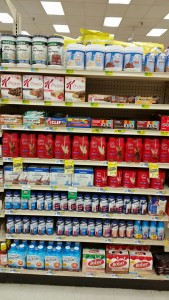
I often get asked about meal replacements such as Boost, Atkins, Slim Fast, Ideal Protein, etc. Are they good? Should I use them? What kind? etc… Our friends at County Fair Foods have a new supply of meal replacement and supplement products so we thought it was fitting to discuss this hot topic with everyone!
The Academy of Nutrition and Dietetics does approve the use of meal replacements for weight loss efforts: “Several studies comparing isocaloric diets have shown an equivalent or greater weight loss efficacy with structured meal replacement plans, compared to reduced calorie diet treatments. One or two daily vitamin- and mineral-fortified meal replacements, supplemented with self-selected meals and snacks, may be a successful weight loss and weight maintenance strategy for overweight and obese adults who have difficulty with self-selection of food and portion control.” (http://www.andeal.org/topic.cfm?cat=2886&conclusion_statement_id=250237&highlight=meal%20replacements&home=1).
The key words are one or two replacements/day, not your whole day and paired up with a well-balanced, calorie reduced diet. I typically recommend the use of these for the meal when the individual is on the run the most. Sometimes you are rushed in the morning to get to work or school and don’t have time for breakfast, in this case, a meal replacement may be a good idea…or maybe it’s lunch as you only get a short break and a meal replacement might fit in well here. The biggest thing to remember is you are drinking your meal, not eating it. Some people are truly satisfied this way and others are not. Personally, I do not use meal replacements because I know I need to “eat” my food to be satisfied rather than “drink” them…when I drink something, I feel like I still need to eat thus a meal replacement would only add more calories! Another reason why I don’t do meal replacements is I prefer real food. I would rather eat whole food than drink a supplement….but that’s just me.One more thing to consider is they are typically around 150-200 calories. This may not be enough for a meal, so you may consider adding a piece of fruit, salad, or yogurt to it to give you a little more substance.
Meal replacements do have a place in our society for helping people manage their weight, but there are many kinds so it’s important to check out the ingredients, nutrients, and prices. If you notice a really long ingredient list, there is more “stuff” added to the product and then you need to consider if you really need all of that extra “stuff.” Some ingredients can affect your body in certain ways, so you may need to check with your physician, pharmacist, or dietitian to ensure it is safe to consume. Costs also makes a difference. You have to remember that these companies are trying to make money off of you, so consider cost and value when you make your selection. In addition, it’s important to consider that a well balanced, portion controlled, healthy meal of real food can be cheaper than some supplement drinks!
You can choose an already made drink like the ones pictured above from Aisle 5 in County Fair Foods or you can make your own using protein powder, which they also carry. You can mix the protein powder with milk and drink or you can make a smoothie with it as well. Smoothies are a great way to get more fruits and vegetables into your daily intake along with the protein!
Below is a chart Alex Loes, SDSU Dietetic Student made for me to compare the various choices. I hope this helps you, but if you have any specific questions regarding choices, selections, or even disease states and the use of these, don’t hesitate to contact me. I’m here to help you as your credible and reliable nutrition information source!
-Kelsey Raml, MS, RD, LN
| Brand (oz/serving) |
Price/oz |
Calories |
Protein (g) |
Carbohydrates (g) |
Fiber (g) |
| Boost Calorie Smart (8) |
0.20 |
190 |
16 |
16 |
4 |
| SlimFast (10) |
0.11 |
190 |
10 |
29 |
5 |
| Shakeology (12) |
0.36 |
160 |
17 |
17 |
6 |
| Atkins (11) |
0.17 |
160 |
15 |
5 |
3 |
| Special K (10) |
0.14 |
190 |
10 |
29 |
5 |
| Ideal Protein (10) |
0.40 |
210 |
26 |
14 |
5 |
| Advocare (9) |
0.36 |
220 |
24 |
24 |
5 |
| Sanford Profile (9-12) |
0.25 |
100 |
15 |
7 |
0 |
by kelsey | Mar 24, 2015 | Cooking Tips, Diabetes, Diet, Food, Heart Health, Weight Management, Wellness/Health
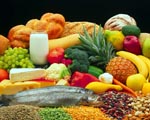
I couldn’t let the month of March slip away before celebrating one of the best parts of it: it’s National Nutrition Month! National Nutrition month is an annual event that reinforces the importance of developing healthy and balanced eating and activity habits. This year’s theme for National Nutrition Month is “Bite into a Healthy Lifestyle” which encourages all to develop habits of healthy eating and physical activity plans focused on eating less calories by making wise food choices and getting daily activity to help achieve a healthy weight and overall health, while reducing risk for disease. Fruits and vegetables are a great way to promote health and wellness while preventing disease. You all know this, but the doing it part, ie-eating 5 servings/day is typically missed and the majority are falling short in this area. To celebrate national nutrition month, I have included 20 ways to add fruits and veggies to your diet. This is something we all have to work at, including myself, so pick a few of these suggestions and give them a try! Strive to get 5/day along with a balanced intake of lean meats, whole grains, low fat dairy, and healthy fats. Balance, portion control, and moderation are keys to a healthy and successful diet!
1. Variety abounds when using vegetables as pizza topping. Try broccoli, spinach, green peppers, tomatoes, mushrooms and zucchini.
2. Mix up a breakfast smoothie made with low-fat milk, frozen strawberries and a banana.
3. Make a veggie wrap with roasted vegetables and low-fat cheese rolled in a whole-wheat tortilla.
4. Try crunchy vegetables instead of chips with your favorite low-fat salad dressing for dipping.
5. Grill colorful vegetable kabobs packed with tomatoes, green and red peppers, mushrooms and onions.
6. Add color to salads with baby carrots, grape tomatoes, spinach leaves or mandarin oranges.*
7. Keep cut vegetables handy for mid-afternoon snacks, side dishes, lunch box additions or a quick nibble while waiting for dinner. Ready-to-eat favorites: red, green or yellow peppers, broccoli or cauliflower florets, carrots, celery sticks, cucumbers, snap peas or whole radishes.
8. Place colorful fruit where everyone can easily grab something for a snack-on-the-run. Keep a bowl of fresh, just ripe whole fruit in the center of your kitchen or dining table.
9. Get saucy with fruit. Puree apples, berries, peaches or pears in a blender for a thick, sweet sauce on grilled or broiled seafood or poultry, or on pancakes, French toast or waffles.
10. Stuff an omelet with vegetables. Turn any omelet into a hearty meal with broccoli, squash, carrots, peppers, tomatoes or onions with low-fat sharp cheddar cheese.
11. “Sandwich” in fruits and vegetables. Add pizzazz to sandwiches with sliced pineapple, apple, peppers, cucumber and tomato as fillings.
12. Wake up to fruit. Make a habit of adding fruit to your morning oatmeal, ready-to-eat cereal, yogurt or toaster waffle.
13. Top a baked potato with beans and salsa or broccoli and low-fat cheese.
14. Microwave a cup of vegetable soup as a snack or with a sandwich for lunch.
15. Add grated, shredded or chopped vegetables such as zucchini, spinach and carrots to lasagna, meat loaf, mashed potatoes, pasta sauce and rice dishes.
16. Make fruit your dessert: Slice a banana lengthwise and top with a scoop of low-fat frozen yogurt. Sprinkle with a tablespoon of chopped nuts.
17. Stock your freezer with frozen vegetables to steam or stir-fry for a quick side dish.
18. Make your main dish a salad of dark, leafy greens and other colorful vegetables. Add chickpeas or edamame (fresh soybeans). Top with low-fat dressing.*
19. Fruit on the grill: Make kabobs with pineapple, peaches and banana. Grill on low heat until fruit is hot and slightly golden.
20. Dip: Whole wheat pita wedges in hummus, baked tortilla chips in salsa, strawberries or apple slices in low-fat yogurt, or graham crackers in applesauce.
http://www.eatright.org/nnm/handoutsandtipsheets/#.UyHnjs47Bw0
-Kelsey Raml, MS, RD, LN
by kelsey | Mar 18, 2015 | Exercise, Goals, Weight Management, Wellness/Health

I know with the snow this morning, you probably aren’t thinking about getting out to use the trail system for activity, but I am guessing you are probably wishing we were enjoying the warmer temps and nicer weather like we did this last weekend! The Park and Rec crew has already been out to the trails and working on cleaning it up and getting it ready for use. It’s a great part of Watertown and we want to encourage you all to use it, thus I wanted to inform you all of a great opportunity to utilize the Watertown trail system for exercise while participating in a challenge. Jeremy Herrboldt, adult and senior activities coordinator with the Watertown Park and Rec developed a really great program that is new this year. The details are below and it starts May 1st and runs through September 30th. This snow will be melting and the warmer temps will be coming back to stay soon, so be sure to check out this new challenge and get signed up by contacting Jeremy at 882-6260.
Watertown Recreational Trail Challenge NEW!
Ever wonder how many miles you have biked, run or walked on the Watertown Recreational Trail? Well this summer we want you to keep track and participate in the Watertown Recreational Trail Challenge. Starting May 1 you can stop at the Park and Rec. Fieldhouse and pick up a tracking sheet that also has the mileage chart for the Recreational Trail on it. Keep track of how many miles you bike, run or walk, then at the end of summer by September 30 just turn your tracking sheets back in and we will tabulate who the three people are who have biked, walked or run the most miles and those three will be recognized later in the month as the ones who put on the most miles on our beautiful trail system.
Dates: May1-September 30
Fee: Free
Location: All miles must be on the Watertown Recreational Trail
-Kelsey
by kelsey | Mar 17, 2015 | Cooking Tips, Diet, Food, Heart Health, Weight Management, Wellness/Health
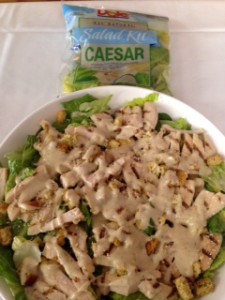
We had a great kickoff of our spring session of STRIVE 2 Survive last week! It’s always fun to start working with another great group of people all wanting to work on improving their health and wellness. I have said it before and will say it again…one of my favorite parts about the lectures is the great and healthy snacks County Fair Foods provides for us! These recipes are a must try!! The above picture is of Chicken Ceasar Salad. A great way to get your veggies and lean proteins all in one! Just be sure to watch the dressing! 😉
Crisp Cucumber Salsa

1/4 c is only 16 calories!! 🙂
Ingredients:
2 c finely chopped, seeded, peeled cucumbers
1/4 c chopped red onion
1 jalepeno pepper, seeded and chopped
1 garlic clove, minced or pressed
1 1/2 tsp lemon juice
1/4 tsp ground cumin
1/2 c finely chopped and seeded tomato
2 Tbsp minced fresh parsley
4 1/2 tsp minced fresh cilantro
1/4 c low fat Greek yogurt
1 1/2 tsp lime juice
1/4 tsp seasoned salt
Baked or whole grain tortilla chips
Directions: In a small bowl, combine first seven ingredients. In another bowl, combine the yogurt, lemon juice, lime juice, cumin, and seasoned salt. Pour over cucumber mixture and toss gently to coat. Serve immediately with chips.
Oatmeal Cookie
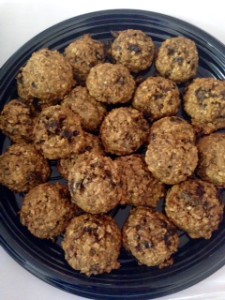
Ingredients:
2 Tbsp water
1 Tbsp ground flaxseed
1 c pitted dried plums, chopped
1 c chopped dates
1/2 c raisins
1/3 c butter, softened
1 egg
2 tsp vanilla
1/2 c unsweetened applesauce
1/4 c maple syrup
1 Tbsp grated orange peel
3 c quick oatmeal
1 c flour
1/2 c whole wheat flour
1 tsp baking soda
1 tsp ground cinnamon
1/2 tsp salt
1/4 tsp ground nutmeg
1/4 tsp ground cloves
Directions: In a small bowl combine water and flaxseed. In a large bowl combine the plums, dates, and raisins, cover with boiling water and let stand for 10 minutes. In another large bowl, cream butter and brown sugar until light and fluffy. Beat in egg, vanilla, applesauce, maple syrup, and orange peel. Combine all other dry ingredients together and gradually add to creamed mixture and mix well. Drain plum mixture. Stir in plum mixture and flaxseed into dough. Drop by tsps onto lightly greased cookie sheet and bake for 8-10 minutes at 350 degrees F.
All ingredients can be found at County Fair Foods! Enjoy!!
-Kelsey
by kelsey | Feb 26, 2015 | Cooking Tips, Diet, Food, Weight Management

Fish is not the most popular protein in our area since we are a land locked, northern state. Our mid-western diet typically includes proteins from beef, chicken, and pork…and fish often gets overlooked. During the Lenten season, it’s a good time to try out some new varieties and types of fish as they are better stocked and often times are better priced (ie- salmon, mahi-mahi, talapia, etc). The frozen bags of fish often have the filets in individual servings or two servings in a wrap so you can just take out as much as you need and then put the rest of the bag back in the freezer. Fish is a very lean and low fat protein so if you are watching your weight, it’s a good choice. Another benefit of some types of fish is the omega 3 fatty acids. Fatty fish such as herring, trout, tuna, mackerel, seabass, and salmon have these good fats. Our fresh water fish from around here such as walleye, northern, and perch, do not have these fats, however they are still lean proteins. It is recommended to incorporate two servings of fish into your weekly intake, so get into the habit of this during Lent and it could stick!
When we eat fish, we often think of it as breaded and fried, however that is not the healthiest choice. Instead of frying try these cooking methods:
- Grill: Season the fish with herbs and spices and a little lemon juice (from real lemons!). Lightly brush the fish with a little olive or canola oil so it won’t stick to the grill and cook for 10-20 minutes. The picture shows one of my favorites: grilled shrimp.
- Saute: You can saute any type of skinless fish. Again, season as desired and then heat a little olive or canola oil in the skillet on medium-high. Cook the fish for 2-3 minutes on both side.
- Poach: Place the fish in a saucepan or deep skillet and add enough stock, water, or wine to barely cover the fish. Add your seasonings, herbs, or spices and bring the liquid to a simmer on medium heat. Simmer for 10 minutes or until the center is opaque. Then you can dress it up with a sauce if desired.
- Bake: lightly coat a baking sheet with cooking spray and arrange the seasoned fish fillets on the sheet with seasoning. Bake for 7-10 minutes…you do not need to flip the fish. You can also put the fish filet in tin foil so the seasonings and herbs really flavor the fish.
- Broil: season the fish filet and brush with olive oil. Place on a broiler pan rack and broil 4-6 minutes on each side.
- If you choose to fry, try making it a little healthier by using an egg white to coat your filet, use canola oil to fry in, and instead of the white flour coating, try whole grain cracker or bread crumbs.
- When your fish is opaque and flakes easily, your fish is fully cooked.
Give it a try…you may be surprised how much you like it!
-Kelsey
by kelsey | Feb 5, 2015 | Cooking Tips, Diet, Food, Heart Health, Weight Management, Wellness/Health

In celebration of National Heart Month, I think it’s fitting to discuss the significance diet and activity play in promoting a healthy heart. Heart disease is the number one killer of Americans and affects both men and women. Genetics do play a role, however a heart healthy diet and and regular activity can help minimize the effects and complications of heart disease. Whether you have heart disease in your family or not, it’s still good to follow a heart healthy eating plan. Highlights of the diet include:
- Lots of fruits and veggies! I’m sure you already knew this one, but the benefits of getting your 5 a day servings of fruits and veggies are worth reminding you again. Most of us know this, the hard part is doing it. Try adding them to your meals, have fruit as a snack, get a double serving to help you reach this goal.
- Fiber! Fiber is very beneficial in combating heart disease. Incorporating more whole grains (and fruits, veggies, and beans/lentils) into your diet will increase your fiber and aid in heart health. Oatmeal, brown rice, wild rice, whole grain noodles, whole grain breads, and even popcorn are considered whole grains. Aim to get at least 25-35 g/day.
- Choose lean proteins. Decreasing the amount of saturated fat in your diet will help reduce plaque buildup. Choose white meat poultry without the skin, 90% or greater lean hamburger, fish, beans, etc….stay away from processed meats! Fatty fish such as salmon, tuna, herring, and trout offer additional benefits as they are loaded with healthy omega 3 fatty acids.
- Choose healthy fats. Incorporating more plant fats such as canola oil and olive oil into your diet and reducing your intake of saturated and trans fats has been shown to improve heart health. You want to choose foods that are lower than 5-8g of total fat per serving and <3g saturated and trans fat per serving. Choosing low fat dairy products will help reduce the amount of saturated fat in your diet as well.
- Hold the salt! Excess sodium can increase blood pressure and cause heart failure. Aim to keep your sodium intake below 2400mg/day. You can do this by doing more home cooking, avoiding boxed or packaged goods, cooking with salt free seasonings, and not using table salt.
- Exercise! At least 30 minutes of exercise a day has been shown to improve heart health. If you can do more, the better!
Making small changes or substitutions will help you have a healthier heart and reduce risk for disease. Reading labels is really essential to help you make good choices, so take some time in the grocery store and really examine the products to ensure you’re making healthy choices!
-Kelsey
