by kelsey | Jun 25, 2014 | Diabetes, Diet, Food, Heart Health, Weight Management, Wellness/Health

I am excited to inform you all that Brown Clinic was selected to participate in a nutrition research study with South Dakota State University’s Nutrition Department regarding metabolic syndrome. The study will be testing two diets (the DASH diet and the BOLD diet) and their effects on metabolic syndrome.
- DASH diet–Dietary Approaches to Stop Hypertension: Considered the “gold standard” heart-healthy diet, this eating plan featured vegetables, fruits and low-fat dairy and limited red meat and sweets
- BOLD diet–Beef in an Optimal Lean Diet: Similar to the DASH diet (rich in vegetables, fruits, whole grains, nuts and beans) and protein amount, but uses lean beef (4 oz./day) as the primary protein source, whereas the DASH diet used primarily white meat and plant protein sources.
Participants must:
- be between 18-65 years of age
- have central obesity (waist circumference >35 in, in women and > 40 in, in men)
- and 2 of the 4 following risk factors to be included in the study:
- elevated triglyceride concentrations (150 mg/dL)
- low high-density lipoprotein (HDL)
- cholesterol (< 40 mg/ dL in men and < 50 mg/dL in women)
- high blood pressure
- elevated fasting plasma glucose (=100 mg/dL)
Participants will receive the following:
- Tailored diet instructions and weekly exercise goals at your initial meeting (free to the participant).
- Two follow-up meetings with the Registered Dietitian Kelsey Raml (free to the participant). Duration of the study is 10-12 weeks long.
- Free lab work at the beginning and end of the study.
- Compensation for this study is limited to tailored diet instructions and $100 in HyVee gift cards upon completion of required steps.
This study is funded by the South Dakota Beef Council. I am really excited to be a part of this study as the results could play a significant role in nutrition recommendations for metabolic syndrome!
If you are interested in participating, please contact me to determine if you are eligible! If you know of someone who may be interested, feel free to share this information with them and get in contact with me!
Thank you!
Kelsey Raml, MS, RD, LN
Registered Dietitian
605-884-4226
kelsey.raml@brownclinic.org
by Dan | Jun 22, 2014 | Equipment, Exercise, Family, Goals, Heart Health, Motivation, Weather, Wellness/Health

It is officially Summer time! Get outside and enjoy the weather when it is nice. Here Zeus is taking Sarah for a walk. He is ready to go, holding the leash in his mouth. He starts out of the gates strong, but then starts to fade before too long.

He is still leading the pack, but we get about a 1/4 mile down the trail, and he has to rest, and looks at us thinking “you can carry me anytime now!” We just take a rest, then go off again. His stamina is increasing, just like all of us when we start out. We have to start slow, keep going, and then gradually keep increasing the time. Walking, running, biking…whatever! Just get out and move!
After our run this AM with the running club, I took off on my bike around the lake..15 miles. Great day for a ride.

There is a variety of activities to do, just take advantage of this time of year, and get out. Take your spouse, kids, significant other, friend, pets, other relatives…whoever! Motivate each other to keep going. Enjoy the weather while we can. Keep moving everybody!
Dr. Dan
Consecutive Exercise Day #: 2459
by Dan | Jun 15, 2014 | Exercise, Family, Heart Health, Motivation, Wellness/Health

I want to wish all you Dad’s out there a Happy Father’s Day! You help us stay on track, are there to watch our back continuously, and you always show us how much you love us! Appreciate you Dad’s while you can, as we don’t know when we are not going to have them around anymore. I miss my Dad every day…but I always have his memories. If he told me anything, it included, by his actions, how important family is, and should always be. I am trying to be there for my kids as much as I can as well.

I have stated many times that my reason for the consecutive exercise, and trying to take care of my health, all revolve around 4 goals. Those goals remain the same, and they are: Sarah, Megan, Molly, and Nick. Thank you for all you do for me as well. I am the father for you three, but I hope you will always refer to me as Dad…that has much more meaning to me. It takes someone special to be a Dad. Happy Father’s Day to all you Dad’s out there! Keep moving everybody!
Dr. Dan
Consecutive Exercise Day #: 2452
by kelsey | May 14, 2014 | Diet, Food, Heart Health, Weight Management, Wellness/Health
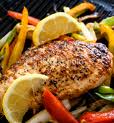
Today’s topic is another reader request! Thanks for all of the requests!! It has been fun covering topics you’re interested in and want to learn more about! High protein diets are very popular and two common ones are the Atkins and Paleo Diets. South Dakota State University Dietetics Student Jessica Claussen reviewed them both for you below.
The All-New Atkins Advantage Diet, Pros and Cons
This diet plan contains a 12-week, low carbohydrate diet to lose weight, which also incorporates exercise into the individual’s life. The first phase of the diet only allows 20 grams of carbohydrates and to eat about 6 ounces of protein at each meal. This phase can sometimes last about 6 months for people. After the first phase than the individual gradually adds small amounts of carbohydrates to the diet. Throughout the first phase the individual could consume less than 130 grams of carbohydrates, which is the minimum amount of carbohydrates needed daily to provide glucose for the proper brain function.
The high protein content of the plan means eating less whole grains, fruits and vegetables, which reduces the amount of vitamins, minerals, phytochemicals and fiber consumed. Also, The high proportion of dietary protein means eating more unhealthy saturated fat and cholesterol. The high protein diet could also place a strain on the kidneys. A high-protein diet may worsen kidney function because your body may have trouble eliminating all the waste products of protein metabolism
Atkins also claims that “natural fats”, including saturated fats, are vital to good health, which can be very misleading. People may become confused and think they need to consume excess amounts of saturated fats. When research supports that a diet rich in saturated fats can lead to heart disease.
It is not recommend that a low-carbohydrate diet is used for weight loss. People should be following a well-balanced diet rich in whole grains, fruit and vegetables.
Paleo Diet: Pros and Cons
The Paleo Diet, which is also known as the caveman diet, has the idea that if we ate as our ancestors did we would weigh less and be healthier. That means that a person can only eat what can be hunted or gathered. That means no grains, dairy, legumes, sugar or salt.
The positive of this diet is that it encourages people to consume more fruits and vegetables, and to cut out their added sodium and sugar intake. The combination of fruits, vegetables, and a diet rich in protein can help control blood sugar and to regulate blood pressure.
The negatives of this diet is that it excludes whole grains, fruits, and dairy products. These foods are rich in nutrients and contain important vitamins and minerals such as calcium and vitamin D. Also whole grains are rich in fiber, which may help reduce your risk of heart disease, cancer, and diabetes. Without consuming these foods, a supplement would be necessary. So limiting whole grains, fruits, and dairy is not necessarily the way to prevent disease and ensuring weight loss.
The Paleo Diet also encourages consuming a great deal of bacon and butter, which is high in saturated fats and sodium. Bacon does not have a lot of nutritional value. Coconut oils are also encouraged. Coconut oil is also high in saturated fats. Other common oils such as canola, sunflower, and extra-virgin olive oil contain significantly less saturated fat than coconut oil.
The Paleo diet may be hard to continue, because wild game is not readily available and most of the meat we consume is domesticated. The fruits and vegetables that we eat has been processed rather than grown and gathered in the wild. It is possible to modify the plan, but even than there are additional costs, lack of variety and the need for planning.
-Jessica Claussen, SDSU Dietetics Student
Overall, high protein diets can be done, but need supervision as if done incorrectly they can cause damage to our kidneys, liver, heart, central nervous system, brain, and bones. In addition, they typically always promote weight loss due to the lack of carbohydrates and low calories, but that weight is usually gained back after going off the diet and can contribute to a pattern of yo-yo dieting. Balance, moderation, and portion control are still keys to a successful diet long term!
-Kelsey
by kelsey | May 8, 2014 | Cooking Tips, Diet, Food, Heart Health, Weight Management, Wellness/Health
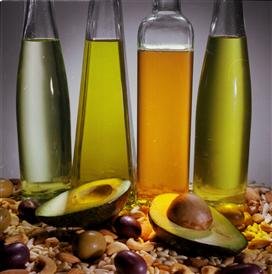
I had a few readers request I cover the topic of saturated fats as there have been a lot of mixed messages about these fats lately, so how do you know what to believe?! First off, lets cover the differences between the various types of fats:
Fat: One of three nutrients supplying energy to the body (the other two are protein and carbohydrate). Fat provides 9 calories per gram, more than twice the calories per gram provided by carbohydrate or protein.
Total Fat: includes saturated, monounsaturated, and polyunsaturated fats in food.
Saturated Fat: solid at room temperature and the main dietary cause of high cholesterol. Found mostly in animals and in some plants including: coconut, coconut oil, palm oil, pal kernel oil, and cocoa butter.
Trans Fatty Acid: a fat produced when liquid fat is turned into a solid fat through hydrogenation; raises LDL cholesterol and lowers HDL cholesterol.
Polyunsaturated Fat: liquid at room temperature and are from vegetable sources including corn, safflower, sunflower, soybean, cottonseed, and sesame seed oils. They are associated with lowering blood cholesterol levels when used in place of saturated fats in the diet. Can promote inflammation in high amounts.
Omega 3- Fatty Acid: type of heart-healthy polyunsaturated fat found in flaxseed oil, tree nuts, and especially fatty fish such as salmon, trout, sardines, and herring.
Monounsaturated Fat: liquid at room temperature and found in canola oil, olive oils, peanut oil, peanut butter, peanuts. Associated with lowering blood cholesterol.
Since saturated fat’s chemical composition makes it a solid fat, that’s exactly what it does inside our body…clogs our arteries causing increased risk for heart disease and stroke. “The American Heart Association recommends limiting the amount of saturated fats you eat to less than 7 percent of total daily calories. That means, for example, if you need about 2,000 calories a day, no more than 140 of them should come from saturated fats. That’s about 16 grams of saturated fats a day.” [http://www.heart.org/HEARTORG/GettingHealthy/FatsAndOils/Fats101/Saturated-Fats_UCM_301110_Article.jsp.] A diet low in saturated fats is also supported by the Academy of Nutrition and Dietetics. A good way to keep our heart healthy is to replace the solid or saturated fats with monounsaturated and/or polyunsaturated fats that are liquid, such as replacing the solid butter with olive oil, canola oil, etc. You can also increase your consumption of fish and nuts as they have higher contents of these healthy fats as well.
Two common confusing parts of this concept are beef consumption and coconut oil.
BEEF: Did you know that beef is 20% leaner than it was about 15 years ago? There are at least 29 cuts of lean beef which means they meet the government guidelines for lean, meaning each cut has less than 10g of total fat, less than 4.5 g of saturated fat, and less than 95mg of cholesterol (in a 3 oz serving). Beef has often gotten a bad rap, but in reality it can be part of a healthy diet when choosing the lean cuts and healthy cooking methodss. Here are some tips for you to make beef a part of your heart healthy meals:
- Look for key words such as “round” or “loin” …these are typically leaner cuts
- Choose 90% or greater lean beef. This means in a 3oz serving there is less than 5g of fat in it.
- Use healthy cooking methods such as grilling, broiling, baking, roasting, or braising. The less tender cuts can be marinated in a tenderizing marinade such as salsa or light Italian dressing.
- Trim the fat! Trimming the fat before cooking will help eliminate some of the fat from the cut.
- Cook with fresh ingredients such as lemon juice, peppers, onions, garlic, and herbs instead of adding extra fat to the cut.
- Practice portion control. Select the 3-5 oz serving over the 10oz.
COCONUT OIL: Coconut oil has gotten more popular over the last few years. Many are choosing it over the olive oil now and it’s somewhat become a craze. Coconut oil is a saturated fat and when looking at it, you can see that as it’s solid. The big debate about it, is that the primary fat of coconut oil is “lauric” acid (a type of fatty acid) that is absorbed by the body differently than the other common saturated fat, stearic acid. The make up of coconut oil is a medium chain triglyceride (type of chemical structure) and the MCTs tend to increase HDL (good) cholesterol better than other saturated fats such ad lard and butter. Many unsaturated fats such as olive oil decrease LDL (bad) cholesterol, improve total cholesterol/HDL ratio, and can also increase HDL cholesterol as well. As you can see this is a very complex concept and subject that involves food science, chemistry, etc. There are compelling arguments on both sides, which makes it very confusing for the consumer. Overall, coconut oil can play a role in raising HDL and provides flavorful cooking, but it does have a significant amount of calories and does promote increased total cholesterol levels…especially when compared to unsaturated fats such as olive oil, canola oil, peanut oil, avocados, nuts, and salmon. Since it is still a saturated fat, I recommend to limit the consumption and practice moderation with it.
Overall, saturated fats are still recommended to be limited in our diets due to their link to heart disease, but there are some interesting concepts to learn and understand about this topic. The good fats, mono- and poly-unsaturated fats should be included in our diets as they promote heart health, so some fat is actually a good thing. It’s hard to cover this type of topic in a blog post because it is so complex, so if you want to learn more about it and/or discuss it further with me, feel free to contact me anytime!
-Kelsey
by Dan | May 1, 2014 | Exercise, Goals, Heart Health, Wellness/Health
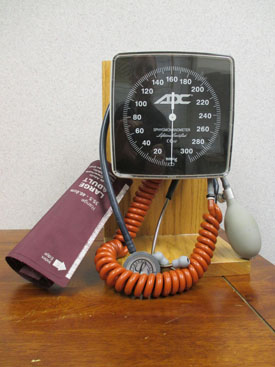
May is National Blood Pressure Month. It is important for all of us to keep track of what our blood pressure readings are. Normal blood pressure is considered 120/80, and the goal is to have everybody be no higher than 140/90. We have talked many times on this blod about the importance of both diet and exercise for our health, and no where is it more important than in relation to our blood pressure. Nearly 68 million people in the U.S. have high blood pressure, or hypertension. Hypertension increasese the risk for heart disease and stroke, the first and third leading cause of death in the United States.

Get your blood pressure checked, and if it is elevated, see your doctor about what options are available to control it for you. Take control of your blood pressure, before it takes control of you! Keep moving everybody!
Dr. Dan
Consecutive Exercise Day #: 2407
