by kelsey | Jan 31, 2013 | Cooking Tips, Food, Weight Management, Winter
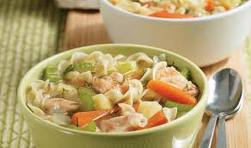
The weather is making headlines today as we woke up to -40-50 below with wind chill. It’s very hard to get motivated to do anything on days like today as we’d rather just curl up in a blanket in our sweatpants and watch a movie. Even though we may feel like being a bum, it’s still a good time to get a little workout in which will help raise your body temperature and give you more energy throughout the day. We also typically eat more soups, stews, and hot-dishes on days like this. If you are watching your waist line, it’s important to be careful of how much you consume of these foods as they can be high in calories, fat, and carbs… depending on how you prepare them. Broth based soups and stews are lower in calories and fat than cream based. In addition, if you’re making a hot dish, you may consider cutting calories by choosing fat free soups to add to your dish, such as fat free cream of chicken or mushroom soup. They also have low sodium varieties of these so if you’re watching your blood pressure or sodium intake, you may consider using this variety. And, as always, be sure to incorporate your lean proteins and plenty of fruits and veggies to your meal. Two of my favorite cold weather meals are my mom’s beef stew that has carrots, peas, potatoes, onion, and roast meat and her chicken noodle soup that also has plenty of veggies with white meat chicken. Nothing beats either of these on a cold winter day!
If you venture out today, be sure to dress appropriately and cover up!
-Kelsey
by kelsey | Jan 30, 2013 | Diet, Food, Weight Management, Wellness/Health
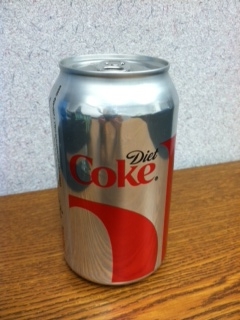
Do you ever feel like you just don’t have any energy or can’t get your steam up to get that list done? I’m sure most of us have felt this way before! Many people turn to caffeine to help give them a boost…and that caffeine is found in a variety of sources from coffee, tea, pop, to energy drinks. Energy drinks have gotten very popular over the last few years and are more prominent in the younger generation. Recently, the FDA has cracked down on makers and suppliers of energy drinks as there have been several reports of adverse affects including 18 deaths related to consumption of energy drinks. Energy drinks have a lot of sugar and caffeine. Caffeine can act as a stimulant and cause a variety of adverse effects, which is why we recommend limiting your caffeine to 200-300mg a day. To put this in perspective, this would be equivalent to 2-4 cups of coffee. A can of Diet Coke has about 42 mg, Mtn Dew has about 55 mg, a latte about 150 mg, and a cup of green tea has about 24-40 mg. The energy drinks have have a lot more than these options. For example, Rockstar drinks can range from 80-240mg depending on the kind, a Red Bull has about 75-80 mg, 5 hr Energy has about 215-240 mg of caffeine.
Many times, a person may have a combination of an energy drinks and other caffeine sources such as coffee or pop, thus making their total consumption of caffeine very high. I encourage you to reflect on the amount of caffeine you take in and if you are getting over the 200-300 mg/day, you may consider switching to decaf or caffeine free products. If you are using caffeine to keep you awake, you may consider reflecting on your sleep habits as well and work at improving them to keep you more alert during the day! For more information on energy drinks and caffeine content, click the link for a complete list from the Natural Medicines Comprehensive Database: http://naturaldatabase.therapeuticresearch.com/ce/ceCourse.aspx?cs=&referer=EUPDATE201301&utm_source=default&utm_campaign=eupdate&pm=5&pc=13-900&utm_content=block1link5&utm_medium=012013eupdate.
-Kelsey
by kelsey | Jan 15, 2013 | Diet, Food, Weight Management, Wellness/Health
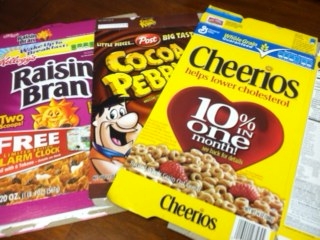
One of the most challenging aisles in the grocery store is the cereal and granola bar aisle as there are so many choices and it’s hard to know what’s good and what’s not! For those regular followers of our blog, you probably know by now that you should choose a whole grain cereal, but from there…how do you decipher which choice is better than another?! Well, let’s start with the basics…you want to avoid any of the real high sugar cereals such as Lucky Charms, Cocoa Pebbles, etc due to their high levels of white, refined sugars.
Here are some tips to help you make a healthy choices:
• 8 grams (g) of sugar or less/serving, if the cereal contains 3 g or less of fiber/serving
• 16 g or less of sugar/serving, if the cereal contains 5 g or more of fiber/serving
Note: raisin bran contains 20 g of sugar/serving and is the exception to the rule—still a great choice due to its higher fiber content)
• Instant hot cereals should contain no more than 100-150 milligrams (mg) of sodium/serving
In addition, be sure to fully read the nutrition facts label and not rely on the manufacturers marketing claims as they can often be misleading!
A way to make breakfast a more balanced meal is to add a source of protein and a serving of fruit to your meal. With the balance of protein, fiber found in your cereal, and some natural sugars, you are set to start your day off in a great way!
-Kelsey
by kelsey | Jan 10, 2013 | Diet, Food, Weight Management, Wellness/Health
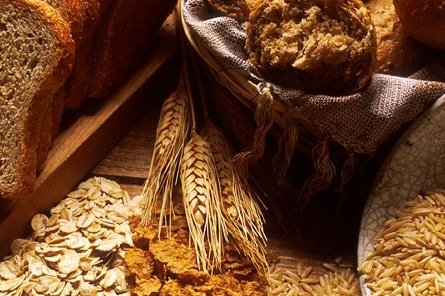
The gluten free diet is a medically necessitated diet…for some people. It is also the newest diet trend sweeping the nation.
So what is gluten? Gluten is protein found in wheat, rye and barley. For some individuals, consuming gluten in any form causes an immune response that damages the small intestine. This damage is a big deal. The lining of the small intestine contains million of tiny, fingerlike projections called villi. Villi function to absorb nutrients from the food we eat. In people with celiac, consuming gluten destroys the villi and limits the body’s ability to absorb nutrients.
Currently, it is estimated that celiac disease affects approximately 1% of the U.S. population. This is about1 in every 133 people and this number may be on the rise. The only treatment for celiac disease is strict adherence to a gluten free diet. And gluten seems to be in everything: pasta, pizza, breads, gravies, sauces, soups and more. Grains to avoid and grains that are safe for the gluten free diet are listed below:
|
Grains to Avoid
|
Safe Grains/Grain Alternatives
|
|
Wheat
(includes spelt, kamut, semolina, triticale)
|
AmaranthBuckwheat
Corn |
Bean/Legumes(chickpeas, lentils, peanuts, soy, kidney, navy etc. |
|
Rye
Barley
(including malt)
|
MilletQuinoa
Rice |
Nuts(almonds, walnuts, chestnuts et) |
|
SorghumTeff
Oats* |
Tubers(Arrowroot, potato, tapioca et. |
*There is currently some controversy surround the safety of oats in the gluten free diet. Rolled oats are subject to significant cross-contamination during processing. Steel-cut oats are currently acceptable; however proteins in oats called avenins are currently being studied for potential reactivity in gluten free patients. At this time, oats are allowed in the gluten free diet based on individual tolerance
Following the gluten free diet has gotten much easier in the past few years. Gluten free products are becoming more mainstream. They are more available in regular grocery stores and more companies are beginning to manufacture gluten free products or at least label that their products are gluten free. The quality of gluten free products is improving as well. But there are still nutritional challenges with the diet. Gluten free products are typically not enriched or fortified with iron, folate, B vitamin, niacin, riboflavin or thiamin like normal grain products. Gluten free products typically contain much less fiber as well, since white rice flour is often a main ingredient. Finally, to compensate for poor flavor or texture, gluten free products often have more sugar or fat added to them, which can lead to weight gain.
The moral of this story is that unless you have been diagnosed with celiac disease by a licensed, medical practitioner there is absolutely ZERO reason for you to follow a gluten free diet. In fact, it can be harmful to your health if you don’t plan properly due to a lack of several nutrients. Any major diet change, be it gluten-free, vegan – whatever—should be discussed in with your medical provider and registered dietitian to make sure you are getting the calories and nutrient that you need.
Please note: There are very specific tests and procedures used to diagnose celiac disease. It is not recommended to begin following a gluten free diet until these have been completed. Please contact your medical provider for more information.
Fasano, A., Berti, I., Gerarduzzi, T., Not, T., Colletti, R., Drago, S., & … Horvath, K. (2003). Prevalence of celiac disease in at-risk and not-at-risk groups in the United States: a large multicenter study. Archives of Internal Medicine, 163(3), 286-292.
Fric, P., Gabrovska, D., & Nevoral, J. (2011). Celiac disease, gluten-free diet, and oats. Nutrition Reviews, 69(2), 107-115. doi:10.1111/j.1753-4887.2010.00368.x
Green, P., & Cellier, C. (2007). Medical progress: celiac disease. New England Journal Of Medicine, 357(17), 1731-1743
-Submitted by Chelsea Rambo, MS – USD Dietetic Intern
by kelsey | Jan 9, 2013 | Cooking Tips, Diet, Food, Weight Management
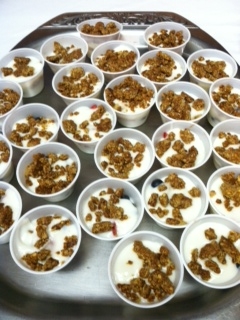
County Fair Foods treated us to some delicious treats last night at our STRIVE 2 Survive kick-off! My personal favorite was the Berry Parfait. They’re super easy to make and loaded with great nutrients. This treat is a good breakfast or a snack….be sure to give it a try!
Berry Parfait
3/4 c sliced strawberries
3/4 c blueberries
1 6 oz tub fat free vanilla yogurt
1 tbsp wheat germ
1/2 banana sliced
1/3 c granola
Layer all of the ingredients in a bowl or cup using about 1/3 of each until you have used all of your ingredients. Enjoy!
-Kelsey
by kelsey | Nov 6, 2012 | Cooking Tips, Food

Have you ever wondered what the proper storage for certain foods is? I like to read the daily updates and news bits on the Academy of Nutrition and Dietetics website (eatright.org) and today’s post was especially interesting! I encourage you to check out the full story at: http://www.eatright.org/Public/content.aspx?id=6442472969#.UJmCvpFub4s. From the proper way to store honey, to keeping tomatoes fresh, to olive oil and butter, this short clip provides you the recommendations to keep your foods fresh and safe to consume! I also encourage you to check out the Food Safety site: http://www.foodsafety.gov/keep/charts/index.html for your complete storage guide! Not only does proper storage keep your food safe to consume, it also allows you to enjoy it and get all of the nutritional benefits.
-Kelsey
