by kelsey | Jul 13, 2017 | Diabetes, Diet, Food, Weight Management, Wellness/Health

There’s a lot of buzz about carbohydrates….are they good? Are they bad? How much should you have? , etc etc etc. Many fad diets that are very popular right now are no carb diets so I thought it would be appropriate to discuss carbohydrates and give you a better idea of the professional recommendations! Carbohydrates are the main (and best) source of energy for your brain and central nervous system. Carbohydrates are essential for energy; however they raise your blood sugar levels higher and faster than any other kind of food. Carbohydrates are essential for your body to be able to sustain energy, so just like a car needs the right type of fuel (gas) to run, you need the right kind of fuel (food) to function and be healthy. To sustain energy, your body needs adequate carbohydrates: 50-60% of your total calories should come from carbohydrates. Cutting out all carbs can be very detrimental to our body, especially our brain, central nervous system, liver, kidneys, and heart. Because they are an excellent source of energy, but they do raise blood sugars, it’s important to recognize the types of carbohydrates and how to count them in efforts of controlling your blood sugars while still maintaining good health and adequate energy..
Carbohydrates are found in the following:
Starches: found in grains, some vegetables, and beans.
- Grains: bread, pasta, cereal, tortillas, rice
- Starchy Vegetables: potatoes, peas, corn, yams, squash
- Beans: kidney beans, pinto beans, black beans, garbanzo beans, and lentils
- **The best and recommended sources of starches are whole grains…choose them over the white, refined grains!
Sugars: found naturally in foods or added to foods.
- Natural Sugars: fruits, fruit juices, dairy products, honey, and molasses.
- Added Sugars: desserts, processed foods, candy, regular soda, and fruit drinks.
- **Natural sugars are better than added sugars, but large quantities of them can still raise your blood sugars…we recommend getting at 2-3 fruits and 3 servings of veggies/day. Anytime you can limit or eliminate the added sugars, do so!
To aid in ideal blood sugar control, we recommend a moderate intake of carbohydrates which means about 45-60g/meal and 15-30g/snack with several small meals and snacks throughout the day. I visit with patients daily about finding the right balance in their intake. If you would like help managing your blood sugars, to learn more about diabetes self care, or a personalized nutrition plan, be sure to contact me for further help!
-Kelsey Raml, MS, RD, LN
by kelsey | Jun 21, 2017 | Cooking Tips, Diet, Food, Weight Management, Wellness/Health

Yesterday I had the opportunity to attend a farm tour around the Brookings area. We toured Baby Bel’s plant, a dairy, VanderWal’s feedlot, and the SDSU Cow/Calf Unit. It was a great day of learning and exploring where our food comes from and the practices involved of getting food to our tables. Dr. Russ Daly, DVM discussed some hot topics such as antibiotic and hormone use. I posted this write up below a few years ago and thought it was worthy of reposting as it addresses the hot topic of hormone use and beef. If you have any questions after reading the facts, please contact me. I am more than happy to help diminish the confusion on this topic!! 🙂
I recently came across a really well written, credible, and easy to understand article regarding hormones in beef. There are a lot of mixed messages and concerns about the use of hormones in our meat production. Hormones are found in all multi-cellular organisms, which does include animals, vegetables, etc. Sometimes producers will use hormone implants which cause the meat to have a little bit more hormones than a non-implanted animal. Federal laws prohibit the use of hormones in hogs and chickens, but it is permissible in beef. The reason producers use implants are to increase efficiency, meaning the cow will gain more muscle, from less feed, more quickly. This really helps keeps prices down of the meat and reduces environmental impact. When implanted, the meat will contain a slightly higher amount of estrogen in a 3 oz serving (1.9 nanograms compared to 1.3 nanograms in non implanted meat). Many people are concerned that the extra estrogen is causing a variety of other issues such as early puberty or faster growing children.
Now here’s where you you pay special attention: our own bodies produce hormones naturally, a child will produce around 50,000 nanograms of estrogen/day and an adult female will produce about 480,000 nanograms of estrogen a day. In addition, when hormones are eaten and digested, they are not able to act as hormones anymore….but even if they did, that 1.9 nanograms in a 3 oz serving of meat is pretty small compared to our own natural production. In addition, it’s important to point out that many other foods have much more estrogen in them naturally, such as potatoes have 225 nanograms, peas have 340 nanograms, icecream-520 nanograms,cabbage- 2000 nanograms, and soy milk has 11,250 nanograms (all based on 3 oz servings). Also, one birth control pill has about 35,000 nanograms of estrogen. So here’s the bottom line, the hormones found in implanted beef are miniscule compared to our own production of hormones and various other foods we normally eat. I personally, am not concerned about this practice and feel it is safe to consume and we shouldn’t have any concerns about it. Now if you are still concerned, even after reading this and learning more from other credible resources, then you certainly can choose organic foods or grass fed meat (they may be higher in price and have a bit different taste, but they are an option for you). Lastly, this also brings us to the very important point that I have mentioned many times: moderation! When you prepare your meals, be sure to plan in a variety of other whole foods withe your lean meats, such as fruits and veggies and whole grains to create a well-rounded, balanced healthy plate!
-Kelsey
http://newsroom.unl.edu/announce/beef/2846/15997
by kelsey | Jun 14, 2017 | Food

The recent storms reminded that we are due for our annual post about food safety and power outages. I think this content is very important to review during times like this when we can lose power due to summer storms. Without power to your freezer or fridge, the safety of your food is at risk…especially when it’s 80 degrees out. If you don’t have one already, be sure to get a thermometer for your fridge and freezer so you are able to monitor and track temperatures appropriately…and be sure to follow these recommendations below.
Keeping cold foods cool and hot foods hot may be a challenge without power so follow these recommendations to keep your food safe in an emergency.
- Keep the refrigerator and freezer doors closed as much as possible to maintain the cold temperature. Watch the temp on both using a thermometer. You want your fridge to stay under 40 degrees and your freezer under zero degrees F.
- The refrigerator will keep food safely cold for about 4 hours if it is unopened.
- A full freezer will hold the temperature for approximately 48 hours (24 hours if it is half full) if the door remains closed.
- If are you able to, get dry or block ice to keep your refrigerator as cold as possible if the power is going to be out for a prolonged period of time. Fifty pounds of dry ice should hold an 18-cubic foot full freezer for 2 days.
- If you are wondering if your food is safe to consume, you need to evaluate each item separately using a thermometer as you cannot rely on the appearance or odor! If the food still contains ice crystals or is 40 °F or below, it is safe to refreeze. Refrigerated food should be safe as long as power is out no more than 4 hours. Keep the door closed as much as possible. Discard any perishable food (such as meat, poultry, fish, eggs, and leftovers) that have been above 40 °F for 2 hours. Remember…it’s better to discard and buy new than risk it and get sick!
For more tips and detailed recommendations please visit the USDA’s website: http://www.fsis.usda.gov/Fact_Sheets/keeping_food_Safe_during_an_emergency/index.asp .
-Kelsey
by kelsey | Jun 6, 2017 | Cooking Tips, Diet, Food, Weight Management, Wellness/Health
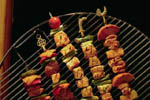
Grilling is a great way to change up cooking techniques and try new flavors after a cold winter season. Spice up any cookout by adding fruits and vegetables to the menu. Beyond the benefits of adding color, variety and flavor, fruits and vegetables can also add a variety of vitamins and nutrients. Keep in mind the Dietary Guidelines for Americans recommend to fill half of your plate with fruits and vegetables at each meal.
Kabobs are a great item to include marinated vegetables like red or yellow peppers, mushrooms, eggplant, cheery tomatoes, and onions. Simply brush your favorite vegetables with olive or canola oil and your favorite spices and grill over medium heat, turning until marked and tender.
When grilling meat, choose healthier options like lean cuts of beef, pork, chicken, or fish. Be sure to keep raw meat, poultry, and their juices separate from ready-to-eat foods avoiding cross contamination. This can be done by using separate plates, cooking utensils, and cutting boards. Frozen foods should be thawed in a refrigerator or the microwave, not on the countertop or by the grill. Also remember to use a food thermometer when cooking meat, poultry, or fish to ensure it reaches a safe minimum internal temperature, this is key to reducing risk of food poisoning. Steak should reach 145°F, hamburgers 160°F, and chicken and pork 165°F.
Vegetarian or an avid mat lover, a grilled marinated Portobello burger can be a tasty alternative. Marinate and grill mushrooms, gill sides up, over medium-low heat with the grill covered until they are marked and softened (about 15 minutes). Flip and grill until cooked through.
Not forgetting dessert, try fruit kabobs with pineapple slices, watermelon, or peach halves. Grilling on low heat until the fruit is hot and slightly golden. Serve them on top of low-fat frozen yogurt or angel food cake.
Most of all enjoy!
-Kelsey
by kelsey | Jun 1, 2017 | Diet, Family, Food, Weight Management, Wellness/Health

Summer has officially started now that school is out! The kids are back home and they’re going to be eating more of the foods that you keep stocked for them at home. Active children burn through their energy stores very quickly and need to replenish them often. Snacking is an important part of keeping your kids energized for their play-filled summer days.
Snacks should be a combination of fiber and protein so that they are filling and satisfying. Pistachios are a good snack as they contain both fiber and protein. You can also pick out two foods that will meet the fiber and protein combination needs. Some ideas are:
- An apple and a teaspoon of peanut butter
- String cheese and a few whole wheat crackers
- Baby carrots and hummus
- Low-fat yogurt and almonds
- Mixed nuts and raisins
- Celery sticks filled with peanut or almond butter
Just be sure to keep in mind that snacks are just to get by until the next mealtime, so snacks should not be a significant source of calories. Kids have small stomachs so keep the portion sizes small as well. This is a good time to instill healthy habits in your child so try to avoid having the TV or video games going during snack time in order to discourage mindless munching. Any fruit, vegetable, low-fat dairy product, or whole wheat grain product makes a good snack so find out what your child likes and get creative with the combinations!
-Kelsey Raml, MS, RD, LN
by kelsey | May 24, 2017 | Cooking Tips, Diet, Food, Weight Management, Wellness/Health

The official kick off to summer and picnic season is this weekend: Memorial Day Holiday! This time of year always bring great cookouts and picnics. Typical picnic foods consist of burgers, brats, hotdogs, chips, and high calorie salads such as macaroni and potato salads. These are all very tasty foods, but they are also all very high in calories, fat, and sodium. Cookouts don’t have to bust the calorie bank. Choose your foods wisely and plan your menus to include a few healthy options and make substitutions like the meal examples below to help you fully enjoy each cookout while aiding in a healthy heart and waistline.
Choose This
90% lean hamburger with whole wheat thin bun
Grilled chicken breast
Grilled shrimp
One small tossed Salad with 1Tbsp light dressing
Fresh veggies with light ranch dip
Baked chips
½ c fruit salad
One small slice of angel food cake with light cool whip and strawberries
Unsweetened Tea with Lemon
Not That
80% lean hamburger with white bun
Hot dogs
Brats
Excess portions of: macaroni salad, potato salad, baked beans
Brownies
Kool-Aid
Regular pop
-Kelsey
