Activity in the summer has challenges just like winter– we often use excuses like “we’re too busy, it’s too hot out, it’s raining, etc” to not stay active. Check out the ideas below to help you stay active in the summer and make the most of the nice weather while we have it! These ideas will help you get your 30 minutes of exercise in/day.
Swimming lessons or sports clubs are a great way for kids to get regular, scheduled physical activity.
Take in the zoo! You’ll get to explore and check out the animals, but also enjoy a nice walk. My son Corbin loves the zoo–the picture above is of him checking out the tiger. We get great activity in at the zoo!
Take a walk through the park! Many towns have bike trails or hiking trails that will keep you off the couch. Watertown has an awesome trail system–get out and use it!
Most yard work is great exercise that will burn tons of calories. Try using a push mower over a riding one for exercise!
Are you competitive? Join a softball team or go golfing. If it’s rainy outside, bowling is also a fun activity for indoors.
Sign up for a 5k race! If running isn’t your thing, you can always grab a friend and walk together.
If you don’t belong to a gym, try exercise videos at home when the weather is acting up.
Work your muscles if you’re on the lake or river! Waterskiing and tubing are great workouts.
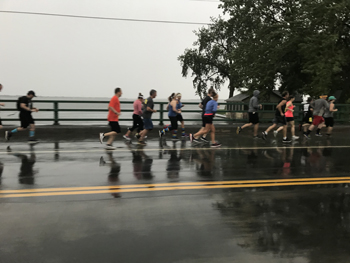
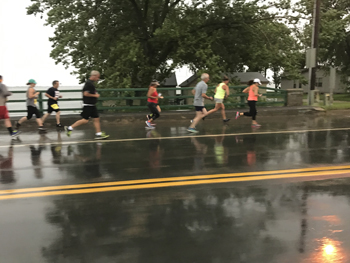
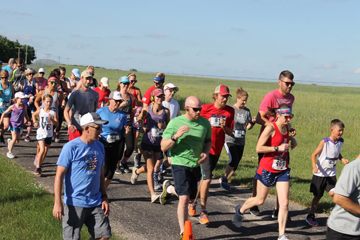
There are always challenges to trying to exercise. But, even more, there are excuses. I have made plenty of them myself as well. You can try to come up with anything feasible, at least in your mind, not to go exercise. But I have found that once I get going, and then especially when I get done, I feel much better, and I am glad I did it! It needs to become a habit to get to this point. It can’t feel like a chore all of the time, or you will never do it. There are definitely those days when exercise feels like a chore. It is inevitable. But there are more good days than bad days. Yesterday was a good example. It was the Run Around Kampeska Half Marathon. It was delayed for an hour due to lightening, but then still rained through the majority of the race. That did not stop these people.
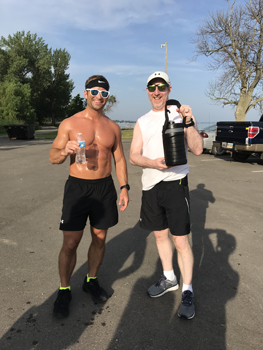
I am still coming back slow with the running, otherwise I would have been out there too. I was relegated to transport, water carrier, and photographer. I would rather be one of the runners! There are those other times when we have to contend with the heat.
You have to time your exercise, and go when it is cooler out. But, you also have to come up with creative ways to stay cool!
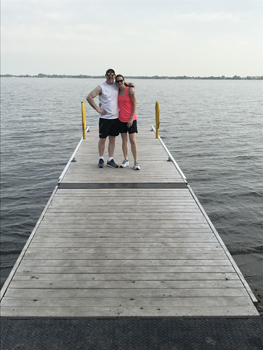
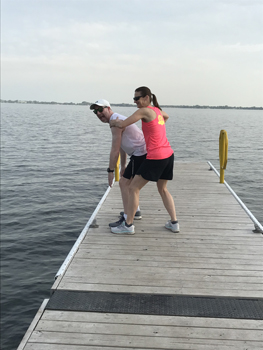
I could say Sarah was just going to help me cool off by throwing me in the lake, but I would be lying. I will never say no to her again!!! Hee Hee! But before you know it, it will be back to the cold and snow again!
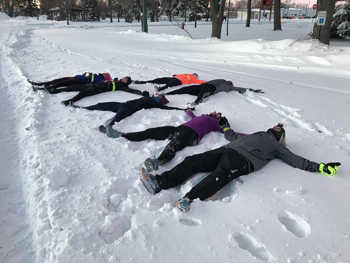
You can still exercise outside, you just have to dress for it, and be more creative. Sometimes though, you just outright give up, and surrender!
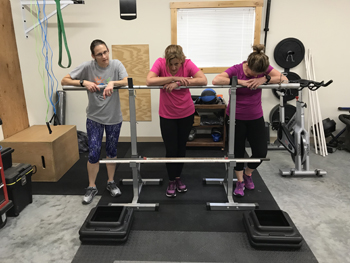
One thing is for sure, it is always more enjoyable exercising with other people. It helps take your mind off things. It is still nice at times to work out on your own, but the group activities is much more fun. There are days when you just wonder why you even bother.
You can be so exhausted afterwards that you wonder why you even bothered. But, then later, when you are doing other activities, you have more energy, feel stronger, and have more endurance. Like I said, the good days still outweigh the bad days. We all want days when we feel like this:
So, go after it. If you are not exercising you are just falling back on another excuse. Make a decision, and go for it. Enjoy life to its fullest. Don’t take things for granted. I am finding out your health is not always going to be there. Control what you can, and then learn to deal what can’t be changed. You can still live your life to the fullest. Appreciate what you have when you do! Keep moving everybody!
Why Exercise Alone Might Not Lead to Weight Loss: Exercise is an integral piece to the weight-loss puzzle, but it certainly doesn’t stand alone. Eating right is just as important for weight loss as exercise alone. The best weight-loss prescription, of course, is to do both—watch what you eat and exercise regularly. These tips can help you get maximum results from your hard work and diligence.
Level of exertion: Make sure that your exercise gets results by working at your ideal level of exertion. The best way to do this is to check your pulse against your maximum heart rate. You can calculate your maximum heart rate by subtracting your age from 220. You should have the ability to speak without gasping for air, but should work hard enough that you don’t really want to have to talk much. You will need to take in 500–1000 calories/day less than what you expend in order to lose 1–2 pounds/week.
Extra food: Avoid the tendency to eat extra food on days that you’ve exercised. Remember that all of those extra bites and spoonfuls can really add up.
Exercise routine: Doing the same exercise routine every day can lead to less energy expenditure over time, because you burn more calories when you’re first learning a routine. Interval training, such as walking fast for 2 minutes and then jogging or running for 30 seconds, is recommended to increase the number of calories burnt.
Sports drinks and supplements: Many sports drinks and bars contain nearly a meal’s worth of calories. They are more appropriate for a person who is running a marathon than for a person who is taking an aerobics class or going for a brisk walk.
Time vs intensity of workout: Rather than increasing the
length of time that you spend exercising, most experts agree that it can be
more beneficial to increase the intensity of your workout to promote weight
loss, while keeping the time spent the same or decreasing it.
If you are struggling with weight loss and need some extra help, please send
me an email or call! I would love to work with you and help you improve your
health and wellness!
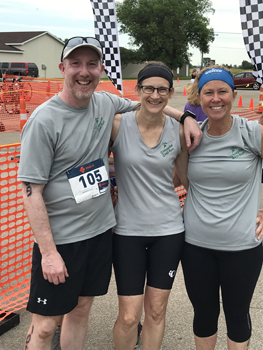
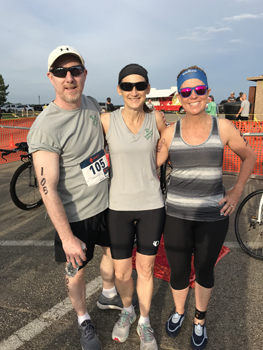
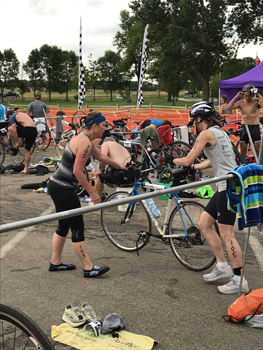
This was our team yesterday doing the Kampeska Mini Triathlon. Team mates Sarah, and Paula Nurnburg. That is how we got our team name: “Burg”er Meister Meister “Bergers”, as there were 2 Reiffenbergers. It was a great time. We all got to participate, and this was the first time for us as a team. Usually we do the whole thing ourselves, but I have to not push it that much yet. We even got second place overall for teams competing!
We were a little worried at first, as the sun was out, and it was going to be hot! Paula was going to swim the 1/4 mile, Sarah would ride the bike 14 miles, and I was running the 5k.
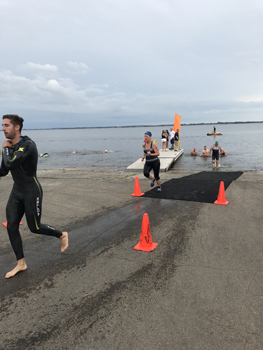
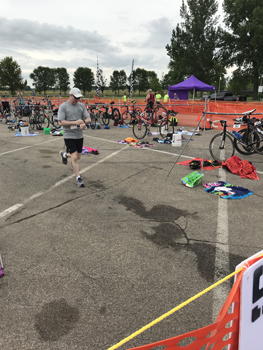
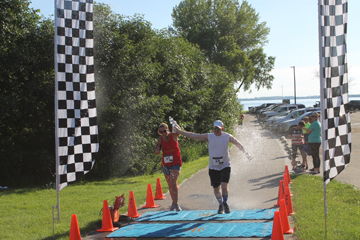
The “Burg”er Meister was coming out of the water, and heading into the transition zone to pass off the chip timer to Sarah, the first of the Meister “Bergers”.
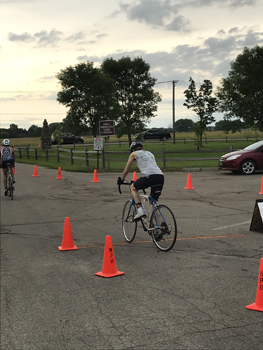
Then Sarah took off on her bike!
Then, I had to wait for her to ride around the lake, planning on anywhere from 45-50 minutes.
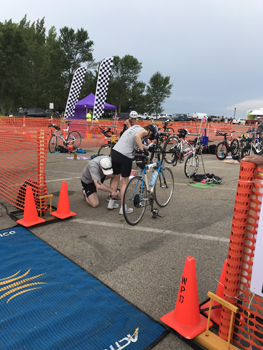
Then she came across, and it was time for the exchange between the two Meister “Bergers”! We had this down man! Then, I took off!
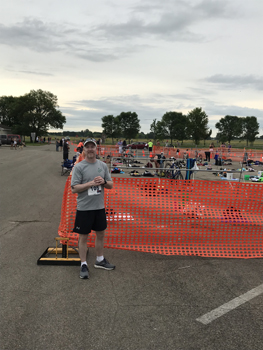
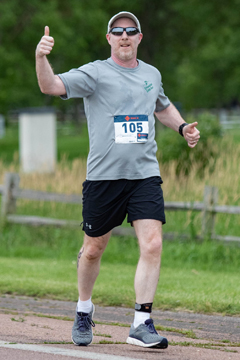
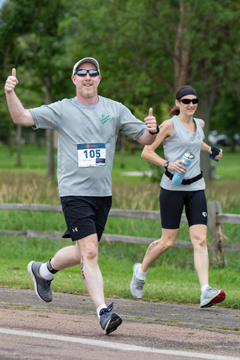
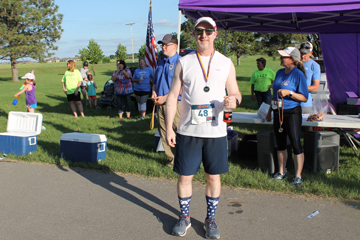
I actually felt pretty good on the 5k run, and it was my fastest time yet since everything has gone on for me in March. Finished in 24:30…over 4 minutes faster than the Freedom run 10 days ago! The clouds had moved in, and kept the sun away, which helped out with the heat factor immensely. It was still hot, but would have been much worse if the sun stayed out. I was smiling for the camera and giving the thumbs up coming in towards the finish!
Of course, Sarah had to come out the last 1/4 mile to run in with me, and make sure I was doing ok. I won’t be able to hide anything from her. It did feel good to have a good run again. Hopefully this keeps improving. I know for sure I will at least keep making forward progress as long as Sarah is beside me. We had a great race! And thanks Paula for helping to make up the rest of the team! The “Burg”er Meister Meister “Bergers” were a force to be reckoned with! Keep moving everybody!
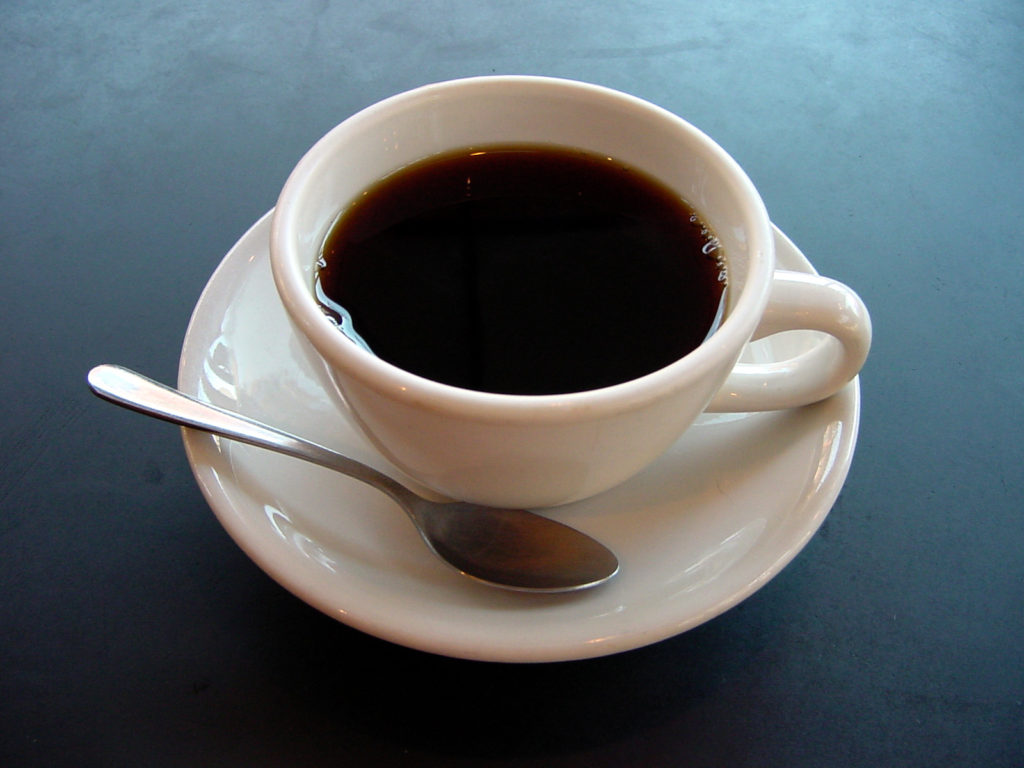
Many of us enjoy one or more cups of coffee each morning and although the caffeine and wake-up call it provides may be the motivating factor, perhaps some of the drink’s other benefits can play a role in your continued enjoyment of it! Coffee has been shown to help with brain function, perhaps prevent some diseases, and increase calcium intake when milk is added. Coffee also contains antioxidants and has anti-inflammatory properties as well. Important vitamins and minerals such as potassium, niacin, vitamin E and magnesium are also present in coffee. One thing to keep in mind about your morning pick-me-up may be to choose wisely. Some of the fancy coffee drinks found at popular coffee shops can also contain loads of sugar and fat, which may contribute empty calories to your daily intake. When choosing a coffee drink, choose low or non-fat drinks or plain coffee, or plain coffee with milk to ensure the most benefit from your coffee. During the hot summer months, enjoy cold-brew coffee or iced coffee as a seasonal way to reap these benefits! -Kelsey
Well, it has been a busy week with the 4th of July. Lots of things to celebrate, with freedom at the top of the list. Freedom to choose as we want, and live as we want. Freedom to spend time with who we want. Freedom to choose things in our lives, both good and bad. It started with the Freedom Run/Walk put on by DASH here in Watertown on Tuesday night.
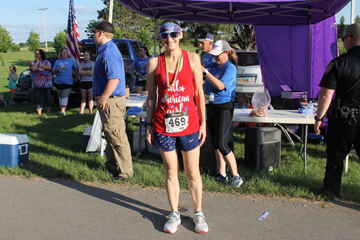
It was a 5k run/walk. Calm winds, but really hot. It takes a while to get used to the heat, especially when we get it all at once. But never the less, a fun event. A lot of us try to dress up as patriotic as we could. Sarah and I each managed to win first in our age category. Thankfully, there were not many in our age category! Ha!
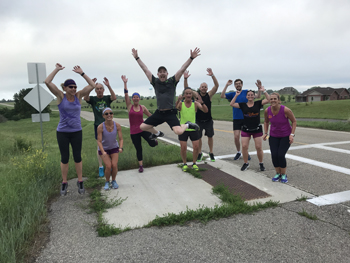
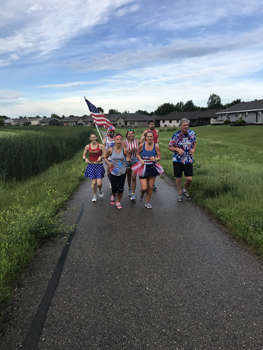
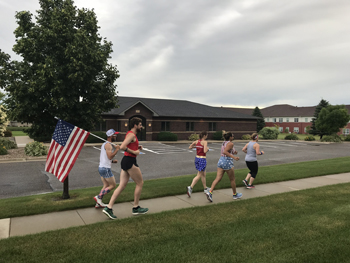
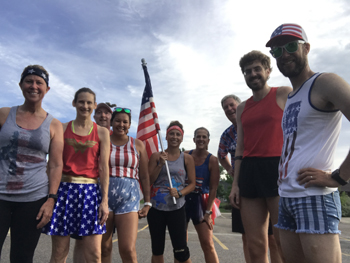
At least I am out running again. 5k has pretty much been my limit here, so will just have to see how time goes. It just feels good to get outside and do something again! Thursday morning, on the 4th of July, our run club met at 7AM for a patriotic run before everybody got busy for the day with their plans, family activities, fireworks, etc.
Another great morning to go out for a run, and celebrate! So, remember to celebrate those things in your life that you appreciate, that you have worked hard for, and that have that special meaning to you. Family, friends, health. You don’t really appreciate what you always have, until you don’t have it anymore. Live life to the fullest. Don’t waste time, days, memories.
Keep working on your own health by trying to do more exercise, and watching your diet. But, also spend time taking care of your mental health. Spend time with family and friends, and enjoy the memories that will come with it. Those are the memories that will mean something…and not only for yourself, but for somebody else as well. So celebrate well, and take care of yourself as well. Keep moving everybody!