Summer time heat raises the risk for dehydration and heat stroke. With the high summer temps and humidity, it’s extra important to make sure you get enough fluids! It is important to stay hydrated throughout the day, as it is too late, if you wait to get a drink when you feel thirsty. Especially for those older adults, it takes longer for them to feel thirsty even though they may be severely dehydrated.
Tips for getting adequate fluids:
• Keep a glass or bottle of water with you during the day so you can sip on it. Drink when you are thirsty and even when you are not thirsty.
• Drink more water instead of sugary beverages, milk and juice to avoid those extra hidden calories. Alcohol will increase your water loss. Plain water always works the best.
• Increase your fluid intakes if your diet is high in fiber, protein or salt.
• On days where you may be sweating alot or burning extra calories such as an all day softball tournament in 80-90 degree weather, or doing yardwork/landscaping in the heat all day…you may need to add electrolytes such as Gatorade or Powerade. I prefer G2 Gatorade as it’s lower in sugar, yet still has plenty of electrolytes. **Please note, these drinks are not necessary when you’re doing less than an hour of light activity or more sedentary activities as they just add extra calories and sugar.
• Consult with your doctor or dietitian if you are on a fluid restricted diet and would like further help with your hydration needs. Use the above chart to determine your hydration level by the color of your urine.
Yesterday, Saturday June 13, was Family Health and Fitness Day. A day to celebrate, and get families out and get active, and engage in fun activities. Whether playing games, walking, riding bikes, whatever…just get moving. Even though we may have a day designated to promote this, there is no reason every day should not be Family Health and Fitness Day. It always has been a part of our lives. We instilled into our kids the importance of being active, and exercising. They learned very young!
We would go for bike rides together starting many years ago. And, we all wore helmets! We went for picnics, riding to get to the park. They learned from the start how important it was to be active.
Many of our vacations centered around being active as well. Here we are taking a break as we were hiking up, what was then called, Harney Peak. We would stay in cabins in Hill City, and go off on the Mickelson Trail, and go hiking to Harney Peak, or the one year we did the Volksmarch to Crazy Horse. We had a blast on those vacations! Everybody had a good time. We explored, saw new things, but had to work to get them done too.
All of this early training translated later to being active in school as well. This was true not only for High School, but College as well. Here we were at one of Nicks Augustana track meets.
We have had several great trips to Disney, and each time ran races while we were there. I have done the Goofy and the Dopey races, and here Molly and Megan ran with us to do their first Half Marathon. Nick could not get off school this year, but Carissa and Noah Hauck ran first time events here as well. Noah the Half Marathon with us, and Carissa the marathon with me. The memories these time bring back! We had a ball!
The kids grew up watching us run all of the time. It was only natural that they would follow the same foot steps. Running is what brought Sarah and I together when we first began to date. We have not stopped since then. We still plan vacations with running events, or other active adventures in mind.
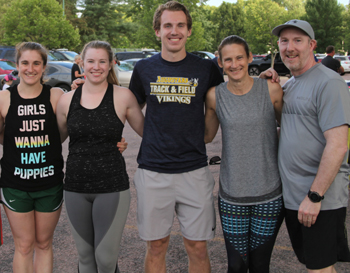
Last year we all got together and ran the Hump Day 5k event as well. We are all getting older, but those times when we still do things like this together are still something very special. I hope there are a lot more times like this as well.
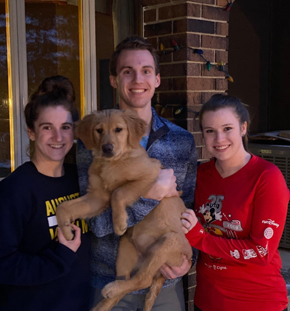
The kids are no exception. All of the dogs we have had have been active runners, walkers with us. Dakota is no exception. She goes with us everyday, either walking, running, or both. If you are going to be a part of Team Reif, you better be able to move. When the times comes when we may not be able to run, we will just have to figure out how else we can be active. Be creative. Have fun with it. Your health depends on it. You truly do need to Strive to Survive. But, nobody said those days could not be incredibly fun along the way! Enjoy life to the fullest. Stay active! Keep moving everybody!
Eating healthy on the go can seem difficult at times, however there are many things you can do to make it a little easier! With life picking up again, I thought this was a fitting topic to discuss. Here are some tips that will save you time while still eating healthy nutritious food!
• Plan Ahead: On Saturday or Sunday, take a look at what your week ahead is going to be like. It can be very helpful to write out your schedule so you can see the times in your week where you may be on the go and extra busy. From there, decide on a few meals that would be easy to prep and that will provide you with energy for those busy days. Also, decide on some easy to grab snacks that you can keep with you.
• Meal Prep: If you have looked at your week and you know you will not have time to cook for yourself, meal prep a few staple items that you can easily grab out of the fridge on your way out the door. This can be something as simple as brown rice, baked chicken, and a side of vegetables. A few breakfast ideas include overnight oats, protein balls, hardboiled eggs, and precut fruit that you can throw in a blender and make a smoothie with. Whatever your food choice may be, meal prepping can be a helpful way to prepare meals for a few days at a time.
• Prepare Extra Food: If meal prepping isn’t really your thing, it’s okay! Another easy way to save time is to prepare extra food when you do cook. If you have time to prepare a healthy dinner, make a few extra servings that you can save for lunch the next day.
• Snack Up: Having healthy snacks on hand will keep you from purchasing quick and unhealthy choices when life gets a little busy. A few good ideas include fresh fruit and vegetables, nuts, trail mix, cheese, pretzels and hummus, yogurt, and peanut butter on whole wheat bread.
• Hydrate: This last tip is so important! The last thing you want to happen when your busy is to become dehydrated. Keep water with you at all times and drink it throughout the day. You can always spice your water up by adding in fresh fruit or sipping on unsweetened iced tea. Utilize a few of these tips to make healthy eating a little bit easier when you have a busy schedule or when you are on the go! Eating healthy and staying hydrated will provide you with the energy that you need to get through your day! -Kelsey
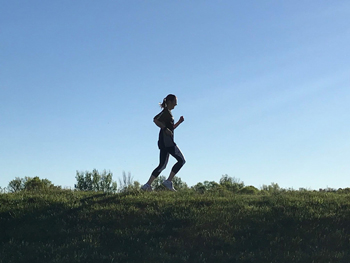
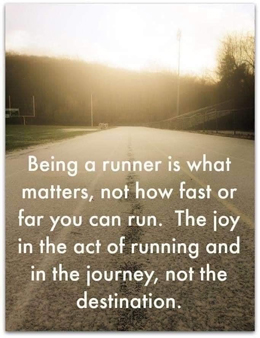
I always found it a little difficult to put into simple words what running means to me when trying to explain it to somebody who does not run. Yes, not all days are good days. Sometimes you wonder why you even go out some days. But those days when everything falls into place, and you are in a “zone”, you just lose yourself in that moment, and everything is just perfect! You are moving smooth. Your breathing is efficient. You don’t even feel like you are working. The scenery around you is easy to lose your thoughts in. Most of those running times it is just me and my thoughts. No other outside stress. No other distractions. Just you. So the best description I can really have is that it is a feeling. A feeling like no other. Those days when that feeling is there, it makes all of the other days that may not be going well, worthwhile.
Like everything, it does not just happen. Practice makes perfect. You have to put the effort in to enjoy the rewards. This is not something that is just going to get handed to you. If you want it, you have to earn it. Getting started is always the hard part. It takes practice, patience, and determination. This week, Wednesday June 3, was National Global Running Day. It was the perfect time to get out and run. For those of you who can’t run, go out and walk. My walks in the evening are my recovery times. I always have my phone with me during those walks. I don’t have it so I can talk on the phone, but so that I have my camera. This last few weeks the sunsets at the Lake have been breathtaking. I went Friday night for a 4 mile walk, and ended spending an additional 45 minutes taking pictures. Peaceful. Relaxing. It was actually quite easy to forget about everything else. It would have been no different with running…but for me, it is tougher to stop and take pictures compared to walking. Once I get going, I just take pictures with my eyes.
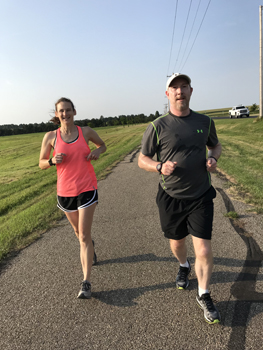
I have had a permanent training partner with Sarah. We both love to run. That is how we started dating. I would run past her house and notice she would be watching me out her window when we were in Med School. Then we started running together, and have not stopped since. Running brought us together, and has kept us together. We plan vacations/trips to involve running. We have seen new places because of running. We have gotten all of our kids to run, so it is now another means of being able to spend time with them. Just wait until grandkids start coming! Running has been a huge part of our lives. Our social activities and friends are all due to running. I promote to my patients every day the importance of exercise. I promote by example. Someday we may not be able to run anymore, but I will worry about that then. For now, I will keep putting one foot in front of the other, and continue to see where this helps steer out lives.
Nothing is going to change this. It is who I am. It is who “we” are. It truly has taught me how to hang in there when times get tough, and to keep looking for the next finish line. I have to admit, I don’t know how to give up, and I hope I never do. After each tough “race” in life, it has always been worthwhile, and something has been learned. We learn from our experiences. That is truly how we continue to grow in life.
Sarah and I will continue to run until that final finish line comes. In the meantime, there are so many more adventures to enjoy, and life to live. Take advantage of what you have. We don’t know when we are not going to have it anymore. Live for today, and look with anticipation to tomorrow.
Enjoy the journey. There are lots of things to see and do yet. Enjoy each sunrise and sunset. They truly are all different. Enjoy the ride. There may be days where we have to hold on tighter, but they just seem to go smoother after a run, or a walk, or any workout. Move. Use it or lose it. You ask those people who have been runners, and for whatever reason they can’t now, what they think of it. How much do they miss it? How much did they enjoy it? How much more fuller was their life when they ran? Each of us needs to find out on our own. Keep trying…keep moving everybody!
June is national dairy month, thus it’s a great time to recognize and discuss the benefits we can get from dairy in our diets. Cow’s milk is the richest source of well-absorbed calcium and is actually absorbed better (about 25%) than the calcium in soy milk. There is about 300 mg of calcium in an 8 oz serving of milk and we recommend getting at least 3 servings of dairy a day. A serving is equal to an 8oz (1 cup) serving of milk, 6 oz tub of yogurt, 1 oz cheese, 1/2 c cottage cheese. In addition to calcium, cow’s milk is an excellent source of phosphorus, vitamin B12, potassium, riboflavin, vitamin A, vitamin D, protein, and niacin…totalling 9 nutrients compared to only 4-5 nutrients found in soy and almond milk. There are many other types of “milks” out there such as almond, rice, coconut, and soy, however these drinks are not the same as cow’s milk in regards to the nutritional qualities. Many of these milks use fortification (adding nutrients), whereas the nutrients are found naturally in cow’s milk.
Below is a list from the Midwest Dairy Association about these beverage’s nutrient sources and nutrition quality (http://www.midwestdairy.com/0p335/dairy-imitators/)
“Soy beverages are made from soybeans and are a good source of protein. However, according to the Protein Digestibility Corrected Amino Acid Score (PDCAAS), soy protein is a lower quality protein than the whey protein found in dairy products. Rice-based beverages are generally processed from brown rice and are fortified with nutrients such as calcium and vitamin D. Rice beverages typically contain only one gram of protein compared to eight grams in cow’s milk. Nut-based beverages can be ground from any nut and the most popular is almond. Almond beverages only supply one gram of protein per serving and lack many of the natural benefits found in almonds. Seed-based beverages, such as hemp, are newer to the marketplace. Their nutritional benefit is touted to be their omega fatty acid content. Similar to the other beverages, they also fall short on protein.”
Often times, these other “milks” contain higher sugar content, less calcium, less protein, and are absorbed less than those benefits in cow’s milk. Now if you have a lactose intolerance or milk allergy, these are certainly options for you, however if you do not have an allergy or intolerance, I highly encourage you to work towards getting your 3 a day servings of dairy and preferably low fat dairy. It will not only provide you with excellent vitamins and minerals to keep your bones and muscles healthy and strong, it will also provide you with an excellent source of protein. For more information on the benefits of dairy, you can visit www.midwestdairy.com. I know I will enjoy a nice glass of cold milk tonight with supper, I hope you do too! -Kelsey
The weather has been getting nicer, and this coming week it is going to get hot! Get outside and utilize the trail, and get some activity, and release the stress with everything going on lately. It is time to just get out and move! We have been waiting a long time for some really warm weather, and it is now coming. Running is my escape, but it is also relaxing to just get out and walk and enjoy the quiet, and just forget about things. It is much easier to do when going out the by the lake, and Jackson Park.
Whether sunrise, sunset, or middle of the day, whenever you have time, get out and enjoy the surroundings, and not worry about COVID going on. You feel charged up and ready to try and take on another day. Mornings are especially quiet, and hearing the birds all chirping, it is easy to let your mind go. It does not make any difference for our dog, Dakota, she will go out any time of the day, walk or run. She just wants to move. We could all learn a lot from her. Exploring, wandering, just plain moving!
The kids went for a bike ride going around the lake. They got some exercise, plus got to spend some time together. It is a great way to spend time with family. You all move together.
So what are you waiting for? Enjoy the Summer. Get away from the stress of things. Spend time with family. Forget all of the other problems going on right now. Keep moving everybody!