by kelsey | Mar 8, 2012 | Cooking Tips, Diet, Weight Management, Wellness/Health
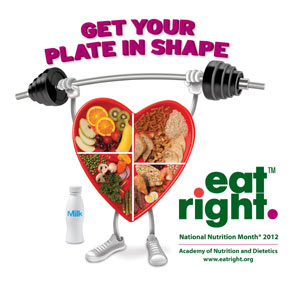
Grocery store aisles are filled with foods high in sodium, fats, and sugars. It’s ok to treat yourself to these foods, such as a donut or cookie every once in awhile, however they should be considered occasional and not a regular habit. Try replacing these foods with more whole choices such as fruits and vegetables, whole grains, lean meats, and low-fat dairy products. Packaged, frozen, and canned goods typically contain higher amounts of sodium and can also contain greater amounts of bad fats (saturated and trans) and excess sugars. These processed foods are major contributors to high blood pressure, heart disease, and diabetes.
Here are a few tips to help get your plate in shape!
Choose foods and drinks with little or no added sugars.
- Drink water throughout the day. For variety, add lemons, limes or cucumbers to your water or try carbonated water.
- Choose low-fat or fat-free milk or 100-percent fruit juices.
- Eat fresh fruit salad for dessert.
Eat fewer foods that are high in solid fats.
- Instead of regular ground beef, opt for extra-lean ground beef. Ground turkey and chicken are also available in lean options.
- Grill, broil, bake or steam your foods instead of frying.
- Cook with healthy oils like olive, canola and sunflower oils in place of hydrogenated and partially-hydrogenated oils.
- Opt for fat-free or low-fat milk, yogurt and cheese.
Cut back on sodium.
- Instead of salt, use herbs and spices to season foods, and avoid salting food before tasting it.
- Do not add salt when cooking pasta, rice and vegetables.
- Read the Nutrition Facts Panel to compare sodium content of foods such as soups, broths, breads and frozen dinners, and choose the healthiest option.
- Eat fresh fruits and vegetables, fresh meats, poultry and fish, beans and peas, unsalted nuts, eggs and low-fat or fat-free milk and yogurt.
-Kelsey
by kelsey | Mar 6, 2012 | Diet
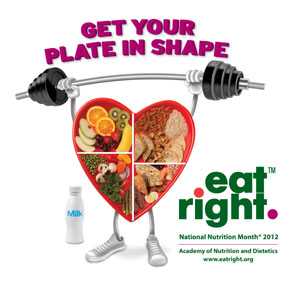
March is an exciting month for me…it’s National Nutrition Month!! It’s a great way to promote healthy eating and help spark interest in “getting your plate in shape”! Here are some tips to help you get your plate in shape:
Make half your plate fruits and vegetables.
- Eat a variety of vegetables, especially dark-green, red and orange varieties, as well as beans and peas.
- When buying canned vegetables, choose “reduced sodium” or “no salt added” whenever possible. Rinsing whole varieties like beans, corn and peas can also reduce sodium levels.
- Dried and frozen fruits and those canned in water or their own juice are good options when fresh varieties are not available.
- Make sure every meal and snack has at least one fruit or vegetable or both.
Make at least half your grains whole.
- Choose brown rice, barley and oats and other whole grains for your sides and ingredients.
- Switch to 100-percent whole-grain breads, cereals and crackers.
- Check the ingredients list on food packages to find foods that are made with whole grains.
Switch to fat-free or low-fat milk.
- Fat-free and low-fat milk have the same amount of calcium and other essential nutrients as whole milk, but less fat and fewer calories.
- If you are lactose intolerant, try lactose-free milk or a calcium-fortified soy beverage.
Vary your protein choices.
- Eat a variety of foods each week from the protein food group like seafood, nuts and beans, as well as lean meat, poultry and eggs.
- Eat more plant-based proteins such as nuts, beans, whole grains and whole soy foods like tofu and edamame.
- At least twice a week, make fish and seafood the protein on your plate.
- Keep meat and poultry portions lean and limit to three ounces per meal.
Cut back on sodium and empty calories from solid fats and added sugars.
- Drink water instead of sugary drinks like regular sodas, fruit-flavored drinks and sweetened teas and coffees. Choose 100-percent fruit juice.
- Compare sodium in foods and choose those with the least amount listed on the Nutrition Facts Panel.
- Season foods with spices or herbs instead of salt.
- Select lean cuts of meat or poultry and fat-free or low-fat dairy products.
- Use heart-healthy oils like olive, canola and sunflower oil in place of butter or shortening when cooking.
Besides nutrition, activity is also very important! Strive to get at least 30 min of aerobic activity in most days of the week.
As part of National Nutrition Month, the Academy of Nutrition and Dietetics’ National Nutrition Month website includes helpful tips, recipes, fun games, promotional tools and nutrition education resources, all designed to spread the message of good nutrition around the “Get Your Plate in Shape” theme.
(Reference: http://www.eatright.org/Media/content.aspx?id=6442467853)
-Kelsey
by kelsey | Feb 23, 2012 | Cooking Tips, Diet, Weight Management, Wellness/Health

With Lent underway, many will be eating more fish in the next 40 days than they do all year round. Fish is a staple food in many parts of the world, but us Mid-Westerners have to work on this a bit as our typical meats are beef, poultry, and pork over fish. Fish is a great source of lean protein. Some fish have more omega 3 fatty acids than others which does offer additional heart health benefits. These fish include salmon, herring, trout, tuna, sea bass, and mackerel. Our area lake fish are lean sources of protein, however most of these fish (walleye, northern, etc) are not a rich source of omega 3 fatty acids.
A popular way to eat fish in the Midwest is breaded and fried. This preparation and cooking method can add a great deal of extra calories and fat. Next time you have fish, opt for the grilled, broiled, or baked without the breading as it’s much healthier for you!
Below is one of my favorite salmon recipes. You can visit the All Recipes website below for the exact recipe and can change the serving size to fit your needs individually.
Alaska Salmon Bake with Pecan Crunch Coating
Prep Time: 20 Min
Cook Time: 10 Min
Ready In: 30 Min
Original Recipe Yield 6 servings
Ingredients
- 3 tablespoons Dijon mustard
- 3 tablespoons butter, melted –can substitute olive oil
- 5 teaspoons honey
- 1/2 cup fresh bread crumbs—can use whole grain bread crumbs
- 1/2 cup finely chopped pecans
- 3 teaspoons chopped fresh parsley
- 6 (4 ounce) fillets salmon
- salt and pepper to taste
- 6 lemon wedges
Directions
- Preheat the oven to 400 degrees F (200 degrees C). In a small bowl, mix together the mustard, butter, and honey. In another bowl, mix together the bread crumbs, pecans, and parsley.
- Season each salmon fillet with salt and pepper. Place on a lightly greased baking sheet. Brush with mustard-honey mixture. Cover the top of each fillet with bread crumb mixture.
- Bake for 10 minutes per inch of thickness, measured at thickest part, or until salmon just flakes when tested with a fork. Serve garnished with lemon wedges.
Nutritional Information
Amount Per Serving Calories: 368 | Total Fat: 22.4g | Cholesterol: 91mg
http://allrecipes.com/recipe/alaska-salmon-bake-with-pecan-crunch-coating/detail.aspx
Enjoy!
Kelsey
by kelsey | Feb 22, 2012 | Diet, Weight Management

As I stated in my last post, it took us a full day to travel from Vegas to Phoenix with our stops at the Hoover Dam and Grand Canyon. It was a great day and awesome experience to see these two places, but it did mean that we were eating in the car…which is always a challenge. To help you when you travel, here are some healthy road trip snacks:
- Raw veggies such as baby carrots, broccoli, etc
- Fresh fruit such as an apple or banana that’s easy to eat in the car
- Trail Mix–just be sure to watch the portions as calories can add up quickly
- Low fat cheese and whole grain crackers
- Sandwich’s with whole grain bread, lean meat, and great veggies
- Almonds, walnuts, or soy nuts
- Whole grain granola bars
The key is packing your snacks before hand to avoid running to a gas station or through a fast food drive thru. Foods to stay away from are all of the tempting, high calorie, high fat foods you find in the convenience stores such as packaged cookies, candy bars, chips, etc. The calories can add up really fast and may not satisfy you as they are typically higher fat and fast acting sugar foods. Including whole grains (fiber rich foods) and lean proteins in your snacks will help provide satiety and satisfaction.
-Kelsey
by kelsey | Jan 26, 2012 | Diet, Weight Management, Wellness/Health

Our society is always on the run and in a hurry and many are missing out on one of the most important meals of the day: breakfast! If you’re in a hurry and don’t have time for breakfast in the morning, there are still ways you can get some good nutrition to start your day off on the right foot.
First off, you’re going to want to consider calories. Usually we recommend meals have about 300-400 calories. The Nutri-Grain bar in the picture only has about 130 calories. So if that’s all you have for breakfast, you’re most likely going to be hungry again in a few hours. In addition to calories, you’ll want to consider the type of grain. The more fiber a product has, the better as it will provide satiety in addition to many other benefits (heart health, digestive health, etc). Your choice should have at least 2-3 grams of fiber and lower amounts of sugars. The next item on the label you should look at is protein. Choices with high protein will again provide satiety and stay with you longer.
There are many choices of complete nutrition that you could try such as a meal replacement drink like Ensure, Boost, or even a homemade smoothie. You could also try nutrition bars such as the Powerbars, Luna, Clif, etc. Another option would be to incorporate a few items. An example would be a whole grain granola bar, yogurt, and banana. All quick and easy to eat but supplying your body with a great source of nutrition. You could also try oatmeal in a to-go container and eat on your way to work. There are many options to get that most important meal of the day in, it just may take a little planning to begin with! Next time you grocery shop, explore the aisles and take time to read labels to help you start your day off right!
-Kelsey
by kelsey | Jan 25, 2012 | Diet, Weight Management
Everyone’s eating habits are a little different from each other’s. Personally I make efforts to follow a well rounded or balanced diet and am very conscious about my eating habits. Now this is probably partly due to the fact that I am a dietitian and have chosen nutrition as my career, but it’s always because I am very passionate about nutrition and want to feed my body with optimal fuel every day! I was discussing “normal” eating habits with a patient recently and I came across some defitinitions by one of the experts in the field, dietitian Ellyn Satter. I wanted to share this with you as it really gives some food for thought as we examine our eating habits.
What is Normal Eating?
- Normal eating is going to the table hungry and eating until you are satisfied.
- Normal eating is being able to give some thought to your food selection so you get nutritious food, but not being so wary and restrictive that you miss out on enjoyable food.
- It is leaving some cookies on the plate because you know you can have some again tomorrow, or it is eating more now because they taste so wonderful.
- Normal eating is trusting your body to make up for your mistakes in eating.
- Normal eating takes up some of your time and attention, but keeps its place as only one important area of your life
You can explore the article at:
http://well.blogs.nytimes.com/2009/08/26/what-is-normal-eating/
Or visit Ellyn’s site at : http://www.ellynsatter.com
As you work to improve your diet think about these concepts and work at incorporating them into your eating habits and thought process! Mindful eating is an excellent concept and promotes life long healthy eating habits.
-Kelsey
