by kelsey | Oct 25, 2018 | Diet, Food, Weight Management, Wellness/Health

To me, one of the most stressful sections/aisle in the grocery store is the yogurt and/or dairy aisle. There are so many options, I feel overwhelmed and then just don’t end up buying any. There is Greek, Icelandic, Australian, Kefir, non-dairy, added flavors, traditional yogurts, etc. All of these add to the confusion. Yogurt has benefits for your health. It can be a great snack, breakfast on the go, or even a small dessert for after a meal. Benefits of yogurt include:
- Probiotics!-these help with digestion, gut health, and boosting immune systems
- Calcium-calcium is needed for building bone tissue, blood clotting, and muscle to work properly
- Protein-can help fill you up, helps build muscle, healthy skin, cell growth, and many other functions of the body
- As you walk down the yogurt aisle you may notice the packages with say higher protein, low fat, no fat, no sugar added, real fruit, added fruit, etc. These labels can be confusing and overwhelming. How do you navigate them all? Read the nutrition label is the greatest tip to use. Read the ingredients list. Try picking yogurts with less ingredients. This helps to reduce amount corn syrup, preservatives and other added ingredients that are consumed through yogurt. Fat free doesn’t mean sugar free! Many producers will take out the fat, but then will add sugar or corn syrup back in to replace fat. This makes the sugar and carbohydrate amount be increased. A light yogurt or low fat yogurt would be a better option if you were diabetic as they usually have the sweeteners like stevia, Splenda, equal, etc. Maybe you are wanting a yogurt with more protein, go for a Greek yogurt or ultra-filtered yogurt. Want to stay fuller longer? Try a yogurt with more fat and protein. This provides more calories to keep you fuller longer. Fruits, honey, and granola will add more calories and carbohydrates. Try a plain or vanilla yogurt and add your own whole fruits or whole grain cereals to it. There isn’t a 1 kind fits all in the yogurt aisle. Explore which one you like the best and which one best fits your nutritional needs.
-Written by Alyssa Kauffman, SDSU Dietetic Intern
by kelsey | Oct 23, 2018 | Diet, Food, Weight Management, Wellness/Health

It’s that time of year again. Not only are the aisles of Wal-Mart strewn with witch hats, zombie make-up and fairy wings, but of course there is the looming aisle of Halloween candy. It can be easy to over indulge on treats this time of year. Most of the candy passed out to trick-or-treaters comes in “fun size” or “mini” portions. However, looks can be deceiving; people often believe that since they are smaller in size, more can be consumed. Calories from Halloween candy can quickly add up. For example; 3 mini snickers bars pack 300 calories. To burn off that many calories you would have to walk at a brisk pace for 1.5 hours or run for 40 minutes.
Fortunately the 31st of October doesn’t have to mean automatic weight gain. Try waiting until the day before to buy treats to pass out. You will be less likely to feel the need to nibble if you don’t buy it a month ahead of time. Keeping it out of sight, such as up in a closet you rarely use, can help you forget that it’s even in the house. The biggest challenge with Halloween candy is the leftovers. After the trick-or-treaters have come and gone we are often left with the reality that we stocked up for 400 doorbell ringers, and only got 15. Buying candy that you don’t like is an easy way to keep you from eating it both before and after the holiday and you can always donate it to get it out of your house. Below are some healthier options to pass out next week!
Halloween the Healthy Way….treats/prizes to try:
Sugar-free gum
Boxes of raisins
Animal crackers
Pretzels
Trail mix
Fruit snacks
Lollipops
Non-Candy choices: stickers, small toys, erasers, etc.
Pictured above my busy bee Corbin last year. Be sure to check back to our blog on Halloween for this year’s costume!
-Kelsey
by kelsey | Oct 3, 2018 | Diet, Food, Wellness/Health

October is Breast Cancer Awareness Month. Many of us know of someone who has been affected by breast cancer as it is the most common cancer in women and more than 230,000 women are diagnosed with breast cancer every year in the United States as stated by the American Cancer Society.
It is important to recognize some symptoms of breast cancer. The most common symptom is the presence of a painless lump in the breast area. Less common symptoms include swelling, tenderness, skin irritation, redness, or nipple abnormalities which may include ulceration or discharge.
Factors that increase the risk of developing breast cancer include the onset of menstruation before age 12, menopause after the age of 55, not breastfeeding for at least one year, not having children, or having children after 30 years of age, and having a high body mass index.
Increased body weight in postmenopausal women who are not taking hormones increases the risk for developing breast cancer. The more fat cells you have, the higher your levels of estrogen in the postmenopausal period, when your ovaries are no longer producing estrogen. Moreover, overweight women have higher insulin levels, and insulin may promote breast tumors.
Nutrition Tips for Cancer Prevention:
Fruits, vegetables, and whole grains are great sources of antioxidants and phytochemicals. Antioxidants and phytochemicals play a role in cancer prevention. Carotenoids is a type of antioxidant that is found in red and yellow produce. Some examples of foods that contain carotenoids are carrots, pumpkin, winter squash, tomatoes, citrus fruits, and red sweet peppers. All dark green vegetables contain nutrients that protect against cancer. Good sources of dark green vegetables include spinach, asparagus, bell peppers, broccoli, brussels sprouts and kale. An additional benefit to eating a well balanced diet that includes a variety of fruits, vegetables, and whole grains is that it promotes a healthy weight. Maintaining a healthy weight will help you to decrease your risk of developing cancer. A helpful tip to remember is that the more colorful the fruit or vegetable, the more nutrients it contains; so pack your plate with colorful choices!
Be sure to mark your calendars for Running’s Ladies Night Event October 18th from 5-8pm! It is an awesome event supporting and promoting the fight against breast cancer!! Our radiologist Dr.Gwen Schaunaman will be at our clinic booth to visit and answer any questions about our 3D mammography and diagnostic testing we do here at the clinic. Be sure to stop by and say hello!
-Kelsey
by kelsey | Sep 13, 2018 | Cooking Tips, Diet, Family, Food, Weight Management, Wellness/Health

School is in full swing now! Are you in need of some school lunch ideas? Check out these ideas below!
- Conventional sandwiches—deli turkey, chicken or roast beef, peanut butter (if it’s a peanut safe school) and jelly, cheese, bagel and cream cheese, bagel and peanut butter, vegetarian pita pocket, tuna fish, chicken salad
- Unconventional sandwiches—hummus and pita bread, cheese and crackers, cream cheese and jelly, cream cheese and olives, sunflower butter, soy-nut butter, wrap filled with vegetables and cheese or deli meats, quesadilla, calzone, stromboli, Canadian bacon with lettuce and tomato
- Conventional alternatives to sandwiches—dinner leftovers (meat/chicken/fish/pork, grains, pasta or potatoes, vegetables), cheese and crackers, leftover pizza, soup, stew, takeout leftovers
- Unconventional alternatives to sandwiches—single-serving cereal or cereal from home in storage container (just add milk), scrambled eggs or hard-boiled eggs, yogurt with granola, chili, pancakes or waffles, nuts (if school allows), homemade smoothies, bean salad, homemade muffin, string cheese.
- Fruits—apple, pear, banana, grapes, berries, orange, grapefruit sections, canned fruit in juice, fruit cocktail, grapefruit sections, cherries, pineapple chunks, melon, pomegranate, guava, papaya, tangerines, clementine, fruit salad
- Vegetables to eat raw, steamed, or with dip—cucumber slices, celery, carrots, green beans, snow peas, blanched broccoli, asparagus, cauliflower, grape tomatoes, beets, corn, salad, guacamole, bean salad
- Snacks—fruit snacks, sunflower seeds, baked potato chips, pretzels, multigrain crackers, high-fiber granola bar, graham crackers, applesauce, multigrain chips or tortilla, dried fruit, tube yogurt (try freezing), cereal bars, dry cereal, banana chips, dried peas, breadsticks
Always be sure to give them some money to buy their milk to go with their meal as well! Adequate calcium intake in childhood is essential for bone strength later in life!
-Kelsey
(Adapted from http://www.consultant360.com/n411/content/lunch-box-suggestions-children)
by kelsey | Sep 12, 2018 | Cooking Tips, Diet, Food, Weight Management, Wellness/Health
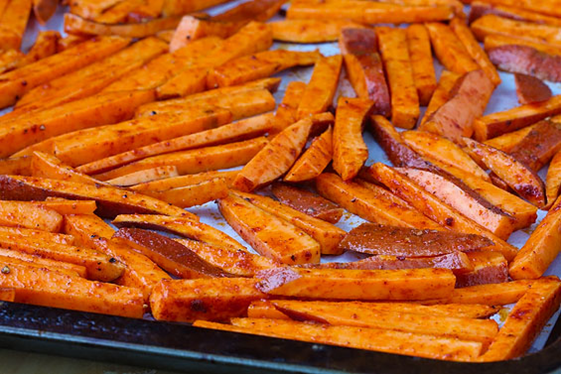
Fall is a wonderful time of year, the leaves begin to change, children are back to school, and the temperature starts to cool off. With all of these changes that are taking place you may find it hard to get away from all of the summer time BBQ and picnic eating habits. A way to help you get back to healthier eating habits is to start using some seasonal vegetables. Fall vegetables are great tasting and easy to cook with. Swapping out a regular potato for a seasonal sweet potato is a simple and easy way to get more bang for your buck. Sweet potatoes are much more nutrient dense which means that they contain more nutrients in a serving compared to a regular potato of the same size. A quick and easy recipe for sweet potatoes is to make sweet potato fries in the oven. Another fun way to incorporate seasonal vegetables is to make Kale chips in the oven. These make for delicious and healthy after school snacks for your children when paired with a low-fat cup of milk.
Baked Sweet Potato Fries: First, peel and wash the potatoes and cut them into strips around a ¼ in thick. Second, place in a bowl and toss with olive oil, paprika, salt, and pepper then place on a baking sheet lined with parchment paper. Lastly, place the baking sheet in a preheated 450-degree oven for 10-15 minutes or golden brown and crispy.
Kale Chips: kale is classified as a super food and is packed with antioxidants along with vitamins and minerals. First, cut up the kale into bite size pieces then in a bowl drizzle olive oil over the pieces then toss so the olive oil coats the pieces evenly. Second, salt and pepper the kale to taste and then place on a baking sheet and place into a 350-degree oven for 10-15 minutes or until edges are slightly brown.
-Kelsey Raml, MS, RD, LN
by kelsey | Aug 23, 2018 | Diet, Exercise, Family, Food, Goals, Weight Management, Wellness/Health

School is starting this week and that means homework, studying, and activities! We often forget about the importance of our health due to the fact we get consumed by our studies. Making health a priority during school is important and can be much easier than most would think. Whether you’re in elementary, high school, or college, here are some healthy tips to keep a healthy balance between nutrition and school:
•Pack healthy snacks/lunches: One main reason students establish unhealthy eating habits is because of how busy their schedules are. Packing healthy snacks to bring to class or to your study spot makes it easy to skip the junk food and extra caffeine.
•Hit the gym/use recess: Elementary students should use their recess period to add some extra physical activity to their day. Many universities have wellness/rec centers that are free for students to use. Take advantage! Working out for as little as 30 minutes a day can make a big difference.
•Get a good night’s sleep: Sleep puts our bodies into an anabolic state, meaning that our muscles grow and recover from break down. Getting enough sleep each night is vital for our body to reach its peak potential and function properly.
•Eat breakfast: Skipping breakfast is very common for students of all ages. Eating breakfast helps keep you fuller throughout the day, making it easier to lay off the junk food. Eating in the morning also gives students more energy and makes them more attentive during class.
•Walk/bike to school: Walking or biking to school instead of driving is an easy way to burn a couple extra calories during the day.
There are multiple ways we can stay healthy during the school year. Make sure to stay health conscious and you will have no problem keeping a healthy lifestyle.
-Kelsey