by kelsey | Aug 3, 2016 | Cooking Tips, Diabetes, Diet, Food, Weight Management, Wellness/Health

Breakfast is one of the most important meals of the day! Yes, you have probably heard this before, but are you a breakfast eater!? Having a good breakfast is a great way to start out the day. It’s not only important for our body, but our mind too. Many times we’ll have excuses such as I was running late, I didn’t feel like eating, I’m not hungry in the morning, and this actually accounts for about a 1/4 to a 1/3 of the population! Starting the day without breakfast is like driving your car on a low tank of gas. We know we can’t go on forever on a low tank of gas, so we shouldn’t do that to our bodies either! Those that skip breakfast tend to snack more on high fat and lower nutritious foods…and are more likely to overeat at lunch because they are over-hungry. Studies have also shown that those working on weight loss are more successful when they eat breakfast as this really jump starts their metabolism and starts their day off right. In addition, eating a healthy breakfast helps our kids excel in school as it helps fuel the brain!
So what should you eat for breakfast? It’s important to get a balance at your meals and especially include a source of protein and a whole grain as these provide satiety. Here are some examples for you:
- Ready-to-eat cereal (>3g fiber, <2-3g fat, a ratio of greater than 4 g carbohydrate:1 g sugar)
- Hot cereal (oatmeal)
- Bagel with low-fat cream cheese or peanut butter
- Yogurt Parfait
- Fruit and yogurt smoothie
- Peanut butter or hummus on whole-wheat toast
- Breakfast quesadilla with low-fat cream cheese and sliced fruit
- Breakfast burrito or taco
- Toasted whole-wheat English muffin with lean ham and low-fat cheese
- Toasted pita with scrambled egg and low-fat cheese
- Low-fat milk and 100% fruit
- Meal replacement drink
If you are one who is not a fan of breakfast but understands the importance of it, I encourage you to try a variety of these options and see which one works best for you. I also encourage you to plan ahead. You may need to wake up 5 minutes earlier to fit breakfast in or make your smoothie the night before so all you have to do it pull the bottle or container out of the freezer or fridge in the morning and drink it on your way to work. Starting your day with a full tank will provide long lasting benefits to you and your body!
-Kelsey
by kelsey | Jul 27, 2016 | Diet, Etc., Weight Management, Wellness/Health

Why Exercise Alone Might Not Lead to Weight Loss
Exercise is an integral piece to the weight-loss puzzle, but it certainly doesn’t stand alone. Eating right is just as important for weight loss as exercise alone. The best weight-loss prescription, of course, is to do both—watch what you eat and exercise regularly. These tips can help you get maximum results from your hard work and diligence.
Level of exertion
Make sure that your exercise gets results by working at your ideal level of exertion. The best way to do this is to check your pulse against your maximum heart rate. You can calculate your maximum heart rate by subtracting your age from 220. You should have the ability to speak without gasping for air, but should work hard enough that you don’t really want to have to talk much. You will need to take in 500–1000 calories/day less than what you expend in order to lose 1–2 pounds/week.
Extra food
Avoid the tendency to eat extra food on days that you’ve exercised. Remember that all of those extra bites and spoonfuls can really add up.
Exercise routine
Doing the same exercise routine every day can lead to less energy expenditure over time, because you burn more calories when you’re first learning a routine. Interval training, such as walking fast for 2 minutes and then jogging or running for 30 seconds, is recommended to increase the number of calories burnt.
Sports drinks and supplements
Many sports drinks and bars contain nearly a meal’s worth of calories. They are more appropriate for a person who is running a marathon than for a person who is taking an aerobics class or going for a brisk walk.
Time vs intensity of workout
Rather than increasing the length of time that you spend exercising, most experts agree that it can be more beneficial to increase the intensity of your workout to promote weight loss, while keeping the time spent the same or decreasing it.
If you are struggling with weight loss and need some extra help, please send me an email or call! I would love to work with you and help you improve your health and wellness!
-Kelsey
by kelsey | Jul 26, 2016 | Cooking Tips, Diet, Food, Weight Management, Wellness/Health

Homemade fruit and vegetable smoothies are a great way to guarantee your 5-A-Day natural nutrients while keeping you cool in these hot temps. Consumption of fruits and vegetables may help prevent chronic diseases such as cancer, heart disease, and diabetes while delivering fiber and vitamins. Contrary to the common belief, consuming the recommended amounts of fruits and vegetables can be inexpensive and in the long run will save you money in terms of medical bills.
There are endless smoothie recipes you can use to make a quick breakfast, after a workout, or for an afternoon snack. Adding an extra boost to your smoothie such as protein powder or Greek yogurt will additionally provide other valuable nutrients. Here’s a guide to help get started
Add Fruit/Vegetable
|
Add Liquid
|
Add Thickener
|
Extra
|
| Banana, Berries, Apple, Pear, Peach, Kiwi, Pineapple, Cherries, Mango, Orange, Spinach, Kale, Beets, Carrots |
Dairy, Soy, Rice, or Almond Milk, Fruit Juice, Water, Iced Tea |
Peanut butter, Yogurt, Frozen yogurt, ice cubes, or oats. |
Honey, Cinnamon, Protein Powder, Mint, Figs, Dark Chocolate, Flaxseed. |
| Choose 2-3 |
Add 1-2 cups of liquid |
Pick your consistency |
Your preference |
Here are some examples:
Green Smoothie: Mango Chunks, Banana, Kale or Spinach, Apple Slices, Water, Plain low fat yogurt
Carrot Smoothie: Carrots, Orange, Pineapple, Low-sugar Apple Juice, Ice Cubes, Cinnamon
Desert Smoothie: Banana, Apple Slices, Low Fat/Skim Milk, Peanut Butter, Top with Dark Chocolate Shavings
Enjoy!
-Kelsey
by kelsey | Jul 20, 2016 | Cooking Tips, Diet, Food, Weight Management, Wellness/Health
Looking to spice up your normal meal routine with some fun and healthy recipes but not sure where to start? Below is a list of online links you can access for healthy recipes. Sometimes we need to take a little time to check out some new options and give them a try! It’s also helpful to look at new recipes for exploring healthy ways of cooking and ways to make substitutions for making your foods healthier!
Healthy Recipe Websites
Helpful Nutrition Websites
by kelsey | Jul 13, 2016 | Cooking Tips, Diabetes, Diet, Food, Weight Management, Wellness/Health

Have you ever wondered how you can enjoy a sweet treat without all of the added calories?! Here are a few ideas for you:
- Mix flavored yogurt or plain yogurt honey and your favorite fruit.
- Drizzle a bit of honey over mixed melon balls.
- Blend bananas and strawberries, freeze into cubes, and eat like ice cream.
- Sauté or bake 1/2 banana and sprinkle with 1 tablespoon chopped nuts.
- Take three of your favorite kinds of berries; cook half of them with just enough water to prevent burning. Cool and stir in remaining berries. Portion 1/2 cup of the berry compote with 1 tablespoon of your favorite vanilla ice cream.
- Try making your favorite flavor of sugar free pudding with low-fat milk.
- If it’s ice cream that you really want- skip the scoop-yourself containers and buy single-serving novelty treats such as fudgesicles, creamsicles, even chocolate-covered ice cream bars. You’re more likely to limit your portions if they already come in a single serving
Enjoy!
-Kelsey
by kelsey | Jun 15, 2016 | Diet, Food, Wellness/Health
Iron Deficiency Anemia
Iron plays an important part to your body and helps move oxygen that is in your blood to different parts of your body. It helps your muscles by helping suppy oxygen to muscles so they can contract. Iron helps you use energy which in turn helps you feel more energized. People need different amounts of iron during different times in their life. Boys ages 9 to 13 need 8 mg/day with an increased amount of 11 mg/day for boys ages 14-18. Once a boy is age 19 or older the recommendation is back down to 8 mg/day. Girls in the 9-13 age group have the same iron recommendation as boys in the same age group, 8 mg/day. When girls reach the age group of 14-18 their needs increase to 15 mg/day. Their needs increase between the ages of 19-50 to 18 mg/day. Women over 50 can decrease their iron consumption back down to 8 mg/day. Women who are pregnant need an increased amount of iron of 27 mg/day and women over the age 19 that are lactating need 9 mg/day.
Many things influence iron absorption, here are a few facts that can help you increase your absorption of iron.
There are two different types of iron, heme and nonheme.
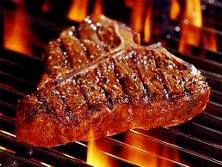
- Heme iron is only found in animal products which include meats, chicken, turkey, fish, and shellfish. Your body absorbs about 15 percent.
- Nonheme iron is found in plant sources and animal sources. This type of iron is absorbed be your body, 3 % to 8%.
Nonheme iron absorption could get better with the following
- Vitamin C, it is found in citrus fruits
- MFP factor is found in animal products
- Sugar, even in wine
Some factors limit or decrease the amount of iron that is absorbed into your body:
- Fiber found in grains and vegetables
- Oxalates, found in spinach, kale, cashews, beets and rhubarb
- Calcium and phosphorous found in dairy products
- EDTA, a food additive
- Tannic acid as well as additional polyphenols which is found in tea and coffee
- Food sources with a good source of iron
Foods with a good source of iron:
Fish/Seafood
Meat
Meat Alternatives
Beans/Legumes
- Kidney beans
- Black beans
- Garbanzo beans/ chickpeas
- Lentils
Vegetables
- Spinach
- Kale
- Mustard greens
- Potatoes
- Asparagus
- Broccoli
Dried fruits
Iron-fortified whole grains
- Cereals
- Breads
- Rice
- Pasta
- Egg yolks
Iron Deficiency Anemia Sample 1-day Menu
| Breakfast |
1 serving citrus fruit 3/4 cup raisin bran cereal 1 egg 1 slice whole-wheat toast 1 tsp margarine |
| Lunch |
3 oz tuna fish 2 slices whole-grain bread 1/2 cup carrots 1 medium apple 1 tsp mayonnaise 1/2 cup low-fat or nonfat milk |
| Afternoon Snack |
1 cup nonfat yogurt 1/2 cup grapes 1 pear |
| Evening Meal |
3 oz chicken 1 medium baked potato, with skin 1.5 cups mixed salad 1 tsp olive oil and vinegar dressing 1/2 cup low-fat or nonfat milk |
|
Source:
http://www.nutrition411.com/content/iron-deficiency-anemia
Academy of Nutrition and Dietetics
Written by Maria Morris, SDSU Dietetic Student