by kelsey | Jul 22, 2014 | Diabetes, Diet, Goals, Heart Health, Motivation, Weight Management, Wellness/Health

A few weeks ago I told you about the exciting news that Brown Clinic was selected to participate in a nutrition research study with South Dakota State University’s Nutrition Department regarding metabolic syndrome. I am still looking for participants to be in the study, so if this interests you and you think you would qualify, please contact me!!
The study will be testing two diets (the DASH diet and the BOLD diet) and their effects on metabolic syndrome
- DASH diet–Dietary Approaches to Stop Hypertension: Considered the “gold standard” heart-healthy diet, this eating plan featured vegetables, fruits and low-fat dairy and limited red meat and sweets
- BOLD diet–Beef in an Optimal Lean Diet: Similar to the DASH diet (rich in vegetables, fruits, whole grains, nuts and beans) and protein amount, but uses lean beef (4 oz./day) as the primary protein source, whereas the DASH diet used primarily white meat and plant protein sources.
Participants must:
- be between 18-65 years of age
- have central obesity (waist circumference >35 in, in women and > 40 in, in men)
- and 2 of the 4 following risk factors to be included in the study:
- elevated triglyceride concentrations (150 mg/dL)
- low high-density lipoprotein (HDL)
- cholesterol (< 40 mg/ dL in men and < 50 mg/dL in women)
- high blood pressure
- elevated fasting plasma glucose (=100 mg/dL)
Participants will receive the following:
- Tailored diet instructions and dietary and exercise goals at your initial meeting (free to the participant).
- Two follow-up meetings with the Registered Dietitian Kelsey Raml (free to the participant). Duration of the study is 10-12 weeks long.
- Free lab work at the beginning and end of the study.
- Compensation for this study is limited to tailored diet instructions and $100 in HyVee gift cards upon completion of required steps.
This study is funded by the South Dakota Beef Council. I am really excited to be a part of this study as the results could play a significant role in nutrition recommendations for metabolic syndrome!
If you are interested in participating, please contact me to determine if you are eligible! If you know of someone who may be interested, feel free to share this information with them and get in contact with me!
Thank you!
Kelsey Raml, MS, RD, LN
605-884-4226
strive2survive@brownclinic.org
by kelsey | Jun 25, 2014 | Diabetes, Diet, Food, Heart Health, Weight Management, Wellness/Health

I am excited to inform you all that Brown Clinic was selected to participate in a nutrition research study with South Dakota State University’s Nutrition Department regarding metabolic syndrome. The study will be testing two diets (the DASH diet and the BOLD diet) and their effects on metabolic syndrome.
- DASH diet–Dietary Approaches to Stop Hypertension: Considered the “gold standard” heart-healthy diet, this eating plan featured vegetables, fruits and low-fat dairy and limited red meat and sweets
- BOLD diet–Beef in an Optimal Lean Diet: Similar to the DASH diet (rich in vegetables, fruits, whole grains, nuts and beans) and protein amount, but uses lean beef (4 oz./day) as the primary protein source, whereas the DASH diet used primarily white meat and plant protein sources.
Participants must:
- be between 18-65 years of age
- have central obesity (waist circumference >35 in, in women and > 40 in, in men)
- and 2 of the 4 following risk factors to be included in the study:
- elevated triglyceride concentrations (150 mg/dL)
- low high-density lipoprotein (HDL)
- cholesterol (< 40 mg/ dL in men and < 50 mg/dL in women)
- high blood pressure
- elevated fasting plasma glucose (=100 mg/dL)
Participants will receive the following:
- Tailored diet instructions and weekly exercise goals at your initial meeting (free to the participant).
- Two follow-up meetings with the Registered Dietitian Kelsey Raml (free to the participant). Duration of the study is 10-12 weeks long.
- Free lab work at the beginning and end of the study.
- Compensation for this study is limited to tailored diet instructions and $100 in HyVee gift cards upon completion of required steps.
This study is funded by the South Dakota Beef Council. I am really excited to be a part of this study as the results could play a significant role in nutrition recommendations for metabolic syndrome!
If you are interested in participating, please contact me to determine if you are eligible! If you know of someone who may be interested, feel free to share this information with them and get in contact with me!
Thank you!
Kelsey Raml, MS, RD, LN
Registered Dietitian
605-884-4226
kelsey.raml@brownclinic.org
by kelsey | May 20, 2014 | Diabetes, Diet, Wellness/Health
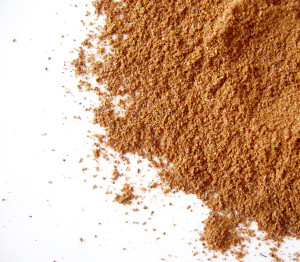
Today, we continue our reader request topics. One reader inquired about the benefits, pros, cons, etc of taking cinnamon for blood sugar control. According to the American Diabetes Association, a study showed an intake of 1,3, or 6 g of cinnamon per day reduces serum glucose, triglyceride, LDL cholesterol, and total cholesterol in people with type 2 diabetes according to the results of a study. One study published in 2009 found that a 500mg capsule of cinnamon taken twice a day for 90 days improved hemoglobin A1C levels in people with poorly controlled type 2 diabetes. More research is needed to confirm these findings and determine how cinnamon supplementation leads to these benefits. For people who have diabetes this is not an alternative to medicine.
There has also been recent studies done where there as been no affect on the participant’s A1C levels. The researches say that it’s possible that the source of the cinnamon and the means by which it’s extracted from cinnamon bark could make a difference as far as its effects on blood glucose levels. This is why cinnamon works in some studies but not in others. Cassia cinnamon is usually what they use in these studies. It is usually the kind that you’re getting at the store. Cassia cinnamon contains a compound called coumarin which may be toxic to the liver at high doses.
People with diabetes still need to keep watching their carbohydrate intake and have a well-balanced diet if they decide to take cinnamon. Compared to drug therapy, we don’t know if cinnamon can reduce the risk of mortality due to diabetes, or the progression to any of the other serious outcomes of diabetes. There still needs to be more evidence-based research to rate the effectiveness of cinnamon in lower blood sugar, but it appears it is not harmful, unless consumed in high doses. Please make special note however, that the use of cinnamon is not an alternative for lifestyle changes and medication if necessary. Following a healthy, balanced, and portion controlled diet with regular activity is still essential to proper blood sugar control!
-Jessica Claussen, SDSU Dietetic Student
by kelsey | May 15, 2014 | Diabetes, Diet, Food, Weight Management, Wellness/Health
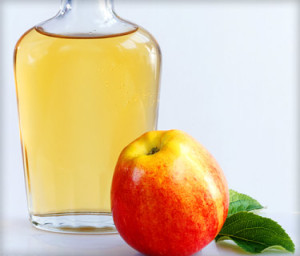
{Photo Referece: http://www.webmd.com/diet/apple-cider-vinegar}
There are claims that apple cider vinegar helps numerous health issues, but is it truly an effective treatment? First off, what is apple cider vinegar? Apple cider vinegar is produced by fermentation of apples. The main ingredient is acetic acid, but many vinegars also have vitamins, minerals, and amino acids (many of these naturally from the apples).
The Claims:
There has been claims that apple cider vinegar is said to help with weight loss. There is little scientific evidence to support these claims. Occasional use of apple cider vinegar is safe for most people, but it won’t likely lead to weight loss.
Apple cider vinegar is an alternative treatment for warts. The wart needs to soak in apple cider vinegar for about 20 minutes. Than the dead skin can be removed and petroleum jelly applied around the wart. The treatment is repeated until the wart falls off.
Apple cider vinegar is also claimed to control blood sugars. It seems that vinegar may be able to inactivate some of the digestive enzymes that break the carbohydrates from food into sugar, thus slowing the absorption of sugar from a meal into the bloodstream. Slowing sugar, absorption gives the insulin-resistant body more time to pull sugar out of the blood and thus helps prevent the blood sugar level from rising so high. This is just a claim and has no scientific evidence to support this.
Apple cider vinegar is said to increase calcium absorption. Vinegar is high in acetic acid, which can increase the body’s absorption of important minerals from the foods we eat.
If you have runny nose, watery eyes, sore throat, or a persistent cough some websites recommend that you mix two teaspoons of apple cider vinegar with two tablespoons of honey and put into a glass of water.
Some articles recommend that taking one to two teaspoonfuls with five to six ounces of water 30 minutes before a meal can help allergies. Than again there is little evidence to support this.
Taking apple cider vinegar for any of these problems, may lead to problems of its own. Apple cider vinegar is very acidic, so it may irritate your throat if you drink it often or in large amounts. Apple cider vinegar may interact with certain supplements or drugs, including diuretics and insulin.
There are many claims that apple cider vinegar cures many diseases and symptoms of colds, but there is little scientific evidence to support these claims. Nothing can be proven, because of the lack of supporting scientific research which can be a problem with alternative therapies. If you are considering using apple cider vinegar for one of these problems, be sure to consult your physician before taking it.
-Jessica Claussen, SDSU Dietetic Student
by kelsey | May 6, 2014 | Diabetes, Diet, Food, Weight Management, Wellness/Health

Today’s post is another reader request! You hear all kinds of good and bad things about artificial sugars, so how do you know what to believe?! Well….here’s the facts:
Artificial sweeteners or sugar substitutes refer to substances that have little to no calories or other nutrients and are added to foods and beverages to provide a taste that is similar to table sugar (sucrose). Because artificial sweeteners are many times sweeter than table sugar, smaller amounts are needed to create the same level of sweetness.
There are five artificial sweeteners that have been tested and approved by the U.S. Food and Drug Administration (FDA):
Acesulfame-K is 200 times sweeter than sugar and it is heat stable, making it great for cooking or baking. The FDA approved acesulfame-K in 1998. Brand names include Sunett and Sweet One.
Aspartame is 200 times sweeter than table sugar and is one of the most commonly used sweeteners today. Aspartame was approved by the FDA in 1981 and is used in a variety of foods. Brand names include NutraSweet and Equal.
Saccharin is about 300 times sweeter than sugar and is used as tabletop sweetener, in baked goods, jams, chewing gum, canned fruit, candy, dessert toppings and salad dressings. The FDA approved saccharin in 1981, along with a warning label stating it was ‘reasonably anticipated to be a human carcinogen’. This warning label was lifted in 2000, after numerous studies cited there is no evidence that saccharin is associated with an incidence of cancer. Brand names include Sweet ‘N Low, Sweet Twin and Sugar Twin.
Sucralose is about 600 times sweeter than table sugar and approved by the FDA in 1999. Sucralose is not absorbed by the body and is eliminated through the urine and feces resulting in zero calories. Sucralose is also heat stable so it can be used for cooking or baking. The brand name for sucralose is Splenda.
Neotame is 7,000-13,000 times sweeter than sugar. Neotame is approved for use in beverages, dairy products, frozen desserts, baked goods and gums. Neotame is not available for consumer purchase at this time.
Stevia has become a popular sweetener in recent years and is extracted from the leaves of the Stevia Rebaudiana Bertoni bush. Two forms can be extracted: Reb A and stevioside. Both are 200-300 times sweeter than table sugar and are calorie free. In 2008, Reb A was generally recognized as safe by the FDA for use as a tabletop sweetener and in prepared foods. Brand names include A Sweet Leaf, Sun Crystals, Stevia, Truvia, and PureVia.
There is a lot of confusion about artificial sugars due to the mixed messages consumers hear about their risks, but when you really look at the studies and evidence, there are are in fact little concerns. According the the FDA, National Cancer Institute, and several other health agencies, there is no sound evidence that these artificial sugars approved cause cancer or serious health problems. Acceptable Daily Intake levels have been set by the FDA to help you determine how much you can consume and still be safe. The ADIs are set at 100x less than the smallest amount that may be harmful. So in order to actually come close to being at risk for side effects it would mean the average person would have to consume around 20 cans of diet pop/day to experience adverse effects. Please see the charts below:
Acceptable Daily Intake for Various Levels: Note the ADI is based on kg of body weight. Take your weight in pounds divided by 2.2 to get your weight in kg.
|
ADI (mg/kg body weight)
|
Average (mg) amount in 12oz can soda
|
Amount (mg) in a packet of sweetener
|
| Acesulfame-K |
15
|
40**
|
50
|
| Aspartame |
50
|
200
|
35
|
| Saccharin |
5
|
140
|
40
|
| Sucralose |
5
|
70
|
5
|
| Sweetener |
Number of 12oz cans diet soda to reach the ADI |
Number of artificial sweetener packets to reach the ADI |
| Acesulfame-K |
25.6
|
20.4
|
| Aspartame |
17
|
97.4
|
| Saccharin |
2.4
|
8.6
|
| Sucralose |
4.8
|
68.2
|
| Stevia/Reb A |
Product info not available. Sodas containing stevia are not widely available |
30
|
There are also newer studies suggesting that the use of artificial sweeteners tricks our body as it’s not real sugar and in turn we eat more. These studies are inconclusive and not reliable. There is a need for more research in this area.
The Bottom Line:
Adults may be able to better manage weight when sugary foods and beverages are replaced with artificial sweeteners as these artificial sweeteners are sugar free, calorie free. The American Academy of Nutrition & Dietetics states that, “based on studies reviewed, artificial sweeteners are safe for use in the general population.” Special populations, such as pregnant women, should limit the use of sugar substitutes and avoid saccharin, since the fetus may not be able to clear the substance quickly enough. Individuals with PKU should avoid aspartame since phenylalanine is found in aspartame. However, individuals with this genetic predisposition can use neotame. So all in all, I recommend them for those wanting to manage their weight and control their blood sugars, however moderation and portion control are key!! You should limit your consumption of 1-2 small drinks/day with artificial sweeteners and instead drink more water. You can flavor your water with real fruit such as infusing berries or squeezing a lemon in your water for flavor.
Source:ADA Evidence Analysis Library (2011).The Truth about Artificial Sweeteners or Sugar Substitutes: How Much Is Too Much?.Retrieved May 1, 2012 from the American Dietetic Association. Website: http://www.adaevidencelibrary.com/files/Docs/NNSResourceDraft3.pdf
-Kelsey
by kelsey | Apr 2, 2014 | Cooking Tips, Diabetes, Diet, Food, Weight Management, Wellness/Health
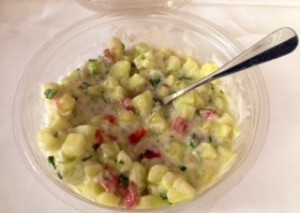
Every Tuesday we meet at the County Fair Banquet Hall for STRIVE 2 Survive, County Fair Foods supplies treats for us. I have to be honest, it’s one of my favorite parts of the lecture as I am always curious to see what new foods they’ll have us try! They have had some really great healthy and low calorie recipes lately so I couldn’t resist sharing!
The above picture is “Crisp Cucumber Salsa”
2 cups finely chopped seeded peeled cucumber
1/4 chopped red onion
1 jalapeno pepper, seeded and chopped
1 garlic clove, minced or pressed
1-1/2 tsp lemon juice
1/4 tsp ground cumin
1/2 cup finely chopped seeded tomato
2 Tbsp minced fresh parsley
4-1/2 minced fresh cilantro
1/4 reduced fat Greek yogurt (can use this instead of sour cream)
1-1/2 tsp lime juice
1/4 seasoned salt
In a bowl combine the Greek yogurt, lemon juice, lime juice, cumin, and seasoned salt. In another bowl, combine the other ingredients. Pour the liquid mixture over the cucumber mixture and toss gently to coat. Serve immediately with baked tortilla chips. Note- 1/4 cup is only 16 calories! If it’s too spicy, you can eliminate the jalapeno.

Low Fat Pumpkin Chocolate Chip Muffins
2 cups whole wheat flour
1 tbsp baking powder
1/2 tsp baking soda
1/2 tsp ground nutmeg
1/2 cup water
1/2 cup packed brown sugar
1 tsp ground cinnamon
1/2 tsp salt
1 (15 oz) can solid packed pumpkin
1/2 cup chocolate chips
Preheat oven to 375 degrees. Line 12 muffin cups with paper liners. Whisk whole wheat flour, brown sugar, baking powder, cinnamon, baking soda, salt, and nutmeg in a large bowl. Stir pumpkin and water into dry ingredients, mixing until just moistened; folk in chocolate chips. Spoon batter into prepared muffin cups, filling them to just below the tops. Bake in the preheated oven until lightly browned and tops of muffins bounce back when pressed lightly, 25-30 minutes. Let muffins cool in pans for 5 minutes until removing to a wire rack to cool completely.
Nutrition information: servings per recipe: 12
Calories: 150 Total Fat: 2.6g Sodium: 323mg Total Carbs: 31g Dietary Fiber: 4g Protein: 3.5g
We also had excellent treats last week, but I didn’t get pictures. Here are the recipes for you try. They are excellent!
Angel Food Dessert
1 sugar free angel food cake, cubed
1 package sugar free vanilla pudding
1 package sugar free strawberry jello
1-16oz cool whip
fresh strawberries, sliced
Mix jello according to package. Also mix pudding according to package. Cube angel food cake. Put in pan in layers. Angel food cake first, then pour jello over, then pour pudding over, and then put cool whip on top. Lay sliced strawberries on top of cool whip and refrigerate over night covered.
Garden Fresh Cottage Cheese Salad
1 container 1% cottage cheese
1 cucumber cubed
1 regular tomato cubed
1 package Good Seasoning Italian dressing
Mix together and put in refrigerator for a few hours before serving.
All of these ingredients for these products can be found at our County Fair Food Store. Enjoy!!
-Kelsey
