by kelsey | Apr 28, 2016 | Cooking Tips, Diabetes, Diet, Food, Weight Management, Wellness/Health

Spring and summer bring warmer temps and the desire for more frozen treats! Smoothies are a great way to cool off and get some great nutrients while you’re at it!
Lately there has been an explosion in the media discussing smoothies for weight loss, athletic performance, and meal replacements. Since the supplement industry heavily promotes “quick fixes”, keep in mind that an overall balanced diet is the best way to maintain or improve your health. The goal of many supplement industries is not to fix the problem, but rather to create addiction and increase revenue. Supplements are not regulated by the Food and Drug Administration and claims made for them are not always accurate or proven. However, homemade fruit and vegetable smoothies are way to guarantee your 5-A-Day natural nutrients. Consumption of fruits and vegetables may help prevent chronic diseases such as cancer, heart disease, and diabetes while delivering fiber and vitamins. With a new season upon us, we are gifted with a wider variety of options to choose from when eating the rainbow. Contrary to the common belief, consuming the recommended amounts of fruits and vegetables can be inexpensive and in the long run will save you money in terms of medical bills.
There are endless smoothie recipes you can use to make a quick breakfast, after a workout, or for an afternoon snack. Adding an extra boost to your smoothie such as protein powder or Greek yogurt will additionally provide other valuable nutrients. Here’s a guide to help get started
Add Fruit/Vegetable
|
Add Liquid
|
Add Thickener
|
Extra
|
| Banana, Berries, Apple, Pear, Peach, Kiwi, Pineapple, Cherries, Mango, Orange, Spinach, Kale, Beets, Carrots |
Dairy, Soy, Rice, or Almond Milk, Fruit Juice, Water, Iced Tea |
Peanut butter, Yogurt, Frozen yogurt, ice cubes, or oats. |
Honey, Cinnamon, Protein Powder, Mint, Figs, Dark Chocolate, Flaxseed. |
| Choose 2-3 |
Add 1-2 cups of liquid |
Pick your consistency |
Your preference |
Here are some examples:
Green Smoothie: Mango Chunks, Banana, Kale or Spinach, Apple Slices, Water, Plain low fat yogurt
Carrot Smoothie: Carrots, Orange, Pineapple, Low-sugar Apple Juice, Ice Cubes, Cinnamon
Desert Smoothie: Banana, Apple Slices, Low Fat/Skim Milk, Peanut Butter, Top with Dark Chocolate Shavings
Enjoy!
-Kelsey
by kelsey | Apr 13, 2016 | Cooking Tips, Diabetes, Diet, Food, Heart Health, Weight Management, Wellness/Health

Last night’s STRIVE treats were extra tasty and healthy! Be sure to give these recipes a try!
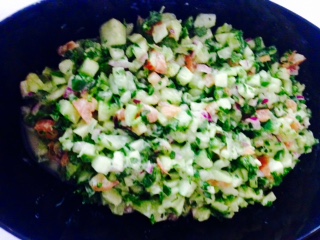
Crisp Cucumber Salad
Ingredients:
2 c finely chopped, seeded, peeled cucumbers
1/4 c chopped red onion
1 jalepeno pepper, seeded and chopped
1 garlic clove, minced or pressed
1 1/2 tsp lemon juice
1/4 tsp ground cumin
1/2 c finely chopped and seeded tomato
2 Tbsp minced fresh parsley
4 1/2 tsp minced fresh cilantro
1/4 c low fat Greek yogurt
1 1/2 tsp lime juice
1/4 tsp seasoned salt
Baked or whole grain tortilla chips
Directions: In a small bowl, combine first seven ingredients. In another bowl, combine the yogurt, lemon juice, lime juice, cumin, and seasoned salt. Pour over cucumber mixture and toss gently to coat. Serve immediately with whole grain chips or crackers.

Creamy Feta-Spinach Dip (pictured above)
8 oz fat free yogurt
3/4 cup crumbled feta cheese
2 oz reduced fat cream cheese, cubed
1/4 cup reduced fat sour cream
1 garlic clove, minced
1 1/2 cups finely chopped fresh spinach
1 tsp dill weed
1/8 tsp pepper
Fresh veggies, pretzels, or sliced bread
- Line a strainer with a coffee filter; place over bowl. Place yogurt in prepared strainer; cover yogurt with coffee filter. Refrigerate for 2 hours or until yogurt has thickened to the consistency of whipped cream.
- Transfer yogurt to a food processor (discard liquid from bowl). Add the feta cheese, cream cheese, sour cream, and garlic; cover and process until smooth.
- Transfer to a small bowl. Stir in spinach, dill, and pepper. Cover and refrigerate until chilled. Serve with vegetables or bread.
Enjoy!
by kelsey | Mar 22, 2016 | Diabetes, Diet, Food, Weight Management, Wellness/Health

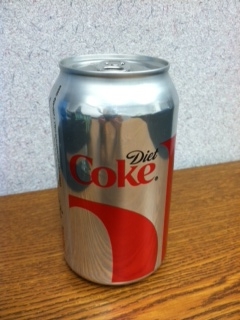
One of the most frequent questions I get from patients is what the real truth is about artificial sugars. You hear all kinds of good and bad things about them, so how do you know what to believe?! Well….here’s the facts:
Artificial sweeteners or sugar substitutes refer to substances that have little to no calories or other nutrients and are added to foods and beverages to provide a taste that is similar to table sugar (sucrose). Because artificial sweeteners are many times sweeter than table sugar, smaller amounts are needed to create the same level of sweetness.
There are five artificial sweeteners that have been tested and approved by the U.S. Food and Drug Administration (FDA):
Acesulfame-K is 200 times sweeter than sugar and it is heat stable, making it great for cooking or baking. The FDA approved acesulfame-K in 1998. Brand names include Sunett and Sweet One.
Aspartame is 200 times sweeter than table sugar and is one of the most commonly used sweeteners today. Aspartame was approved by the FDA in 1981 and is used in a variety of foods. Brand names include NutraSweet and Equal.
Saccharin is about 300 times sweeter than sugar and is used as tabletop sweetener, in baked goods, jams, chewing gum, canned fruit, candy, dessert toppings and salad dressings. The FDA approved saccharin in 1981, along with a warning label stating it was ‘reasonably anticipated to be a human carcinogen’. This warning label was lifted in 2000, after numerous studies cited there is no evidence that saccharin is associated with an incidence of cancer. Brand names include Sweet ‘N Low, Sweet Twin and Sugar Twin.
Sucralose is about 600 times sweeter than table sugar and approved by the FDA in 1999. Sucralose is not absorbed by the body and is eliminated through the urine and feces resulting in zero calories. Sucralose is also heat stable so it can be used for cooking or baking. The brand name for sucralose is Splenda.
Neotame is 7,000-13,000 times sweeter than sugar. Neotame is approved for use in beverages, dairy products, frozen desserts, baked goods and gums. Neotame is not available for consumer purchase at this time.
Stevia has become a popular sweetener in recent years and is extracted from the leaves of the Stevia Rebaudiana Bertoni bush. Two forms can be extracted: Reb A and stevioside. Both are 200-300 times sweeter than table sugar and are calorie free. In 2008, Reb A was generally recognized as safe by the FDA for use as a tabletop sweetener and in prepared foods. Brand names include A Sweet Leaf, Sun Crystals, Stevia, Truvia, and PureVia.
There is a lot of confusion about artificial sugars due to the mixed messages consumers hear about their risks, but when you really look at the studies and evidence, there are are in fact little concerns. According the the FDA, National Cancer Institute, and several other health agencies, there is no sound evidence that these artificial sugars approved cause cancer or serious health problems. Acceptable Daily Intake levels have been set by the FDA to help you determine how much you can consume and still be safe. The ADIs are set at 100x less than the smallest amount that may be harmful. So in order to actually come close to being at risk for side effects it would mean the average person would have to consume around 20 cans of diet pop/day to experience adverse effects. Please see the charts below:
Acceptable Daily Intake for Various Levels: Note the ADI is based on kg of body weight. Take your weight in pounds divided by 2.2 to get your weight in kg.
|
ADI (mg/kg body weight)
|
Average (mg) amount in 12oz can soda
|
Amount (mg) in a packet of sweetener
|
| Acesulfame-K |
15
|
40**
|
50
|
| Aspartame |
50
|
200
|
35
|
| Saccharin |
5
|
140
|
40
|
| Sucralose |
5
|
70
|
5
|
| Sweetener |
Number of 12oz cans diet soda to reach the ADI |
Number of artificial sweetener packets to reach the ADI |
| Acesulfame-K |
25.6
|
20.4
|
| Aspartame |
17
|
97.4
|
| Saccharin |
2.4
|
8.6
|
| Sucralose |
4.8
|
68.2
|
| Stevia/Reb A |
Product info not available. Sodas containing stevia are not widely available |
30
|
There are also newer studies suggesting that the use of artificial sweeteners tricks our body as it’s not real sugar and in turn we eat more. These studies are inconclusive and not reliable.
The Bottom Line:
Adults may be able to better manage weight when sugary foods and beverages are replaced with artificial sweeteners as these artificial sweeteners are sugar free, calorie free. Studies have also shown that artificial sweeteners do not increase appetite or food intake in adults, adolescents or children. The American Academy of Nutrition & Dietetics states that, “based on studies reviewed, artificial sweeteners are safe for use in the general population.” Special populations, such as pregnant women, should limit the use of sugar substitutes and avoid saccharin, since the fetus may not be able to clear the substance quickly enough. Individuals with PKU should avoid aspartame since phenylalanine is found in aspartame. However, individuals with this genetic predisposition can use neotame. So all in all, I recommend them for those wanting to manage their weight and control their blood sugars, however moderation and portion control are key!!
Source:ADA Evidence Analysis Library (2011).The Truth about Artificial Sweeteners or Sugar Substitutes: How Much Is Too Much?.Retrieved May 1, 2012 from the American Dietetic Association. Website: http://www.adaevidencelibrary.com/files/Docs/NNSResourceDraft3.pdf
-Kelsey
by kelsey | Aug 11, 2015 | Diabetes, Diet, Food, Heart Health, Weight Management, Wellness/Health

Breakfast is one of the most important meals of the day! Yes, you have probably heard this before, but are you a breakfast eater!? Having a good breakfast is a great way to start out the day. It’s not only important for our body, but our mind too. Many times we’ll have excuses such as I was running late, I didn’t feel like eating, I’m not hungry in the morning, and this actually accounts for about a 1/4 to a 1/3 of the population! Starting the day without breakfast is like driving your car on a low tank of gas. We know we can’t go on forever on a low tank of gas, so we shouldn’t do that to our bodies either! Those that skip breakfast tend to snack more on high fat and lower nutritious foods…and are more likely to overeat at lunch because they are over-hungry. Studies have also shown that those working on weight loss are more successful when they eat breakfast as this really jump starts their metabolism and starts their day off right. In addition, eating a healthy breakfast helps our kids excel in school as it helps fuel the brain!
So what should you eat for breakfast? It’s important to get a balance at your meals and especially include a source of protein and a whole grain as these provide satiety. Here are some examples for you:
- Ready-to-eat cereal (>3g fiber, <2-3g fat, a ratio of greater than 4 g carbohydrate:1 g sugar)
- Hot cereal (oatmeal)
- Bagel with low-fat cream cheese or peanut butter
- Yogurt Parfait
- Fruit and yogurt smoothie
- Peanut butter or hummus on whole-wheat toast
- Breakfast quesadilla with low-fat cream cheese and sliced fruit
- Breakfast burrito or taco
- Toasted whole-wheat English muffin with lean ham and low-fat cheese
- Toasted pita with scrambled egg and low-fat cheese
- Low-fat milk and 100% fruit
If you are one who is not a fan of breakfast but understands the importance of it, I encourage you to try a variety of these options and see which one works best for you. I also encourage you to plan ahead. You may need to wake up 5 minutes earlier to fit breakfast in or make your smoothie the night before so all you have to do it pull the bottle or container out of the freezer or fridge in the morning and drink it on your way to work. Starting your day with a full tank will provide long lasting benefits to you and your body!
-Kelsey
by kelsey | Jul 29, 2015 | Cooking Tips, Diabetes, Diet, Food, Weight Management

Have you ever wondered how you can enjoy a sweet treat without all of the added calories?! Here are a few ideas for you:
- Mix flavored yogurt or plain yogurt honey and your favorite fruit.
- Drizzle a bit of honey over mixed melon balls.
- Blend bananas and strawberries, freeze into cubes, and eat like ice cream.
- Sauté or bake 1/2 banana and sprinkle with 1 tablespoon chopped nuts.
- Take three of your favorite kinds of berries; cook half of them with just enough water to prevent burning. Cool and stir in remaining berries. Portion 1/2 cup of the berry compote with 1 tablespoon of your favorite vanilla ice cream.
- Try making your favorite flavor of sugar free pudding with low-fat milk.
- If it’s ice cream that you really want- skip the scoop-yourself containers and buy single-serving novelty treats such as fudgesicles, creamsicles, even chocolate-covered ice cream bars. You’re more likely to limit your portions if they already come in a single serving
Enjoy!
-Kelsey
by kelsey | Jul 21, 2015 | Diabetes, Diet, Eating Out, Food, Weight Management, Wellness/Health

Everyone is busy and on the run with life happenings so eating out tends to be a part of our lives. I have found this happens even more in the summer with summer vacations and activities. We all know that eating out is not the best for us as we don’t have control over how the meal is prepared, ingredients, and portions like we do at home. Despite this, we all still eat out and most of us enjoy it as it means we don’t have to do the preparing, cooking, and cleaning up afterwards…and it’s typically a social activity as well! Restaurants are taking notice of our nation’s desire to improve our health and wellness and there are more healthier options on the menus today, but there are still some very unhealthy ones as well. Below are some tips to help you eat out the healthy way:
- Go for a smaller portion of the meal such as half of the meal, lunch portion, or appetizer size portion.
- Look for key words such as baked, broiled, grilled, or roasted. Stay away from descriptive words such as crispy, creamy, crunchy, and crispy as those typically mean fried and more fat added.
- Substitute the fries for a salad (dressing on the side and use sparingly) or if available a second serving of cooked veggies or fruit.
- Get a to-go box right away before you start eating and package half of your meal in the box and eat at another meal at home. If it’s on your plate, you’ll be more apt to eat it, so put it away right away so you aren’t tempted and you are more apt to practice proper portion control.
- Share! It’s ok to share an entree with you friend, spouse, etc to help you practice better portion control.
- Look at the options ahead of time online or using your smart phone. Many restaurants have their nutrition information included in their websites or you can use the Calorie King app to explore the options and make a healthy choice when dining out.
- If eating out is a rare occurrence, it is ok to splurge, but keep in mind it should be a special occasion and only every once in awhile, not every day or every week as those extra calories will add up and cause weight gain quickly!
- To help balance out the extra calories consumed when eating out, be sure to get your activity in and engage in at least 30-60 minutes/day!
-Kelsey