by kelsey | Aug 22, 2012 | Cooking Tips, Food, Wellness/Health

With everyone getting back into the groove of school this week, it means children are going back to the cafeteria. The importance of talking with your children about nutrition is crucial to their health. Children need to be able to make healthy decisions on their own. There are several steps a parent can make when helping their child go back to school.
Look over the menu: Review the weekly or monthly school menus with your child and decide which meals they like and dislike. For the days your child decides to eat at school help them distinguish the healthier choice, like choosing fruit instead of a cookie. Studies have shown letting your child help in the decision-making process makes them more likely to follow through with the decision.
Packing your own lunch: Make sure you’re packing meals with enough nutrients to power your child through the rest of their school day. Let your child be a part of the lunch packing process whether if it is making the sandwich or packing fruits into a bag. Pack food your child likes, because if they don’t eat it at home they are not likely to eat them when you’re not around.
Follow up at home: Make sure to follow up their lunch with an equally healthy dinner. Having a well balance meal at every meal is very important. A child who eats healthy at home is more likely to make healthier choices when they are on their own.
Tips for Packing Healthy School Lunches:
- Plastic bags and containers will really help with portions while making a sack lunch.
- Keep in mind that they will not be eating right away and to keep the refrigerated foods cool to keep from spoiling. For example, dairy products such as yogurt, will need a cool pack.
- Pack the lunch the night before with leftovers from dinner to save time in the morning.
- Make sure to include the child while making lunch and give them healthy choices to choose from.
- Try to choose less sugary drinks, like skim milk instead of chocolate milk or crystal light instead of a high sugar juice.
Keeping the lunches safe by keeping all the food at the correct temperatures. Pack cold items in an insulated lunch box with a frozen pack. Keep warm soups in a thermos, make sure the thermos is clean and use very hot water.
Sandwich Ideas
Whole wheat bread with deli meat (try to avoid bologna, pepperoni, and salami)
Peanut butter and jelly sandwich
Bagel with cream cheese or peanut butter
Crackers and cheese
Pita with hummus
Ham and cheese rolled up in a whole wheat tor-tilla
Crackers and cheese
*This blog post was written by Megan Bren, SDSU Dietetic Student
-Kelsey
by kelsey | Aug 15, 2012 | Cooking Tips, Diet, Food, Weight Management
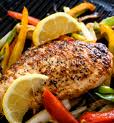
A popular topic of discussion with my patients is fat content and ways to reduce fat in our diets. You have read about lean beef options in previous posts, but it’s also important to discuss white meat poultry compared to dark meat. Many prefer the chicken thigh over the breast due to the flavor and taste. The dark meat certainly may have more flavor, but it also has more calories, fat, and saturated fat all contributing to the flavor. A 3 oz portion of a chicken breast without the skin contains about 3 g of fat, <1g sat fat and about 140 calories. A similar serving of dark meat has about 170 calories, 9 g of fat and 3 g of saturated fat. The nutritional composition of dark meat is very similar to that of a T-bone steak. Thus, the white meat has less calories and significantly less fat.
Choosing lean meats is going to help reduce your risk for heart disease, but it’s also important to be mindful of your portion sizes to help keep your calories balanced. Keeping your protein to a quarter of your plate or about 3-4 oz will provide your body with the right amount of nutrients, while not breaking the calorie bank. In addition, be sure always include a balance at your meals with a quarter of your plate whole grains and half your plate fruits and veggies.
-Kelsey
by kelsey | Jul 19, 2012 | Cooking Tips, Food, Weight Management, Wellness/Health

As I mentioned in my post yesterday, I am proud to be a part of South Dakota Team BEEF which is sponsored by the SD Beef Council. Team BEEF is a group of runners and health advocates who recognize the benefits nutritionally of lean beef and the important role this top notch protein can play in training. As members of Team BEEF, you get a running jersey to promote Team BEEF and reimbursement for several sponsored races. I first learned of Team BEEF from a good friend and fellow dietitian who helped start Wisconsin’s Team BEEF when she was in school there. As I learned more, I knew I had to get involved as I am truly passionate about health and wellness and am an advocate for lean beef protein. Yes, I may be little biased because I am the wife of a cattle rancher and that’s our way of living, however if you truly examine the research and evidence regarding beef protein, there truly is a place for it in our diets…as long as you are selecting the lean cuts the majority of time.
Did you know that beef is 20% leaner than it was about 15 years ago? There are at least 29 cuts of lean beef which means they meet the government guidelines for lean, meaning each cut has less than 10g of total fat, less than 4.5 g of saturated fat, and less than 95mg of cholesterol (in a 3 oz serving). Here are some tips for you to make beef a part of your heart healthy meals:
- Look for key words such as “round” or “loin” …these are typically leaner cuts
- Choose 90% or greater lean beef. This means in a 3oz serving there is less than 5g of fat in it.
- Use healthy cooking methods such as grilling, broiling, baking, roasting, or braising. The less tender cuts can be marinated in a tenderizing marinade such as salsa or light Italian dressing.
- Trim the fat! Trimming the fat before cooking will help eliminate some of the fat from the cut.
- Cook with fresh ingredients such as lemon juice, peppers, onions, garlic, and herbs instead of adding extra fat to the cut.
- Practice portion control. Select the 3-5 oz serving over the 10oz.
Balance is key to a healthy diet, so be sure to include your fruits and veggies and whole grains along with your lean meat to create a healthy plate. As of a just a few months ago, all meat is required to have the nutrition content (label) posted by it in the grocery store. Be sure to use this when you’re selecting your cuts of meat and pay special attention to the total fat and saturated fat content. If you want to learn more about the benefits of beef and explore healthy recipes check out these websites: www.beefnutrition.org and www.beefitswhatsfordinner.com.
Below is a picture of some of the SD Team BEEF members after the Beef & Eggs 5k.

-Kelsey
by kelsey | Jun 28, 2012 | Cooking Tips, Food
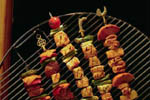
With the 4th of July right around the corner, you may be busy making plans with friends and family which always involves planning a menu. Summer gatherings are known for picnics and outdoor eating, and often times food safety is overlooked. One small mistake of food safety can result in foodborne illness and sicken your whole crew. Here are some tips to avoid foodborne illness.
1) Wash your Hands: many times foodborne illness can be avoided by simply practicing proper hand washing techniques. Be sure to wash your hands before cooking, after handling raw meat, and before eating. If running water is not available, bring hand sanitizer and rub it all over your hands, inbetween fingers, and around your nails.
2) Use sealed containers for packing your coolers: If juices from raw meats drip into your cooler and mix with other items, it creates the perfect environment for bacteria to grown. Use ziplock or sealed tight containers for packing your goods. If running water isn’t available, be sure to wash your produce before you leave home!
3) Avoid cross-contamination: bring two sets of utensils and plates to avoid cross contamination. One set for the raw food and one set for the cooked food.
4) Use a good cooler: Make sure your cooler is up to par for keeping your foods cool and be sure to leave enough room (1/4) of it for ice, ice packs, etc. Pack cool and hot foods separately and be sure to use your thermometer to check the temperature of the cooler throughout the day. Temperatures should be under 40 degrees.
5) Dont’ let food sit out: The danger zone for bacteria growth is between 40 and 140 degress F. Bacteria can double in a matter of 20 minutes when in this zone. Do not let any food sit out for more than 2 hours and if the temperature is higher than 90 degrees F, food should only sit out for an hour. Be especially mindful of meats, salads made with a mayo base, and anything dairy.
6) Use a thermometer: Meats needs to be cooked to certain temperatures to ensure doneness and eliminate bacteria. Hamburger must be cooked to 160 degrees F and chicken- 165 degrees F. If you are unsure of what temp your meat should be cooked to, please refer to this chart: http://homefoodsafety.org/cook
Enjoy and be safe!
-Kelsey
by kelsey | May 9, 2012 | Cooking Tips, Food, Weight Management, Wellness/Health

Last night’s Relish Cooking Show was a great event and well attended! There were many great vendors and the chef presented his cooking demonstration in a way that was applicable to every day life in the fast lane. For those who didn’t attend, I believe you will be able to watch the show online at www.relish.com. Cooking can sometimes be very overwhelming as it takes planning and time, but once you get the hang of things, it will not only save you money from going out to eat, but it can also be healthier for you! Now the recipes he made last night were not all the healthiest, but he did show us that you can make meals in a timely fashion by reusing ingredients and parts of the meals for other courses at another time. Since the first of the year, I have tried making an effort to plan our meals better. It wasn’t really a resolution, just mainly a wellness goal of mine. It’s easy to get into the habit of not planning and then grabbing something quick or making boxed meals. Now, it’s fine to do that every once in awhile, but the processing isn’t good for us and can make us feel sluggish as we aren’t fueling our bodies with healthy foods.
Everyone’s busy and frankly the busy-ness isn’t ever going to change as that’s the way our society is, so we need to adapt and do better with what we have control of. Here are some tips that have helped me be more organized and enjoy healthy meals during the busy work week. I hope they help you too!
- On a day that you have a little more (example- Sunday) make a plan for your week’s meals. Plan out at least 3-5 days. Ask your family for input on what they would like to help reduce the stress of you having to plan everything out yourself. Since I don’t have any kids to help me with this, I love looking through my cookbooks and finding new recipes and/or meals we haven’t had in awhile to keep variety in our intake.
- Think about how you can re-use items for several meals. An example of this is what we call batch cooking and what Chef Christopher showed last night. Brown up some extra hamburger or slow cook several chicken breasts in a crockpot or oven and pre-portion into a few small containers to use in various meals. Last week I used hamburger in 3 meals: hamburger pizza, spaghetti, and tacos, but I only browned the hamburger once, thus saving me a lot of time.
- Check your cupboards, fridge, and freezer to make sure you have adequate groceries for these meals. If you don’t, you may need to make a trip to the grocery store.
- Ask your family for help! If you have kids old enough to help in the kitchen assign each of them a night to help out.
- Think about MyPlate and make sure you have adequate produce to make a healthy plate with the food groups. Remember half of your plate should be fruits and vegetables, a quarter lean meat, and a quarter whole grains. If you’re always short on veggies (which most of us are), I highly recommend the frozen steamer bags as they are super easy and convenient.
Cooking at home doesn’t have to be stressful…with a little planning and pre-preparation, you’ll find that eating at home is truly enjoyable and much healthier than that greasy burger and fries from the drive thru.
The picture I have included is of our very own STRIVE 2 Survive contributor, Dr. Jon McAreavey showing off his knife and cooking skills at the Relish show last night.
-Kelsey
by kelsey | Apr 25, 2012 | Cooking Tips, Diet, Food, Weight Management, Wellness/Health

Do you have a child that refuses to eat vegetables? Many prefer fruit over vegetables because of their sweet taste. However the combination of fruit and vegetables offers our body’s a great source of vitamins and minerals and each color offers their own really great nutrients…which is why we encourage you to eat a colorful diet. As many of you know, we recommend getting at least 2 fruits a day and fresh or frozen are best. Be careful of the juices and canned fruit as they often times have more sugar and lack the fiber which is beneficial for us. To help increase vegetable intake (strive to get at least 3 servings/day), try using a variety of preparation methods such as raw, steamed, or roasted. Here are some tips to help your children increase their intake of vegetables:
- Allow your children to pick out the vegetables for dinner
- Use cut-up vegetables with dip as a snack
- Vary the choices to keep it interesting
- Have kids help wash, peel and slice vegetables if they are old enough.
Including them in the decision making and preparation gives them ownership and makes eating them more satisfying! A really great website for learning more about increasing your fruit and veggie consumption is: www.fruitsandveggiesmorematters.org. Check it out!
-Kelsey
Reference: http://www.eatright.org/Public/content.aspx?id=6442450985
