by kelsey | May 22, 2013 | Cooking Tips, Diabetes, Diet, Food, Weight Management

As I’ve said before, one of my favorite parts of STRIVE 2 Survive is enjoying the various selections County Fair Foods provides for us. Last night, we had an excellent strawberry trifle and it was so good I thought I’d share the recipe with you!
Ingredients:
1 container of cool whip (use light, fat free, or sugar free)
1 sugar free angel food cake (baked)
1 sugar free strawberry jello (mixed)
1 sugar free vanilla instant pudding (mixed)
1 container of sweetened strawberries (thawed)
Steps:
Tear angel food cake into pan.
Pour jello over angel food
Pour sweetened strawberries.
Pour Pudding
Top with cool whip.
As you can see, we all really enjoyed it as the pan is almost gone!

This is great for a summer picnic and to give your sweet tooth a fix without all of the extra calories!
-Kelsey
by kelsey | May 7, 2013 | Cooking Tips, Food, Weight Management, Wellness/Health
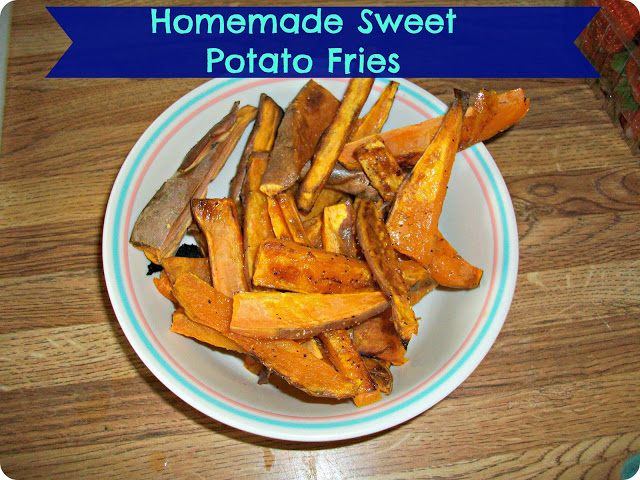
This week I have a dietetic student from South Dakota State University with me doing part of her practicum experience. Amanda Lambrechts is a senior dietetic student and originally from Milbank. She has her own personal blog so when I asked her if she wanted to contribute this week’s posts she was happy to do so, as she’s a natural at it! -Kelsey
Amanda’s Sweet Potato Fries
I tried sweet potato fries for the first time my sophomore year of college at a place on campus at SDSU. I liked them, but they didn’t seem much healthier than any other fries. They were still covered with salt and grease. I hadn’t thought much about them again, until earlier this Spring. A dietetics friend of mine was telling me that sweet potatoes are a staple food of hers. Feeling in a food rut after a long semester, I decided to dig my way out by trying some different recipes. I must say, after you make these homemade sweet potato fries, you will never go back to greasy fast food fries again.
1.) You will need: Extra Virgin Olive Oil, Mrs. Dash, Garlic Salt, Sweet Potatoes, a baking sheet, aluminum foil, a sharp knife, and a cutting board.
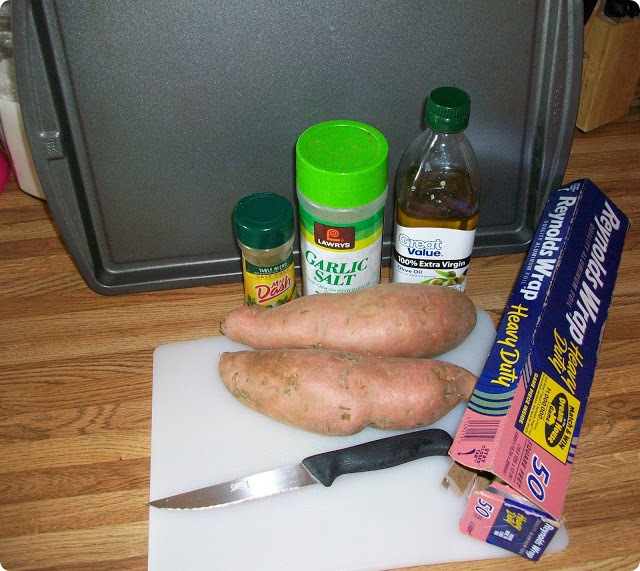
2.) Before preparing the fries, preheat the oven to 400 degrees F and line the
baking sheet with foil.
3.) After washing and scrubbing the sweet potatoes thoroughly, cut them into wedges.
4.) Sparingly, drizzle olive oil and sprinkle some Mrs. Dash and Garlic Salt over the wedges. Toss the wedges a few times so the seasoning and oil is distributed.
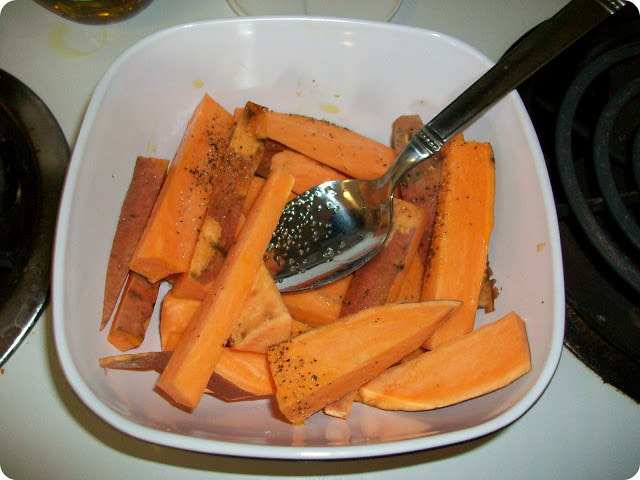
5.) Line the baking sheet with the wedges and place them in the heated oven.
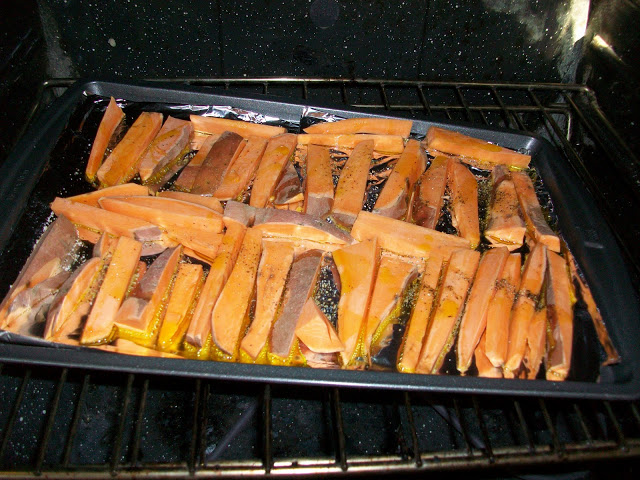
6.) Allow the wedges to bake for 10-15 minutes. Take the pan out of the oven and flip each of the wedges to their opposite side. Bake for 10-15 additional minutes.
7.) Allow the fries to cool a few minutes before serving.

8.) Finally, enjoy! I dipped mine in Kraft 3-Cheese Ranch Lite Dressing.
Not only are these fries delicious, but they are also a great source of Beta Carotene. I can see myself making these again in the future.
Get it?
Beta Carotene…See….
Okay, you don’t have to laugh at that joke, but I would recommend you trying this recipe.
-Amanda
by kelsey | Mar 28, 2013 | Cooking Tips, Food, Holidays
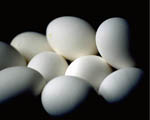
With the Easter Holiday and Celebration just a few days away, many of you have your eggs hard boiled and ready to be painted…or many of you already have them painted! Painting eggs is an Easter tradition. As a child I always looked forward to painting eggs, the egg hunt, and of course of our Easter baskets. Easter was always an eventful holiday around our house and we have many funny stories to tell about our traditions. The eggs, baskets, etc are all part of the fun, but be sure to reflect on the real meaning of Easter!
As Sunday comes and goes, you may wonder what to do with those eggs. Here are some tips for you to practice proper egg safety:
- Not sure how to boil an egg? Place the eggs in a saucepan and cover with water. Bring to a boil with the lid on, then turn off the heat. Let the eggs sit in water for 15 min. Remove eggs and place in a bowl of ice cold water to cool.
- Eggs should be used within 3 weeks of the sell by date. Be sure to store them in the fridge at a temp less than 40 degrees F.
- Hard boiled eggs spoil faster than fresh eggs as the protective coating is washed away, making them more susceptible to bacteria. Hard boiled eggs must be refrigerated within 2 hours of cooking.
- If you want to eat the hard boiled eggs after the holiday, you must store them in the refrigerator. Throw away any eggs that are cracked, dirty, or have been out of the fridge for more than 2 hours. If you are going to use the leftover cooked eggs, it is recommended to use them within one week to prevent food poisoning. To help you do this, you could make two batches- one to display and one for eating.
- Ever wonder what the green ring on a hard boiled yolk is? It’s a result of overcooking the eggs and is caused by sulfur and iron compounds in the egg reacting to the surface of the yolk. The green color may also be a result of a large amount of iron in the water used to cook with. It may look funny, but it is safe to eat.
Happy Easter!
-Kelsey
by kelsey | Mar 7, 2013 | Cooking Tips, Diet, Food, Weight Management, Wellness/Health
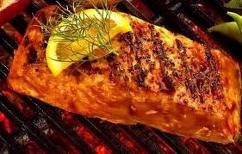
Fish is not the most popular protein in our area since we are a land locked, northern state. Our mid-western diet typically includes proteins from beef, chicken, and pork…and fish often gets overlooked. During the Lenten season, it’s a good time to try out some new varieties and types of fish as they are better stocked and often times are better priced (ie- salmon, mahi-mahi, talapia, etc). The frozen bags of fish often have the filets in individual servings or two servings in a wrap so you can just take out as much as you need and then put the rest of the bag back in the freezer. Fish is a very lean and low fat protein so if you are watching your weight, it’s a good choice. Another benefit of some types of fish is the omega 3 fatty acids. Fatty fish such as herring, trout, tuna, mackerel, seabass, and salmon have these good fats. Our fresh water fish from around here such as walleye, northern, and perch, do not have these fats, however they are still lean proteins. It is recommended to incorporate two servings of fish into your weekly intake, so get into the habit of this during Lent and it could stick!
When we eat fish, we often think of it as breaded and fried, however that is not the healthiest choice. Instead of frying try these cooking methods:
- Grill: Season the fish with herbs and spices and a little lemon juice (from real lemons!). Lightly brush the fish with a little olive or canola oil so it won’t stick to the grill and cook for 10-20 minutes.
- Saute: You can saute any type of skinless fish. Again, season as desired and then heat a little olive or canola oil in the skillet on medium-high. Cook the fish for 2-3 minutes on both side.
- Poach: Place the fish in a saucepan or deep skillet and add enough stock, water, or wine to barely cover the fish. Add your seasonings, herbs, or spices and bring the liquid to a simmer on medium heat. Simmer for 10 minutes or until the center is opaque. Then you can dress it up with a sauce if desired.
- Bake: lightly coat a baking sheet with cooking spray and arrange the seasoned fish fillets on the sheet with seasoning. Bake for 7-10 minutes…you do not need to flip the fish. You can also put the fish filet in tin foil so the seasonings and herbs really flavor the fish.
- Broil: season the fish filet and brush with olive oil. Place on a broiler pan rack and broil 4-6 minutes on each side.
- If you choose to fry, try making it a little healthier by using an egg white to coat your filet, use canola oil to fry in, and instead of the white flour coating, try whole grain cracker or bread crumbs.
- When your fish is opaque and flakes easily, your fish is fully cooked.
Give it a try…you may be surprised how much you like it!
-Kelsey
by kelsey | Mar 6, 2013 | Cooking Tips, Diet, Eating Out, Etc., Food, Weight Management
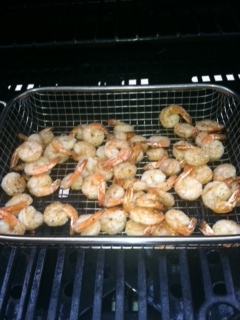
Last night’s STRIVE 2 Survive sparked a hot topic about fish options. Many of you are eating more fish right now than you ever do due to the Lenten season. Jeff, with County Fair had some excellent choices of frozen fish that we reviewed and discussed, but it also brought up the topic of fast food fish choices. All of these fish sandwiches are breaded and fried, but how to do know what’s better than others? I did a little research for you to help you make better choices. When you look at the chart below, please take note of the calories, total fat, saturated fat, trans fat (the only place that has trans fat is Culvers), sodium (recommended to stay below 2400mg/day), and cholesterol (recommended to stay below 300mg/day). The carbohydrates are coming from the bun and a little from the breading and can easily be dropped by taking off half of your bun. Other important things to note is that holding the tarter sauce can save you about 100 calories and 5-10g of fat. Another healthy choice would be to get a side salad, instead of fries with the sandwich. And even better would be to make your fish at home like my picture of grilled shrimp above. We’ll discuss cooking methods tomorrow, so stay tuned!
-Kelsey
Nutrient Comparison
References: restaurant’s websites, calorieking.com, and myfitnesspal.com.
|
Nutrition Facts |
|
|
|
|
|
|
|
|
| Food Item |
Calories |
Total Fat |
Sat. Fat |
Trans Fat |
Cholesterol |
Sodium |
Total Carbs |
Fiber |
Sugar |
Protein |
| McDonalds Filet of Fish |
380 |
18g |
3.5g |
0 |
40mg |
610mg |
39g |
2g |
5g |
16g |
| *McDonalds Filet of Fish-No Tarter |
290 |
9g |
2g |
0 |
30mg |
530mg |
38g |
1g |
5g |
15g |
| *McDonalds Fish Bites (snack size) |
280 |
13g |
2g |
0 |
25mg |
420mg |
21g |
1g |
0 |
11g |
| McDonalds Fish Bites (shareable size) |
740 |
39g |
5g |
0 |
70mg |
1260mg |
63g |
4g |
1g |
33g |
| Burger King Fish Sandwich |
590 |
31g |
5g |
0 |
45mg |
1480mg |
57g |
3g |
8g |
21g |
| Burger King Fish Sandwich-No Tarter |
410 |
12g |
2g |
0 |
30mg |
1240mg |
53g |
3g |
6g |
21g |
| *Taco Johns Fish Taco |
280 |
14g |
4.5g |
0 |
35mg |
1160mg |
29g |
2g |
3g |
10g |
| Arby’s Fish Sandwich |
570 |
25g |
4g |
0 |
45mg |
1010mg |
64g |
2g |
9g |
21g |
| Arby’s Fish Sandwich-No Tarter |
450 |
15g |
2.5g |
0 |
35mg |
730mg |
59g |
2g |
6g |
21g |
| Culvers Cod Filet |
663 |
40g |
7g |
1g |
76mg |
979mg |
47g |
1g |
5g |
31g |
| Culvers Cod Filet-No Tarter |
|
553 |
27g |
5g |
1g |
58mg |
877mg |
46g |
1g |
5g |
31g |
| Culvers 3 piece Cod Dinner |
1929 |
132g |
22g |
2g |
196mg |
2444mg |
108g |
8g |
18g |
75g |
| Culvers 3 piece Cod Dinner-No Tarter |
1553 |
96g |
16g |
2g |
148mg |
2172mg |
106g |
8g |
18g |
75g |
|
|
|
|
|
|
|
|
|
|
|
by kelsey | Feb 12, 2013 | Cooking Tips, Diet, Heart Health, Weight Management, Wellness/Health
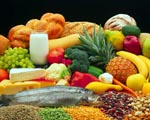
In celebration of National Heart Month I cannot resist reminding you about the significance diet and activity play in promoting a healthy heart. Heart disease is the number one killer of Americans and affects both men and women. Genetics do play a role, however a heart healthy diet and and regular activity can help minimize the effects and complications of heart disease. Whether you have heart disease in your family or not, it’s still good to follow a heart healthy eating plan. Highlights of the diet include:
- Lots of fruits and veggies! I’m sure you already knew this one, but the benefits of getting your 5 a day servings of fruits and veggies are worth reminding you again. Most of us know this, the hard part is doing it. Try adding them to your meals, have fruit as a snack, get a double serving to help you reach this goal.
- Fiber! Fiber is very beneficial in combating heart disease. Incorporating more whole grains (and fruits, veggies, and beans/lentils) into your diet will increase your fiber and aid in heart health. Oatmeal, brown rice, wild rice, whole grain noodles, whole grain breads, and even popcorn are considered whole grains. Aim to get at least 25-35 g/day.
- Choose lean proteins. Decreasing the amount of saturated fat in your diet will help reduce plaque buildup. Choose white meat poultry without the skin, 90% or greater lean hamburger, fish, beans, etc….stay away from processed meats! Fatty fish such as salmon, tuna, herring, and trout offer additional benefits as they are loaded with healthy omega 3 fatty acids.
- Choose healthy fats. Incorporating more plant fats such as canola oil and olive oil into your diet and reducing your intake of saturated and trans fats has been shown to improve heart health. You want to choose foods that are lower than 5-8g of total fat per serving and <3g saturated and trans fat per serving. Choosing low fat dairy products will help reduce the amount of saturated fat in your diet as well.
- Hold the salt! Excess sodium can increase blood pressure and cause heart failure. Aim to keep your sodium intake below 2400mg/day. You can do this by doing more home cooking, avoiding boxed or packaged goods, cooking with salt free seasonings, and not using table salt.
- Exercise! At least 30 minutes of exercise a day has been shown to improve heart health. If you can do more, the better!
Making small changes or substitutions will help you have a healthier heart and reduce risk for disease. Reading labels is really essential to help you make good choices, so take some time in the grocery store and really examine the products to ensure you’re making healthy choices!
-Kelsey
