by kelsey | Jul 28, 2015 | Cooking Tips, Food, Wellness/Health
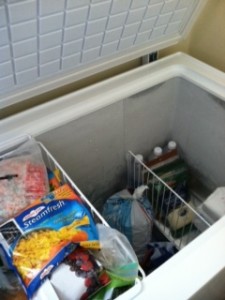
The recent storms have resulted in power outages along with a lot of destruction and damage, thus I thought it was time to review proper food safety recommendations when power is lost. Without power to your freezer or fridge, the safety of your food is at risk…especially when it’s 80 degrees out. If you don’t have one already, be sure to get a thermometer for your fridge and freezer so you are able to monitor and track temperatures appropriately…and be sure to follow these recommendations below.
Keeping cold foods cool and hot foods hot may be a challenge without power so follow these recommendations to keep your food safe in an emergency.
- Keep the refrigerator and freezer doors closed as much as possible to maintain the cold temperature. Watch the temp on both using a thermometer. You want your fridge to stay under 40 degrees and your freezer under zero degrees F.
- The refrigerator will keep food safely cold for about 4 hours if it is unopened.
- A full freezer will hold the temperature for approximately 48 hours (24 hours if it is half full) if the door remains closed.
- If are you able to, get dry or block ice to keep your refrigerator as cold as possible if the power is going to be out for a prolonged period of time. Fifty pounds of dry ice should hold an 18-cubic foot full freezer for 2 days.
- If you are wondering if your food is safe to consume, you need to evaluate each item separately using a thermometer as you cannot rely on the appearance or odor! If the food still contains ice crystals or is 40 °F or below, it is safe to refreeze. Refrigerated food should be safe as long as power is out no more than 4 hours. Keep the door closed as much as possible. Discard any perishable food (such as meat, poultry, fish, eggs, and leftovers) that have been above 40 °F for 2 hours. Remember…it’s better to discard and buy new than risk it and get sick!
For more tips and detailed recommendations please visit the USDA’s website: http://www.fsis.usda.gov/Fact_Sheets/keeping_food_Safe_during_an_emergency/index.asp .
-Kelsey
by kelsey | Jun 25, 2015 | Cooking Tips, Diet, Food, Holidays, Weight Management, Wellness/Health
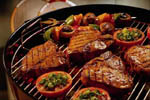
With the 4th of July a week away, many are prepping their grocery list or menu for the fun filled holiday weekend. You’ll fire up the grill, enjoy some burgers or steaks, a few tasty drinks, and friends and fellowship. I love to grill and foods on the grill are my favorite…and I know beef will be what’s for dinner in my household as nothing beats a tasty “Raml” hamburger or steak. Besides the protein, I am sure there will be plenty of fruits and veggies to enjoy of which both can be grilled as well! Kabobs are a great way to incorporate meat, veggies, and fruit all in one!
Did you know that beef is 20% leaner than it was about 15 years ago? There are at least 29 cuts of lean beef which means they meet the government guidelines for lean, meaning each cut has less than 10g of total fat, less than 4.5 g of saturated fat, and less than 95mg of cholesterol (in a 3 oz serving). Here are some tips for you to make beef a part of your heart healthy meals:
- Look for key words such as “round” or “loin” …these are typically leaner cuts
- Choose 90% or greater lean beef. This means in a 3oz serving there is less than 5g of fat in it.
- Use healthy cooking methods such as grilling, broiling, baking, roasting, or braising. The less tender cuts can be marinated in a tenderizing marinade such as salsa or light Italian dressing.
- Trim the fat! Trimming the fat before cooking will help eliminate some of the fat from the cut.
- Cook with fresh ingredients such as lemon juice, peppers, onions, garlic, and herbs instead of adding extra fat to the cut.
- Practice portion control. Select the 3-5 oz serving over the 10oz.
Balance is key to a healthy diet, so be sure to include your fruits and veggies and whole grains along with your lean meat to create a healthy plate. All meat is required to have the nutrition content (label) posted by it in the grocery store. Be sure to use this when you’re selecting your cuts of meat and pay special attention to the total fat and saturated fat content. If you want to learn more about the benefits of beef and explore healthy recipes check out these websites: www.beefnutrition.org and www.beefitswhatsfordinner.com.
Happy 4th of July!
-Kelsey
by kelsey | Jun 16, 2015 | Cooking Tips, Diet, Food, Weight Management, Wellness/Health
June is national dairy month, thus it’s a great time to recognize and discuss the benefits we can get from dairy in our diets.
Cow’s milk is the richest source of well-absorbed calcium and is actually absorbed better (about 25%) than the calcium in soy milk. There is about 300 mg of calcium in an 8 oz serving of milk and we recommend getting at least 3 servings of dairy a day. A serving is equal to an 8oz (1 cup) serving of milk, 6 oz tub of yogurt, 1 oz cheese, 1/2 c cottage cheese. In addition to calcium, cow’s milk is an excellent source of phosphorus, vitamin B12, potassium, riboflavin, vitamin A, vitamin D, protein, and niacin…totalling 9 nutrients compared to only 4-5 nutrients found in soy and almond milk.
There are many other types of “milks” out there such as almond, rice, coconut, and soy, however these drinks are not the same as cow’s milk in regards to the nutritional qualities. Many of these milks use fortification (adding nutrients), whereas the nutrients are found naturally in cow’s milk. Below is a list from the Midwest Dairy Association about these beverage’s nutrient sources and nutrition quality (http://www.midwestdairy.com/0p335/dairy-imitators/)
- “Soy beverages are made from soybeans and are a good source of protein. However, according to the Protein Digestibility Corrected Amino Acid Score (PDCAAS), soy protein is a lower quality protein than the whey protein found in dairy products.
- Rice-based beverages are generally processed from brown rice and are fortified with nutrients such as calcium and vitamin D. Rice beverages typically contain only one gram of protein compared to eight grams in cow’s milk.
- Nut-based beverages can be ground from any nut and the most popular is almond. Almond beverages only supply one gram of protein per serving and lack many of the natural benefits found in almonds.
- Seed-based beverages, such as hemp, are newer to the marketplace. Their nutritional benefit is touted to be their omega fatty acid content. Similar to the other beverages, they also fall short on protein.”
Often times, these other “milks” contain higher sugar content, less calcium, less protein, and are absorbed less than those benefits in cow’s milk. Now if you have a lactose intolerance or milk allergy, these are certainly options for you, however if you do not have an allergy or intolerance, I highly encourage you to work towards getting your 3 a day servings of dairy and preferably low fat dairy. It will not only provide you with excellent vitamins and minerals to keep your bones and muscles healthy and strong, it will also provide you with an excellent source of protein.
For more information on the benefits of dairy, you can visit www.midwestdairy.com or contact my good friend and fellow Registered Dietitian Whitney Jerman at wjerman@midwestdairy.com.
I know I will enjoy a nice glass of cold milk tonight with supper, I hope you do too!
-Kelsey
by kelsey | Jun 10, 2015 | Cooking Tips, Diabetes, Diet, Food, Weight Management, Wellness/Health
When people think of summer it brings to mind family reunions, picnics, campfires and consequently hotdogs, potato salads, and s’mores. Here are some tips to make those summer months healthier:
-Summer is the best time of the year for fruits and vegetables! More fruits and vegetables are in season and are wonderful to incorporate in your diet. Try planting your own garden or checking out the local farmer’s market to stock up on a variety of fruits and vegetables. Our farmer’s market is open every Saturday morning in the Runnings parking lot.
-Hotdogs and burgers are trademarks for summer. Instead of a sodium and fat packed hotdog or brat try to go for grilled chicken or lean red meats. If you are really craving that hotdog opt for the lower in fat turkey dog or all beef dog and watch your portions.
– Macaroni salad and potato salad are featured at the usual family get-together. The majority of these salads are going to contain high amounts of fat. Opt for fresh fruit or bring your own salad made with a low fat mayonnaise, low-fat Greek yogurt, or low fat sour cream.
-Be sure to drink plenty of water! Having at least eight 8oz. glasses a day is important to stay hydrated during the hot summer months.
– As for the infamous s’more, try dark chocolate and bananas (replacing the marshmallow) which will give you some antioxidants as well as taste great! Or just cut your portion to one s’more since it’s hard to mess with a classic!
-Get active! If you do indulge in some tasty, not-so-healthy treats this summer, just be sure to get in a little extra activity to balance your calories in with your calories out. Take advantage of the nice weather and get outside!
-Kelsey
by kelsey | May 26, 2015 | Cooking Tips, Diet, Food, Weight Management, Wellness/Health
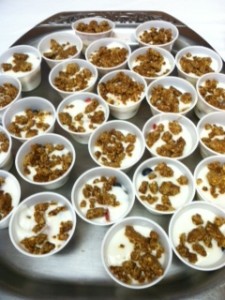
Summer has officially started now that school is out! The kids are back home and they’re going to be eating more of the foods that you keep stocked for them at home. Active children burn through their energy stores very quickly and need to replenish them often. Snacking is an important part of keeping your kids energized for their play-filled summer days.
Snacks should be a combination of fiber and protein so that they are filling and satisfying. Pistachios are a good snack as they contain both fiber and protein. You can also pick out two foods that will meet the fiber and protein combination needs. Some ideas are:
- An apple and a teaspoon of peanut butter
- String cheese and a few whole wheat crackers
- Baby carrots and hummus
- Low-fat yogurt and almonds
- Mixed nuts and raisins
- Celery sticks filled with peanut or almond butter
Just be sure to keep in mind that snacks are just to get by until the next mealtime, so snacks should not be a significant source of calories. Kids have small stomachs so keep the portion sizes small as well. This is a good time to instill healthy habits in your child so try to avoid having the TV or video games going during snack time in order to discourage mindless munching. Any fruit, vegetable, low-fat dairy product, or whole wheat grain product makes a good snack so find out what your child likes and get creative with the combinations!
-Written by Kara Schmidt, SDSU Dietetics Student
by kelsey | May 21, 2015 | Cooking Tips, Diet, Food, Weight Management, Wellness/Health

| Looking to eat locally and economically? Grow your own produce in a garden, either in the ground or in pots. This is also a fun way for children to be active outdoors during the summer and can help them to learn about where their food comes from! Almost any container can be used for planting, just make sure that there are holes in the bottom so that excess water can drain.Easy vegetables, like cherry tomatoes and sugar snap peas, might be a good start for a first-timer. However, most vegetables will grow in containers. You can buy seed packets, which will have the best planting and harvest times, or buy starter plants from your local greenhouse. When the vegetables are ready, just harvest, wash, and enjoy!
If you do not want to grow your own garden, be sure to check out the great locally grown produce at our farmer’s market every Saturday morning at the Runnings parking lot!
-Written by Kara Schmidt, SDSU Dietetics Student |
