by kelsey | May 3, 2017 | Exercise

Just a reminder this challenge started Monday!! Be sure to pick up your forms to track your activity at the Park and Rec Fieldhouse (the old Armory building). Enjoy this nice weather and get out on the trails!
Have you ever wondered how many miles you have biked, run or walked on the Watertown Recreational Trail? This summer we want you to join the third annual Watertown Recreational Trail Challenge. Starting May 1 you can stop at the Park and Rec. Fieldhouse and pick up a tracking sheet that also has the mileage chart for the Recreational Trail on it. Keep track of how many miles you bike, run or walk, then at the end of summer by September 29 just turn your tracking sheets back in and we will tabulate who the three people are who have biked, walked or run the most miles and those three will receive awards and be recognized later in the month of October as the ones who put on the most miles on our beautiful trail system.
Dates: May 1 – September 29
Fee: Free
Location: All miles must be on the Watertown Recreational Trail
Contact: Jeremy with the Park and Rec at 882-6260
by kelsey | Apr 27, 2017 | Diabetes, Diet, Food, Heart Health, Weight Management, Wellness/Health

Currently, about half of all American adults have one or more chronic diseases, many of which are associated with poor dietary intake and lack of physical activity. The Dietary Guidelines for Americans is a resource that provides nutrition and dietary advice designed to help Americans achieve and maintain a healthy body weight, meet nutrient needs, and reduce the risk of diet-related chronic diseases. Every five years, a new edition of the Dietary Guidelines is published. A committee of researchers in the fields of nutrition, health, and medicine develop this document through the analysis and evaluation of current scientific evidence.
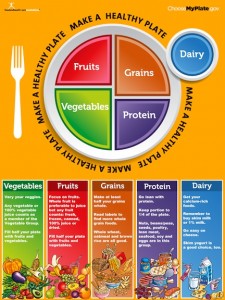
The 2015-2020 Dietary Guidelines for Americans emphasize the importance of following a healthy eating pattern. An eating pattern is the combination of foods and beverages that make up a person’s dietary intake over time. A healthy eating pattern includes:
Vegetables, a variety including dark green, red and orange, legumes (beans and peas), starchy, and other subgroups
Fruits, especially whole fruits
Grains, at least half of which are whole grains
Dairy, fat-free or low-fat, including milk, yogurt, cheese
Protein foods, a variety including seafood, lean meats and poultry, eggs, legumes (beans and peas), and nuts, seeds, and soy products
Oils, including those from plants such as canola, corn, olive, peanut, safflower, soybean, and sunflower; oils are also naturally present in nuts, seeds, seafood, olives, and avocados
A healthy eating pattern limits saturated fat, trans fat, refined starches, added sugars, and sodium. Keep in mind that improving your eating pattern and lifestyle doesn’t have to happen overnight. Start with small shifts in food choices. For example, try shifting from: white bread to whole wheat, full-fat cheese to low-fat, soft drinks to water, potato chips to unsalted nuts, and butter to olive or canola oil. A healthy eating pattern should be paired with appropriate levels of physical activity. Adults need at least 150 minutes of physical activity each week, and children ages 6 to 17 years need at least 60 minutes of physical activity per day.
For more information on an eating pattern specific to your body’s needs, contact a local registered dietitian or healthcare professional.
-Written by Amanda Berckes, SDSU Dietetic Intern
by kelsey | Apr 26, 2017 | Diet, Weight Management, Wellness/Health

According to the Boston Medical Center, approximately 45 million Americans diet each year and spend $33 billion on weight-loss products in their pursuit of a slimmer body. However, over a third of American adults are obese.
Fad diets usually help people lose weight quickly; however, the pounds usually come right back when quitting the diet. In the end, such diets are unsuccessful because they do not promote healthy eating habits and behaviors that can be incorporated into an individual’s everyday life.
Here are a few things to look for to help you identify a fad diet. Beware of diets that…
- Omit or restrict food groups or macronutrients (i.e. cutting out all carbs or foods from the grains food group): The main food groups are vegetables, fruit, protein foods, grains, and dairy. Foods from these groups provide the nutrients our bodies need to function properly.
- Are very low in calories (i.e. less than 1000 calories a day): Severely restricting calories will cause a person to lose weight, but they will likely miss out on essential nutrients and become lethargic from the lack of energy intake. Plus, very low-calorie diets are not sustainable over the long run.
- Promise quick weight loss (i.e. more than 2 pounds a week): A realistic and healthy weight loss goal is ½ – 2 pounds a week. Slower but more apt to keep it off!
- Make you purchase a specific company’s products (i.e. pills, shakes, meal replacement bars, etc.) ; Oftentimes meal replacements can be included in a healthy diet and help you lose weight. However, people often struggle when they stop consuming those products because they did not learn how to make healthy food choices.
- Do not have scientific evidence to back them up: Fad diets usually have claims without scientific evidence to back them up. Instead, they use endorsements and testimonials to entice people. These endorsements lack credibility as they could be from paid actors or diet coaches trying to make money by selling their products.
- Doesn’t allow you to enjoy your favorite foods every once in a while: Food should be enjoyable! The key is portion size and moderation. When told to give up certain foods, people tend to overindulge on “cheat days” or once they reach their weight loss goal.
- Doesn’t promote physical activity: To lose weight, a person must create a negative calorie balance by burning more calories than they consume. Engaging in physical activity will aid in weight loss and help keep the pounds off. Not to mention the many other benefits of regular exercise!
Bottom line: if it’s too good to be true, it probably is!
-Written by Amanda Berckes, SDSU Dietetic Intern
by kelsey | Apr 25, 2017 | Cooking Tips, Diet, Heart Health, Weight Management, Wellness/Health

Salt is in a lot of our foods and most commonly found in packaged, processed foods. Limiting your salt or sodium intake can help prevent the buildup of extra water in your body and this can be beneficial for high blood pressure, heart failure, kidney disease, or other conditions that result in fluid retention. It is recommended to keep your sodium intake between 1500-2300 mg/day. 1/4 teaspoon of salt has about 600 mg sodium, so it doesn’t take much to get to that recommendation, which is why being more aware of your salt intake and choosing salt-free seasonings is beneficial for your health! You can use Mrs.Dash or No Salt to add flavor, but herbs are especially useful to add flavor without adding salt. If you aren’t familiar with working with herbs, you can use the chart below to select an appropriate herb for your food selection. Give these a try!
Food
|
Herbs to try
|
| Eggs |
Basil, dill weed (leaves), garlic, parsley |
| Fish |
Chervil, dill, fennel, garlic, basil, bay leaf (crumbled), French tarragon, lemon thyme, parsley |
| Poultry |
Garlic, oregano, rosemary, savory, Lovage, marjoram, sage |
| Beef |
Bay, chives, cloves, cumin, garlic, hot pepper, marjoram, rosemary, savory |
| Lamb |
Garlic, marjoram, oregano, rosemary, thyme (try making little slits in the lamb to be roasted and insert herbs) |
| Pork |
Coriander, cumin, garlic, ginger, hot pepper, pepper sage, savory, thyme |
| Cheese |
Basil, chervil, chives, curry, dill, fennel, garlic, chives, marjoram, oregano, parsley, sage, thyme |
| Soups |
Bay, chervil, French tarragon, marjoram, parsley, savory, rosemary |
| Salad |
Basil, borage, burnet, chives, lovage, parsley, French tarragon, garlic. Herb vinegars are great on salad for extra flavor. |
| Tomato Sauce |
Basil, bay leaf, marjoram, oregano, parsley, celery leaves, cloves |
| Fruit |
Anise, cinnamon, coriander, cloves, ginger, lemon verbena, mint, rose geranium, sweet cicely |
| Bread |
Caraway, marjoram, oregano, poppy seed, rosemary, thyme |
| Vegetables |
Basil, burnet, chervil, chives, dill, French tarragon, marjoram, mint, parsley, pepper, thyme, savory |
| Italian Blend |
Basil, marjoram, oregano, rosemary, sage, savory, thyme |
| Barbecue Blend |
Cumin, garlic, hot pepper, oregano |
Herb Blends to Replace Salt
|
|
| Saltless Surprise |
2 teaspoons garlic powder and 1 teaspoon each of basil, oregano, and powdered lemon rind (or dehydrated lemon juice). Put ingredients into a blender and mix well. Store in glass container, label and add dry rice to prevent caking. |
| Spicy Saltless seasoning |
1 teaspoon each of cloves, pepper, and coriander seed (crushed), 2 teaspoons paprika, and 1 tablespoon rosemary. Mix ingredients in a blender. Store in airtight container. |
by kelsey | Apr 20, 2017 | Exercise, Weight Management, Wellness/Health
Have you ever wondered how many miles you have biked, run or walked on the Watertown Recreational Trail? This summer we want you to join the third annual Watertown Recreational Trail Challenge. Starting May 1 you can stop at the Park and Rec. Fieldhouse and pick up a tracking sheet that also has the mileage chart for the Recreational Trail on it. Keep track of how many miles you bike, run or walk, then at the end of summer by September 29 just turn your tracking sheets back in and we will tabulate who the three people are who have biked, walked or run the most miles and those three will receive awards and be recognized later in the month of October as the ones who put on the most miles on our beautiful trail system.
Dates: May 1 – September 29
Fee: Free
Location: All miles must be on the Watertown Recreational Trail
Contact: Jeremy with the Park and Rec at 882-6260