by kelsey | Jul 19, 2017 | Food
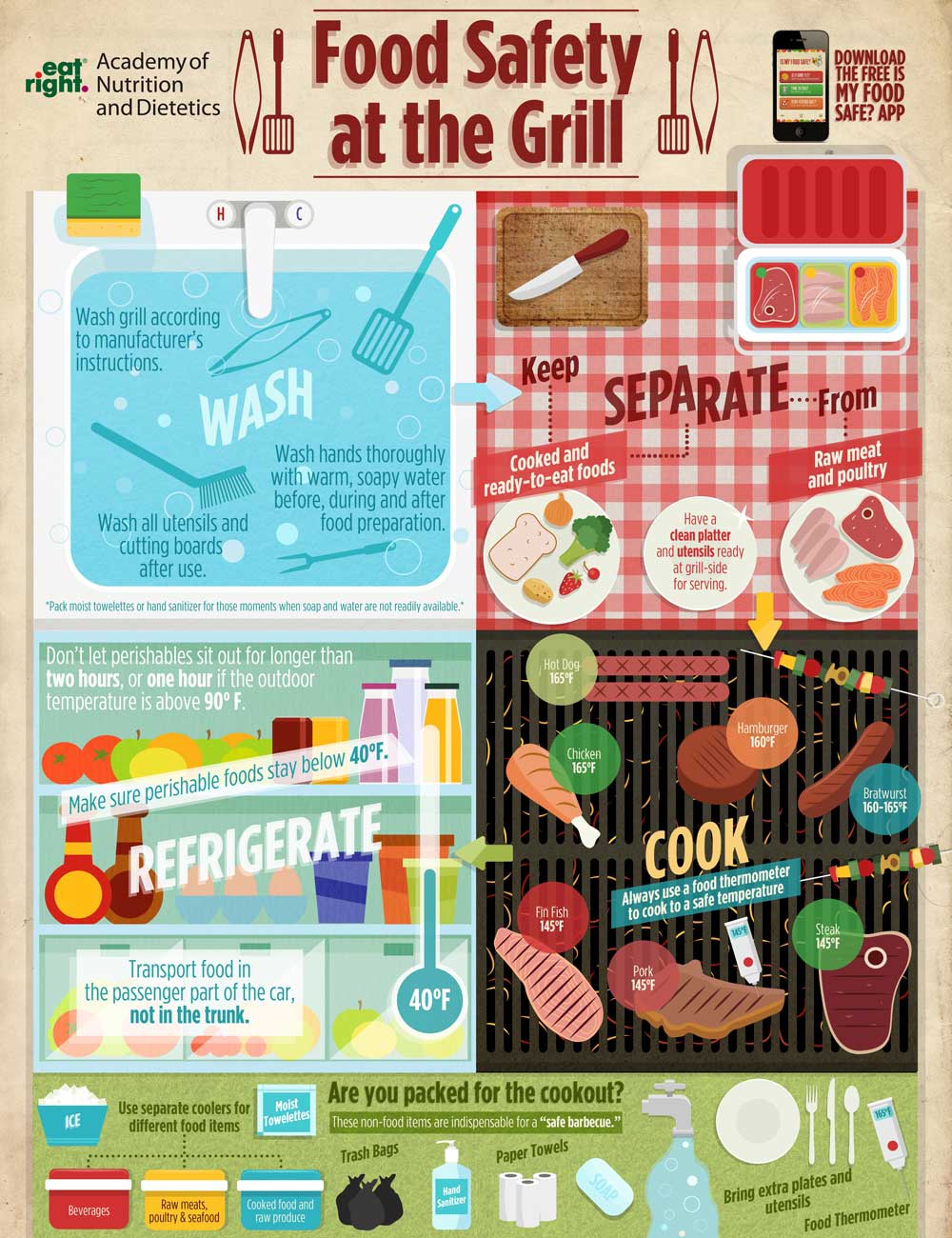
Summer is the perfect time to grill! Everyone loves to grill but there are some important food safety issues to be aware of when grilling. First off it is crucial that you keep raw meats/poultry and cooked meats/poultry separate. Have an extra clean plate (not the one that had the raw meats) next to the grill to place the cooked meats on. Make sure to keep hot food hot and cold foods cold, and transport any food in the car and not in the trunk especially in these hot months. Have a meat thermometer next to you and make sure your meats reach the appropriate temperature. Keep meats and fruits/vegetables separate on your grill, so raw meats do not contaminate the fruits/vegetables. Have a safe grilling season and remember your food safety! Refer to the infographic below for more grilling food safety tips plus the temperature all your meats should get to.
-Written by Elizabeth Honner, SDSU Dietetic Student
References: eatright.org- Academy of Nutrition and Dietetics.
by kelsey | Jul 18, 2017 | Exercise, Family

Wanting some fun ideas for your family to get your daily exercise in? The weather is nice and your kids have a bunch of energy built up… why not use it and do some family activities!
- Sign your kid up for a local sport or swimming lessons. Whether it is little league or teaching your kid to swim on their own, they are both great activities to get your kid after and catch up with some school or neighbor friends that are on the same team.
- Schedule a night to go on a family walk, run, bike ride, or a family sports night.
- Go on a hike or walk through the park, and have your kids make a list of their 10 favorite things they saw on the walk.
- Invite some friends over and have a dance party. It helps their kids stay active with their friends!
- Can’t seem to get your kids away from the screen? Turn the commercial breaks into exercise opportunities by incorporating jumping jacks, sit-up, or a variety of exercises until the show comes back on.
- Do a walk/run race in your community. There are always plenty of 5K races in the community throughout the spring, summer, and fall.
- Work on a family garden. Your kids will love digging in the dirt and it gives your kids a chance to see where their food comes from. Plus, you can harvest the food you grow and your little ones might want to try what they grew! This is a great way to introduce new fruits and vegetables!
Just a few ideas to get the kids active throughout the summer!
Elizabeth Honner- SDSU dietetic student
http://www.parents.com/fun/sports/exercise/10-ways-to-exercise-as-a-family/
http://www.eatright.org/resource/fitness/exercise/family-activities/family-exercise-for-every-season
by kelsey | Jul 13, 2017 | Diabetes, Diet, Food, Weight Management, Wellness/Health

There’s a lot of buzz about carbohydrates….are they good? Are they bad? How much should you have? , etc etc etc. Many fad diets that are very popular right now are no carb diets so I thought it would be appropriate to discuss carbohydrates and give you a better idea of the professional recommendations! Carbohydrates are the main (and best) source of energy for your brain and central nervous system. Carbohydrates are essential for energy; however they raise your blood sugar levels higher and faster than any other kind of food. Carbohydrates are essential for your body to be able to sustain energy, so just like a car needs the right type of fuel (gas) to run, you need the right kind of fuel (food) to function and be healthy. To sustain energy, your body needs adequate carbohydrates: 50-60% of your total calories should come from carbohydrates. Cutting out all carbs can be very detrimental to our body, especially our brain, central nervous system, liver, kidneys, and heart. Because they are an excellent source of energy, but they do raise blood sugars, it’s important to recognize the types of carbohydrates and how to count them in efforts of controlling your blood sugars while still maintaining good health and adequate energy..
Carbohydrates are found in the following:
Starches: found in grains, some vegetables, and beans.
- Grains: bread, pasta, cereal, tortillas, rice
- Starchy Vegetables: potatoes, peas, corn, yams, squash
- Beans: kidney beans, pinto beans, black beans, garbanzo beans, and lentils
- **The best and recommended sources of starches are whole grains…choose them over the white, refined grains!
Sugars: found naturally in foods or added to foods.
- Natural Sugars: fruits, fruit juices, dairy products, honey, and molasses.
- Added Sugars: desserts, processed foods, candy, regular soda, and fruit drinks.
- **Natural sugars are better than added sugars, but large quantities of them can still raise your blood sugars…we recommend getting at 2-3 fruits and 3 servings of veggies/day. Anytime you can limit or eliminate the added sugars, do so!
To aid in ideal blood sugar control, we recommend a moderate intake of carbohydrates which means about 45-60g/meal and 15-30g/snack with several small meals and snacks throughout the day. I visit with patients daily about finding the right balance in their intake. If you would like help managing your blood sugars, to learn more about diabetes self care, or a personalized nutrition plan, be sure to contact me for further help!
-Kelsey Raml, MS, RD, LN
by kelsey | Jul 11, 2017 | Diet, Weight Management, Wellness/Health

Sadly, there is no magical weight loss pill or a way to lose weight as you sit on the couch enjoying your favorite TV show. Here are some tips for when looking for a weight loss plan and avoiding those FAD diets that make it look like you are losing a bunch of weight but then later gain it all back and maybe then some.
- First off, slow weight loss is the recommendation and is usually the best way to loss the weight and keep it off. It is recommended to lose 1 to 2 pounds a week.
- Never cut out whole food groups, the key to steady weight loss is making the small daily healthy choices that lead to lifestyle changes. The diets that cut out whole foods groups can cause malnutrition by missing key nutrients and can leave you craving it even more than you did before.
- Summer is also the time when a lot of fruits and vegetables are in season and more affordable at the grocery store. Take advantage of this and get to know what fruits and vegetables you like most, and start incorporating them into your healthy eating habits.
- Lastly, exercise is essential. There is no better time to get physically active than the summer. The weather is nice enough that you can enjoy a nice brisk 30-60 minute walk around the neighborhood, or run, or bike ride every day if possible or at least most days of the week.
The best way to lose weight and keep it off is to make small everyday healthy lifestyle choices. The best part of slow and steady weight loss is you don’t have to wait, you can start today!
-Elizabeth Honner SDSU Dietetic Student
Source: eatright.org- staying away from FAD diets
by kelsey | Jun 28, 2017 | Diet, Weight Management, Wellness/Health

Metabolism is the body’s process of breaking down what we eat to use as energy. This process is the key to maintaining healthy weight and to stay feeling your best. Metabolism mainly stays stable; however, your body’s metabolism gradually decreases with age.
Is there a way to raise your metabolism back up to a healthy rate to promote weight loss or keep weight off? Here are a few tips that help with boosting your body’s metabolism back to a faster rate—the healthy way.
- Eat regularly: Spacing the time you eat to every 3-4 hours (about 3 meals + 2 snacks per day) helps your metabolism stay on track and running properly. Skipping meals causes your body to slow down to conserve calories. This also causes the body to store fat due to thinking it’s in a famine. Storing fat and conserving the calories your eating will cause weight gain rather than weight loss.
- Eat well balanced meals: The type of food that you consume plays a huge role with your mood along with the energy you receive. Eating foods high in saturated fat and added sugar (i.e. desserts, fast food, chips) may cause you to feel more tired and will not give your body the proper nutrients it needs. Try eating smaller, more balanced meals with whole wheat/whole grains, vegetables, lean meats, and fresh fruit.
- Exercise: Exercising helps your body build muscle, which then helps your body burn calories more efficiently. The faster you burn calories, the easier to have weight loss. People with more muscle can consume more calories because of the rate they burn them, compared to someone with more body fat. Try switching up your exercises regularly to make sure your body doesn’t get used to the same routine to promote the best results.
- Be patient: Building your metabolism back up may take time, so being patient is important to getting results.
- Persistence: Boosting metabolism takes consistency. Following a regular diet and a stable eating pattern will help with this. Make a schedule with eating and exercising that you are comfortable with and keep it a routine.
Ways that will NOT boost your metabolism consistently:
- Eating hot peppers or drinking green tea: These MIGHT boost your metabolism for a few hours, but are not an effective way to keep your body producing enough energy to burn your calories in a day. Instead, stick to eating healthy grains, vegetables, and lean meats which will impact your metabolism more effectively and better over time.
- Consuming very little calorie diets: This will cause your body to go into starvation mode which leads to conserving calories and burning them more slowly. Therefore, will cause you to keep weight on. Instead, keep a well-balanced diet and eat throughout the day.
Following these tips will help make you feel better, have more energy, and will give your metabolism an extra boost.
-Heather Arbach, SDSU Dietetic Student
Sources: http://www.eatright.org