by kelsey | Oct 25, 2017 | Exercise, Family, Weight Management, Wellness/Health

Did you know that it is recommended children get at least 60 minutes of activity a day? Meeting this activity recommendation will not only promote a healthy weight, but also ward off diseases like diabetes, heart disease, and cancer. This 60 minutes does not have to be all at once though…it can be spread throughout their day. You may consider the following tips to help you and your child be more active:
- Join a sports team or try a new physical activity.
- Take a walk or turn up the tunes and do some dancing indoors after your supper meal.
- Instead of catching a movie or watching TV, pick an activity that requires movement such as laser tag, bowling or miniature golf.
- Give children toys that encourage physical activity like balls, kites, hula hoops, Frisbee and jump ropes.
- Limit TV time and keep the TV out of your child’s bedroom.
- Plant a garden. Kids love to water plants, and they’ll get excited weeks later when they see their flowers bloom or vegetables grow.
- Practice what you preach! Kids will be more apt to engage in activity and stay interested when their parent or family is doing it!
Creating a positive environment with encouragement and reinforcement will help your child live a long and healthy lifestyle. These tips are just a glimpse of what we cover in Strive Kids wellness program. If you’d like to learn more about our program, be sure to contact us!
-Kelsey Raml, MS, RD, LN
by kelsey | Oct 19, 2017 | Diet, Holidays, Weight Management, Wellness/Health

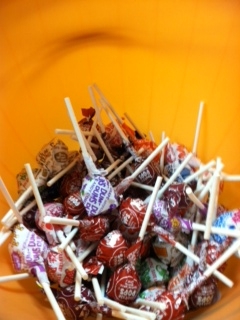
It’s that time of year again. Not only are the aisles of Wal-Mart strewn with witch hats, zombie make-up and fairy wings, but of course there is the looming aisle of Halloween candy. It can be easy to over indulge on treats this time of year. Most of the candy passed out to trick-or-treaters comes in “fun size” or “mini” portions. However, looks can be deceiving; people often believe that since they are smaller in size, more can be consumed. Calories from Halloween candy can quickly add up. For example; 3 mini snickers bars pack 300 calories. To burn off that many calories you would have to walk at a brisk pace for 1.5 hours or run for 40 minutes.
Fortunately the 31st of October doesn’t have to mean automatic weight gain. Try waiting until the day before to buy treats to pass out. You will be less likely to feel the need to nibble if you don’t buy it a month ahead of time. Keeping it out of site, such as up in a closet you rarely use, can help you forget that it’s even in the house. The biggest challenge with Halloween candy is the leftovers. After the trick-or-treaters have come and gone we are often left with the reality that we stocked up for 400 doorbell ringers, and only got 15. Buying candy that you don’t like is an easy way to keep you from eating it both before and after the holiday.
Halloween Treats to Try
Sugar-free gum
Boxes of raisins
Animal crackers
Pretzels
Trail mix
Fruit snacks
Lollipops
Non-Candy choices: stickers, small toys, erasers, etc.
Halloween Tricks to Avoid
Candy bars
Caramels
Fudge
Skittles
M&M’s
-Kelsey
by kelsey | Oct 18, 2017 | Diet, Food

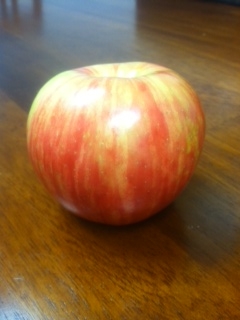
Apples are one of my favorite fall foods. They are extra tasty and delicious when in season right now! Read more about this great fruit below from an excerpt from nutrition411.com!
“Apples are healthful. The average apple, which is about 1 cup (C) quartered, 125 gram (g), or tennis ball sized, has 65 calories, 3 g fiber, and 10% of daily requirements for vitamin C and is also high in vitamin K, vitamin B6, and potassium. Apples are satisfying and pair well with almost anything. They are enjoyed in countless ways—baked and sliced in pancakes, cubed in fruit salad, served with peanut butter or cheese, baked in the oven, paired with pork, and made into apple pie.
Apples are best consumed when harvested between late August and October. They store well until the middle of the winter, but do lose some of their nutritional value with time.
Follow these tips when selecting apples:
- Look for apples that have good color and smell fresh
- Avoid apples with bruises or damage to their skin (brown or dry spots on the apple do not affect flavor and are acceptable to eat)
- Store apples unwashed in a plastic bag in the refrigerator
- Store apples separately from cruciferous vegetables, such as broccoli, cauliflower, and cabbage
- Do not allow apples to have contact with lettuce, cucumbers, or greens, because apples give off a gas that will speed up the deterioration of these vegetables
- Use apples to help ripen fruits such as pears, peaches, and plums by placing the unripened fruit in a bag with an apple—the gas given off from the apple will help to ripen the under-ripened fruit
Popular varieties and best uses
The following guide will help you determine the best use for different varieties of apples.
Baldwin: Known for its tartness and crisp texture, this all-purpose apple is great for baking.
Cortland: Tart and crisp, these apples do not brown readily and are great in salads. They also hold their shape well during baking.
Empire: A hybrid of McIntosh and Red Delicious, this apple is sweet, crisp, and firm. It is best used raw and in salads.
Gala: Mild, sweet, crisp, and juicy, this apple is best eaten raw. It is the most popular fresh apple in the nation.
Golden Delicious: Mild and sweet, this juicy apple is an all-purpose apple that is easy to use. You can eat it any way, and it is good for baking.
Granny Smith: This bright green apple is tart, crisp, and hard. It holds its shape well during baking, but is also great in salads or eaten by itself.
Honey Crisp: This is becoming one of the most popular fresh eating apples ever grown, and although production has tripled over the past 3 years, supply cannot keep up with demand. They have a crisp, firm texture, lots of juice, and the flavor is a nice mix of slightly tart with honey-like sweetness.
Ida Red: Tart, crisp, and firm, this apple stores very well and is good for all-purpose use.
Jonagold: A hybrid of Jonathan and Golden Delicious apples, this apple has a sweet and tart flavor that goes well in pies and sauces.
Jonathan: Sweet and acidic, this apple is great for eating by itself, baking, and sauces.
Macoun: A McIntosh and Jersey Cross hybrid, this apple is tart and crisp. It is good for eating by itself, baking, and sauces.
McIntosh: Sweet, juicy, and less firm, these apples make great sauces and juices. They also are good in salads.
Northern Spy: Tart and delicate, this may be the best baking apple.
Red Delicious: One of the most famous varieties, this apple is best for eating by itself.
Rome Beauty: Sweet and firm, this apple holds its shape well during baking and cooking.”
Reference: https://www.consultant360.com/n411/content/apples-cooking-eating-and-baking
-Kelsey
by kelsey | Oct 17, 2017 | Etc.

Reposting to remind you all that Running’s Ladies Night is TOMORROW!!! Come visit myself and two of our physicians at our clinic booth!! Dr.Gwen Schaunaman will be there for the first half and Dr.Clark Likness will be there later on. We will have some great handouts and goodies to give out!! Runnings is offering a special that you buy a $2 pink bucket (proceeds go to fight breast cancer) and 15% off anything you can fit in the bucket. It’s a great event!! Come visit us!
Be sure to mark your calendars for Running’s Ladies Night Event October 18th from 5-8pm! It is an awesome event supporting and promoting the fight against breast cancer!! Our radiologist Dr.Gwen Schaunaman will be at our clinic booth along with myself to visit and answer any questions about our 3D mammography and diagnostic testing we do here at the clinic. Be sure to stop by and say hello to us!
October is Breast Cancer Awareness Month. Many of us know of someone who has been affected by breast cancer as it is the most common cancer in women and more than 230,000 women are diagnosed with breast cancer every year in the United States as stated by the American Cancer Society.
It is important to recognize some symptoms of breast cancer. The most common symptom is the presence of a painless lump in the breast area. Less common symptoms include swelling, tenderness, skin irritation, redness, or nipple abnormalities which may include ulceration or discharge.
Factors that increase the risk of developing breast cancer include the onset of menstruation before age 12, menopause after the age of 55, not breastfeeding for at least one year, not having children, or having children after 30 years of age, and having a high body mass index.
Increased body weight in postmenopausal women who are not taking hormones increases the risk for developing breast cancer. The more fat cells you have, the higher your levels of estrogen in the postmenopausal period, when your ovaries are no longer producing estrogen. Moreover, overweight women have higher insulin levels, and insulin may promote breast tumors.
Nutrition Tips for Cancer Prevention:
Fruits, vegetables, and whole grains are great sources of antioxidants and phytochemicals. Antioxidants and phytochemicals play a role in cancer prevention. Carotenoids is a type of antioxidant that is found in red and yellow produce. Some examples of foods that contain carotenoids are carrots, pumpkin, winter squash, tomatoes, citrus fruits, and red sweet peppers. All dark green vegetables contain nutrients that protect against cancer. Good sources of dark green vegetables include spinach, asparagus, bell peppers, broccoli, brussels sprouts and kale. An additional benefit to eating a well balanced diet that includes a variety of fruits, vegetables, and whole grains is that it promotes a healthy weight. Maintaining a healthy weight will help you to decrease your risk of developing cancer. A helpful tip to remember is that the more colorful the fruit or vegetable, the more nutrients it contains; so pack your plate with colorful choices!
-Kelsey
by kelsey | Oct 12, 2017 | Etc., Food, Wellness/Health

If you ate today, be sure to thank a farmer! Today is National Farmers Day! Consumers want to know where their food comes from, yet know very little about how food gets from the farm to the dinner table; in fact, most consumers today are three generations removed from the farm. For example, one thing consumers are unaware of is that milk travels from the farm to grocery store in about 48 hours. In addition, some criticize farmers because they use GMO (genetically modified organisms) seeds and hormones in cattle to promote growth. Farmers understand the science behind these products and why they should be used: by using them, they can use less water, less pesticide and herbicide, and produce enough yield to feed the world! Without these scientific advancements, we would not be able to feed the starving world! Farmers share the same values as consumers on many topics including those related to producing nutritious food, environmental stewardship and animal care. This is not a just a “job” for them, it is their life! The above picture is of my favorite little farmer, our son Corbin, who was helping dad combine beans yesterday. Corbin is a 6th generation farmer!
October 12th is National Farmers Day and it’s a perfect time to tip our hats to America’s farmers and recognize all of the hard work they put into getting delicious food to our tables!
Here are few fun facts for you about agriculture in South Dakota include:
- 98% of farms in South Dakota are family owned and operated – in fact, over 2,500 South Dakota farms have been in the same family for more than 100 years.
- The average size of a farm in South Dakota in 2016 was 1,397 acres.
- The average age of a South Dakota farmer is 57 years.
- There are 46,000 producers in South Dakota on 31,000 farms or ranches.
- Each year, one South Dakota producer raises enough food to feed 155 people in the U.S. and abroad.
- South Dakota’s agriculture industry has a $25.6 billion economic impact each year. With more than 19 million acres of cropland and 23 million acres of pastureland, our farmers and ranchers are one of our economy’s key drivers.
- In addition to generating 20% of our state’s economic activity, production agriculture and its value added industries employ over 115,000 South Dakotans.
Here are some fun facts about dairy production:
- Milk takes about 48 hours to get from farm to store. Thanks to hardworking dairy farmers for making our food fresh & local.
- Between 1944 and 2007, milk production has quadrupled but emits 63% fewer greenhouse gasses, requires 90% less cropland and consumes 65% less water.
- Cheers to the dairy farmers working hard to make the milk behind our pizza!
- Take this 10-stop video tour to see how milk from real cows, on a Midwest farm, becomes dairy foods you love. Use your smartphone, tablet or computer for an insider’s view of dairy farm living: http://bit.ly/MidwestFarmTour
- Delicious dairy comes from local farms – see for yourself: http://bit.ly/MidwestFarmTour
Producing the food that you put on your table, truly is a labor of love and hard work, so in celebration of National Farmers Day, I encourage you to thank our local farmers for helping put that delicious food on your table… and take extra appreciation of it!
To all of you that work in acres, not hours. We thank you!
-Kelsey Raml, MS, RD, LN