Eating healthy on the go can seem difficult at times, however there are many things you can do to make it a little easier! Summer can be just as busy as the school year, thus I thought this was a fitting topic to discuss. Here are some tips that will save you time while still eating healthy nutritious food!
• Plan Ahead: On Saturday or Sunday, take a look at what your week ahead is going to be like. It can be very helpful to write out your schedule so you can see the times in your week where you may be on the go and extra busy. From there, decide on a few meals that would be easy to prep and that will provide you with energy for those busy days. Also, decide on some easy to grab snacks that you can keep with you.
• Meal Prep: If you have looked at your week and you know you will not have time to cook for yourself, meal prep a few staple items that you can easily grab out of the fridge on your way out the door. This can be something as simple as brown rice, baked chicken, and a side of vegetables. A few breakfast ideas include overnight oats, protein balls, hardboiled eggs, and precut fruit that you can throw in a blender and make a smoothie with. Whatever your food choice may be, meal prepping can be a helpful way to prepare meals for a few days at a time.
• Prepare Extra Food: If meal prepping isn’t really your thing, it’s okay! Another easy way to save time is to prepare extra food when you do cook. If you have time to prepare a healthy dinner, make a few extra servings that you can save for lunch the next day.
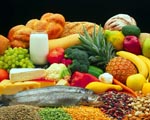
• Snack Up: Having healthy snacks on hand will keep you from purchasing quick and unhealthy choices when life gets a little busy. A few good ideas include fresh fruit and vegetables, nuts, trail mix, cheese, pretzels and hummus, yogurt, and peanut butter on whole wheat bread.
• Hydrate: This last tip is so important! The last thing you want to happen when your busy is to become dehydrated. Keep water with you at all times and drink it throughout the day. You can always spice your water up by adding in fresh fruit or sipping on unsweetened iced tea. Utilize a few of these tips to make healthy eating a little bit easier when you have a busy schedule or when you are on the go! Eating healthy and staying hydrated will provide you with the energy that you need to get through your day! -Kelsey
The official kick off to summer and picnic season is this weekend: Memorial Day Holiday! This time of year always bring great cookouts and picnics. Typical picnic foods consist of burgers, brats, hotdogs, chips, and high calorie salads such as macaroni and potato salads. These are all very tasty foods, but they are also all very high in calories, fat, and sodium. Cookouts don’t have to bust the calorie bank. Choose your foods wisely and plan your menus to include a few healthy options and make substitutions like the meal examples below to help you fully enjoy each cookout while aiding in a healthy heart and waistline.
Choose This:
90% lean hamburger with whole wheat thin bun
Grilled chicken breast
Grilled shrimp
Lean Steak such as sirloin
Tossed Salad with light dressing
Fresh veggies with light ranch dip
Baked chips
Fruit salad
Angel food cake with light cool whip and strawberries
Sometimes we need a break from cooking and need to enjoy eating out. You can still make healthy and wise choices when dining out. Check out these tips to help you make good choices!
• Go for a smaller portion of the meal such as half of the meal, lunch portion, or appetizer size portion.
• Look for key words such as baked, broiled, grilled, or roasted. Stay away from descriptive words such as crispy, creamy, crunchy, and crispy as those typically mean fried and more fat added.
• Substitute the fries for a salad (dressing on the side and use sparingly) or if available a second serving of cooked veggies or fruit.
• If dining in, get a to-go box right away before you start eating and package half of your meal in the box and eat at another meal at home. If eating carry out, only take a portion of the meal on your plate and put the rest in the fridge. If it’s on your plate, you’ll be more apt to eat it, so put it away right away so you aren’t tempted and you are more apt to practice proper portion control.
• Share! It’s ok to share an entree with you friend, spouse, etc to help you practice better portion control.
• Look at the options ahead of time online or using your smart phone. Many restaurants have their nutrition information included in their websites or you can use the Calorie King app to explore the options and make a healthy choice when dining out.
• If eating out is a rare occurrence, it is ok to splurge, but keep in mind it should be a special occasion and only every once in awhile, not every day or every week as those extra calories will add up and cause weight gain quickly!
• To help balance out the extra calories consumed when eating out, be sure to get your activity in and engage in at least 30-60 minutes/day!
Summer is coming and the kids will be out of school soon and home more and they’re going to be eating more of the foods that you keep stocked for them at home. Active children burn through their energy stores very quickly and need to replenish them often. Snacking is an important part of keeping your kids energized for their play-filled summer days. Snacks should be a combination of fiber and protein so that they are filling and satisfying.
Some ideas are:
•An apple and a teaspoon of peanut butter
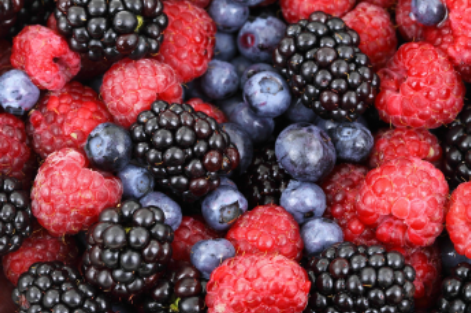
•Mixed berries with yogurt
•String cheese and a whole wheat crackers
•Baby carrots and hummus
•Low-fat yogurt and granola or nuts
•Trail mix
•Celery sticks filled with peanut or almond butter.
Just be sure to keep in mind that snacks are just to get by until the next mealtime, so snacks should not be a significant source of calories. Kids have small stomachs so keep the portion sizes small as well. This is a good time to instill healthy habits in your child so try to avoid having the TV or video games going during snack time in order to discourage mindless munching. Any fruit, vegetable, low-fat dairy product, or whole wheat grain product makes a good snack so find out what your child likes and get creative with the combinations! -Kelsey Raml, MS, RD, LN
Raml Boys with three cute calves! Corbin (5), Adam, Carson (1).
May is National Beef Month so I thought it’d be fitting to talk about this powerhouse lean protein! I get asked a lot about if beef can be part of a healthy diet and it certainly can! There are actually 29 cuts of lean beef! As many of you know, my husband Adam raises beef cattle with his dad and brother. Our sons are the 6th generation of Raml Cattle. Cattle and ranching aren’t just their jobs, it is truly their passion and they do anything in their power to make sure their cattle are healthy and well to produce a top notch protein on your plate. Ranching and farming are not easy in today’s world, but we are blessed to be able to raise our boys on the ranch and show them how hard work, perseverance, and passion can pay off.
Now you may think I am just bias, but science doesn’t lie–I’m putting on my nutrition hat now and want to share how lean red meat can be included in a heart healthy diet! Did you know that beef is 20% leaner than it was about 15 years ago? There are at least 29 cuts of lean beef which means they meet the government guidelines for lean, meaning each cut has less than 10g of total fat, less than 4.5 g of saturated fat, and less than 95mg of cholesterol (in a 3 oz serving). Lean beef is also a great source of multiple vitamins and minerals such as vitamin B12, selenium, zinc, niacin, vitamin B6, phosphorus, iron, and choline.
Here are some tips for you to make beef a part of your heart healthy meals:
• Look for key words such as “round” or “loin” …these are typically leaner cuts.
• Choose 90% or greater lean beef. This means in a 3oz serving there is less than 5g of fat in it.
• Use healthy cooking methods such as grilling, broiling, baking, roasting, or braising. The less tender cuts can be marinated in a tenderizing marinade such as salsa or light Italian dressing.
• Trim the fat! Trimming the fat before cooking will help eliminate some of the fat from the cut.
• Cook with fresh ingredients such as lemon juice, peppers, onions, garlic, and herbs instead of adding extra fat to the cut.
• Practice portion control. Select the 3-5 oz serving over the 10oz. Balance is key to a healthy diet, so be sure to include your fruits and veggies and whole grains along with your lean meat to create a healthy plate.
• All meat is required to have the nutrition content (label) posted by it in the grocery store. Be sure to use this when you’re selecting your cuts of meat and pay special attention to the total fat and saturated fat content.
If you want to learn more about the benefits of beef and explore healthy recipes check out these websites: www.beefnutrition.org and www.beefitswhatsfordinner.com.
Below are some of my favorite pictures of our world on the ranch.
Eat beef, it’s what’s for dinner!
Kelsey
Corbin checking out the show calves.
Corbin loves the baby calves! He enjoyed a break from working cattle with this little one last summer.
Tough guy ready to work those calves. 🙂
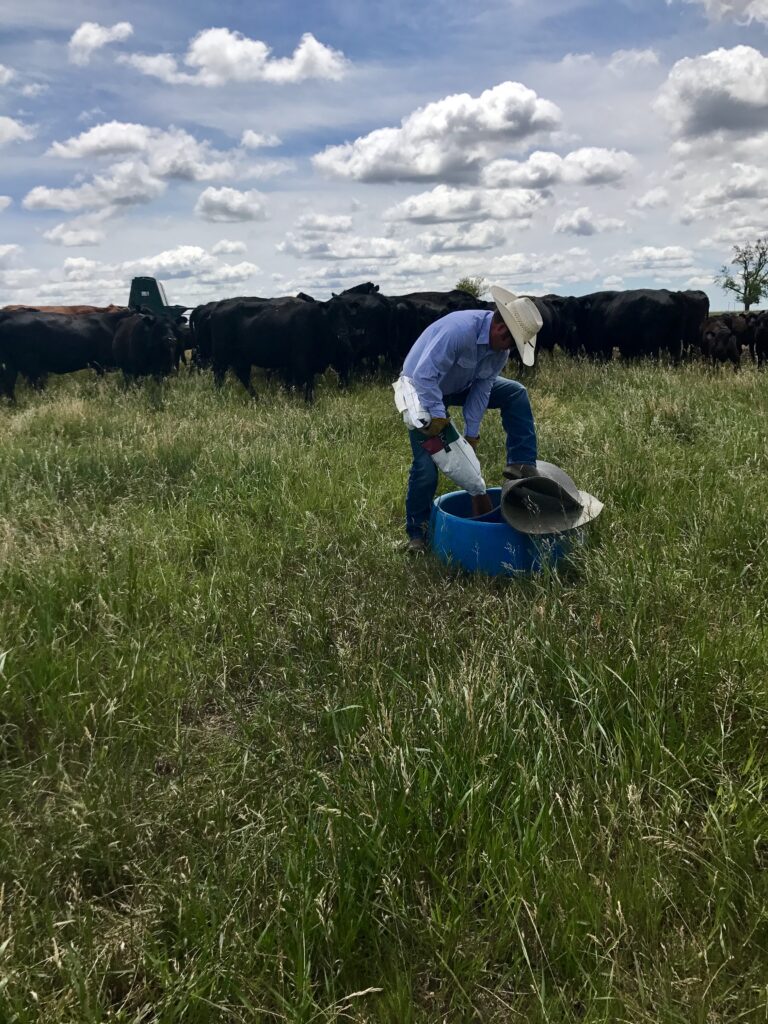
Helped his dad deliver twins last spring!Adam giving the cows some mineral. We like happy, healthy cows!