With the Easter Holiday and Celebration just a few days away, many of you have your eggs hard boiled and ready to be painted…or many of you already have them painted! We had a great time getting ours ready this weekend (see above!). As Sunday comes and goes, you may wonder what to do with those eggs. Here are some tips for you to practice proper egg safety:
Not sure how to boil an egg? Place the eggs in a
saucepan and cover with water. Bring to a boil with the lid on, then turn
off the heat. Let the eggs sit in water for 15 min. Remove eggs and place
in a bowl of ice cold water to cool. This year, I used our InstaPot to
hard boil them—they turned out great and I enjoyed the new way of cooking!
Eggs should be used within 3 weeks of the sell by date.
Be sure to store them in the fridge at a temp less than 40 degrees F.
Hard boiled eggs spoil faster than fresh eggs as the
protective coating is washed away, making them more susceptible to
bacteria. Hard boiled eggs must be refrigerated within 2 hours of cooking.
If you want to eat the hard boiled eggs after the
holiday, you must store them in the refrigerator. Throw away any eggs that
are cracked, dirty, or have been out of the fridge for more than 2 hours.
If you are going to use the leftover cooked eggs, it is recommended to use
them within one week to prevent food poisoning. To help you do this, you
could make two batches- one to display and one for eating.
Ever wonder what the green ring on a hard boiled yolk
is? It’s a result of overcooking the eggs and is caused by sulfur and iron
compounds in the egg reacting to the surface of the yolk. The green color
may also be a result of a large amount of iron in the water used to cook
with. It may look funny, but it is safe to eat.
Do you have your Easter baskets all ready for the little (or big) kids in your life? Easter baskets are usually filled with all kinds of goodies and I like to think of them being just as exciting as getting your Christmas stocking! My family has all kinds of funny stories about the big search for finding our Easter baskets and of course what we find inside is even more exciting! The candy aisles at the store are filled with all kinds of goodies, but let us not forget that there are plenty of other non-junk food options to fill your Easter baskets with. Here are some ideas for you:
Sidewalk chalk
Color Dotz by Crayola (color your bath water with them!)
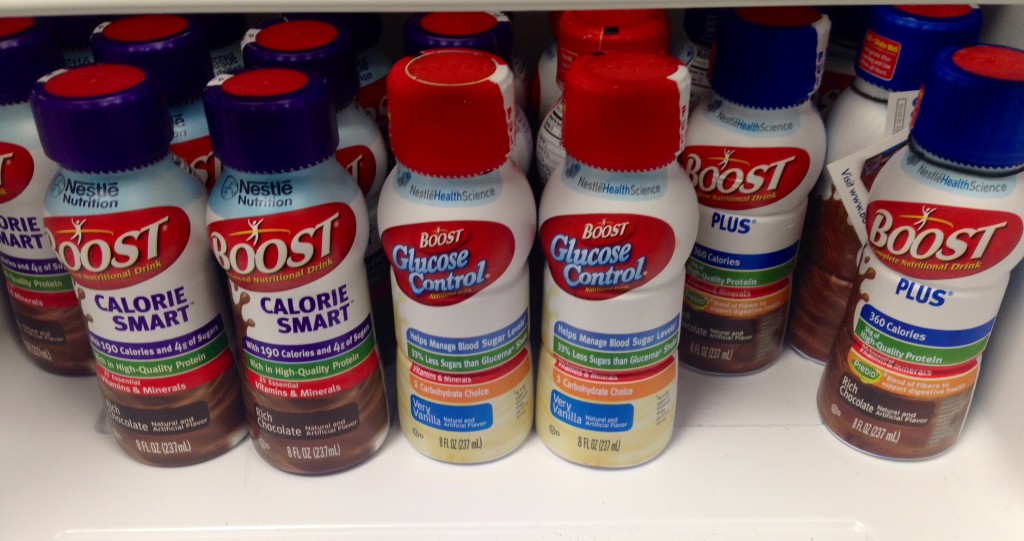
I often get asked about meal replacements such as Boost, Atkins, Slim Fast, Ideal Protein, etc. Are they good? Should I use them? What kind? etc…
The Academy of Nutrition and Dietetics does approve the use of meal replacements for weight loss efforts: “Several studies comparing isocaloric diets have shown an equivalent or greater weight loss efficacy with structured meal replacement plans, compared to reduced calorie diet treatments. One or two daily vitamin- and mineral-fortified meal replacements, supplemented with self-selected meals and snacks, may be a successful weight loss and weight maintenance strategy for overweight and obese adults who have difficulty with self-selection of food and portion control.” (http://www.andeal.org/topic.cfm?cat=2886&conclusion_statement_id=250237&highlight=meal%20replacements&home=1).
The key words are one or two replacements/day, not your whole day and paired up with a well-balanced, calorie reduced diet. I typically recommend the use of these for the meal when the individual is on the run the most. Sometimes you are rushed in the morning to get to work or school and don’t have time for breakfast, in this case, a meal replacement may be a good idea…or maybe it’s lunch as you only get a short break and a meal replacement might fit in well here. The biggest thing to remember is you are drinking your meal, not eating it. Some people are truly satisfied this way and others are not. Personally, I do not use meal replacements because I know I need to “eat” my food to be satisfied rather than “drink” them…when I drink something, I feel like I still need to eat thus a meal replacement would only add more calories! Another reason why I don’t do meal replacements is I prefer real food. I would rather eat whole food than drink a supplement….but that’s just me. 🙂 One more thing to consider is they are typically around 150-200 calories. This may not be enough for a meal, so you may consider adding a piece of fruit, salad, or yogurt to it to give you a little more substance.
Meal replacements do have a place in
our society for helping people manage their weight, but there are many kinds so
it’s important to check out the ingredients, nutrients, and prices. If you
notice a really long ingredient list, there is more “stuff” added to
the product and then you need to consider if you really need all of that extra
“stuff.” Some ingredients can affect your body in certain ways, so
you may need to check with your physician, pharmacist, or dietitian to ensure
it is safe to consume. Costs also makes a difference. You have to remember that
these companies are trying to make money off of you, so consider cost and value
when you make your selection. In addition, it’s important to consider
that a well balanced, portion controlled, healthy meal of real food can be
cheaper than some supplement drinks! If you have any specific questions
regarding choices, selections, or even disease states and the use of these,
don’t hesitate to contact me. I’m here to help you as your credible and
reliable nutrition information source!
-Kelsey Raml, MS, RD, LN
Inflammation is an important part of our immune system’s response to injury and infection. It is our bodies way of signaling the immune system to defend, heal, or repair itself against possible infection or bacteria. Without inflammation as a physiological response, our body would not heal properly, and many conditions would be deadly.
That being said, if our inflammatory process goes on longer
than needed or if it occurs in unnecessary places, inflammation suddenly becomes
an issue. Chronic inflammation has been linked to the development of numerous
diseases and health conditions.
Chronic, low-grade inflammation often does not have symptoms according to Mayo Clinic, but there are labs that can be ran to determine if inflammation is present. Besides looking at blood test results, your diet and lifestyle habits can contribute to your bodies inflammation. It’s important to maintain a healthy lifestyle to keep inflammation in check.
Starches, Fruits, Vegetables
Choose whole-grain starches, fresh whole fruits and vegetables.
Consume a variety of colorful fruits and vegetables.
Limit refined starches (white versions) and added sugars (white or brown sugar, soda, energy drinks).
Meats
Limit high-fat red meat such as prime rib, bacon and sausage, as well as processed meats (ex: bologna, salami and hot dogs). These are higher in saturated fat, which if consumed in excess can increase inflammation.
Choose skinless poultry, fish, eggs, legumes.
Fat
Limit saturated fat. This includes butter, whole milk, cheese, high-fat red meat and skin on poultry. Our bodies only require a small amount so excess intake will increase inflammatory risk.
Be very cautious or avoid trans-fat altogether (ex: prepackaged baked goods, flavored coffee creams).
Choose monounsaturated and omega-3 fats, these are thought to neutralize inflammation. Found in olive oil, avocados and nuts.
Omega-3 fatty acids are found in salmon and tuna, walnuts, and ground flaxseed. Omega-3 is an essential fat that our bodies cannot make. We must obtain it from dietary sources or supplements.
Other suggestions
Flavor food with spices and herbs that have antioxidant properties such as garlic, green herbs, ginger, and turmeric.
Moderation in all areas, excess of any food (even if it has anti-inflammatory properties) is not a good thing.
An exact and strict diet plan for a patient with chronic inflammation is still lacking but we do know general healthy eating suggestions that help produce anti-inflammatory results over time. The suggestions above will come as no surprise, as it is information we have all heard numerous times. The key is to adapt these suggestions into your daily lifestyle.
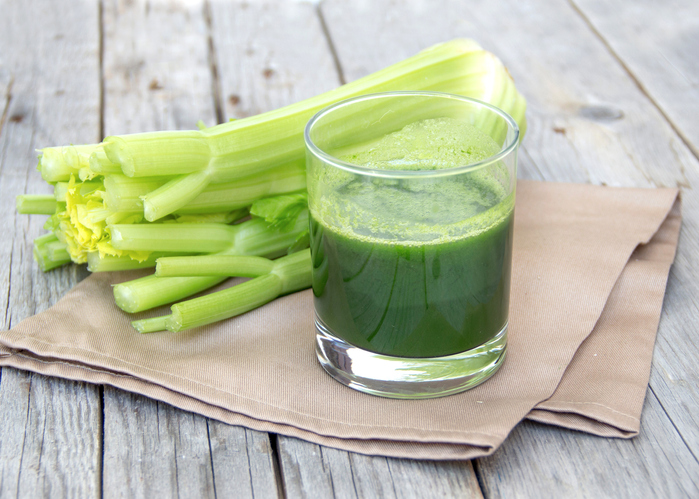
Many people have noticed that one of the latest nutrition “trends” has been juicing and consuming beverages that claim to boost gut health, detoxify the body, and fill your body with tons of vitamins and minerals. Most recently, celery juicing has become a popular topic of discussion on social media and other news outlets. Some celery juicers have claimed that drinking this magic drink has cured them of mental health problems, infertility, and eczema. However, as a Registered Dietitian we are taught to look to the science based evidence to understand if the topic is a healthful practice or not.
After a search in the current scientific
literature on celery juicing we can conclude there is not enough information to
prove that celery juice lives up to all the claims. Majority of the studies
have been done on mice and not human subjects. There needs to be more research regarding
celery juice impact on human health.
Luckily, there are still benefits to
consuming celery. By eating fresh celery provides a source of vitamin K,
vitamin C, potassium, folate, manganese, and much more. It has a high percentage
of water which can help prevent dehydration. Celery is also a great source of
fiber, but only in its whole form. By juicing the celery stalks, you are stripping
the celery of all its fiber. Despite these benefits, there have not been
large human studies done using celery juice as a treatment for chronic
conditions.
One claim is that celery contains
phytochemicals and antioxidants associated with reducing inflammation to
possibly reduce autoimmune symptoms and disease risk. Nonetheless, so do lots of other vegetables, fruits, and herbs.
Compounds called flavonoids are in celery stalks but there are lots of other
foods with the same level of or even more flavonoids. If you were to puree 1 pound of any vegetable or fruit, you would
get similar potential “superfood” nutrient levels. There’s nothing particularly
special about celery other than it’s a vegetable, and most all need to be
eating more veggies.
As a registered dietitian counseling a patient who is or wants to try celery juicing I would tell the patient that celery juice is not harmful for most people, but check with your doctor if you take statins, blood pressure medicine, or blood thinning medication as there is always a risk of nutrient-drug interactions.